Showing posts with label crime. Show all posts

Tuesday, July 22, 2025

The Fairbanks Four: Murder, Injustice, and the Birth of a Movement by Brian Patrick O'Donoghue

The Fairbanks Four: Murder, Injustice, and the Birth of a Movement
by Brian Patrick O'Donoghue
352 pages 
Published April 2025 by Sourcebooks
Source: my copy courtesy of the publisher, through Netgalley, in exchange for an honest review

Publisher's Summary: 
One murder, four guilty convictions, and a community determined to find justice.

October, 1997. Late one night in Fairbanks, Alaska, a passerby finds a teenager unconscious, collapsed on the edge of the road, beaten nearly beyond recognition. Two days later, he dies in the hospital. His name is John Gilbert Hartman and he's just turned 15 years old. The police quickly arrest four suspects, all under the age of 21 and of Alaska Native and American Indian descent. Police lineup witnesses, trials follow, and all four men receive lengthy prison terms. Case closed. 

But journalist Brian Patrick O'Donoghue can't put the story out of his mind. When the opportunity arises to teach a class on investigative reporting, he finally digs into what happened to the "Fairbanks Four." A relentless search for the truth ensues as O'Donoghue and his students uncover the lies, deceit, and prejudice that put four innocent young men in jail.

The Fairbanks Four is the gripping story of a brutal crime and its sprawling aftermath in the frigid Alaska landscape. It's a story of collective action as one journalist, his students, and the Fairbanks indigenous community challenge the verdicts. It's the story of a broken justice system, and the effort required to keep hope alive. This is the story of the Fairbanks Four.

My Thoughts: 
Ever since Mini-me and Ms. S moved to Alaska, I've been drawn toward learning more about that state and its people, which is why this book initially caught my eye. But the subtitle is what really pulled me in. The more I read in general, the more aware I am of how often our justice system fails us as a society - corruption, racism, sloppy work, reliance on people who have a lot to gain by saying what the system wants them to say, society's expectation that crimes will be resolved quickly (fueled by watching it happen that way on t.v.). 

I made the mistake of reading this on my phone. I should know better - I don't think any book I've ever read entirely on my phone has ever gotten the fair shake it deserves and I feel certain that my opinion of this book would have been different if I'd have read it on my iPad. It wasn't helped, either, by the fact that I read it during a reading slump and never read it long enough at any one sitting to really get immersed in it. For me, it seemed to drag a bit at time and I got bogged down in trying to keep who was who straight. There are a lot of people involved in this story, from the four young men initially convicted of the murder, to the witnesses, the police, the attorneys, the judges, those working to free the young men, and those working with O'Donoghue to get to the truth of the murder. If I'd have been smart, I would have made myself a list. 

Do you ever watch Dateline or 48 Hours or any of those kinds of shows? If you do, then you're familiar with the way that, as details emerge and depending on who you're listening to, the truth seems to sway first one way and then the next. Even knowing going in (because of course this book wouldn't exist if this weren't true) that the four young men would eventually be exonerated, I still swayed back and forth. Certainly none of these young men were perfect angels, but it was clear early on that a desperately understaffed police department was being pressured to solve this case as quickly as possible by any means possible and that's what they did. 

O'Donoghue, left; the Fairbanks Four, right
O'Donoghue, who had been a newspaperman and then became a college professor, was convinced to look further into the case and used this case as a learning tool for his classes. Others in the native Alaskan community also took up the cause. Even so, it took 18 years of pressure and hundreds of man hours and digging for these men to be released. It took almost another decade before O'Donoghue was able to get the book published; not until the men won settlements from the city did the publisher agree that there was an ending to the story that made it worth publishing. 

As much as I struggled getting through the book (again, my fault more than the book's), it's the first book I've read in a long time that made me want to dig deeper. I discovered that the victim's brother still believes that the four men initially convicted were the real killers and he's extremely angry that they've not only gone free but have won settlements. It was brought home to me, once again, that when someone is released, it's hard to assimilate back into society - imagine how the outside world changed between 1997 and 2015. One of the men had a young daughter when he was imprisoned; by the time he got out, he had two granddaughters. Nothing can bring back everything that these men lost while they were behind bars. 

Tuesday, July 15, 2025

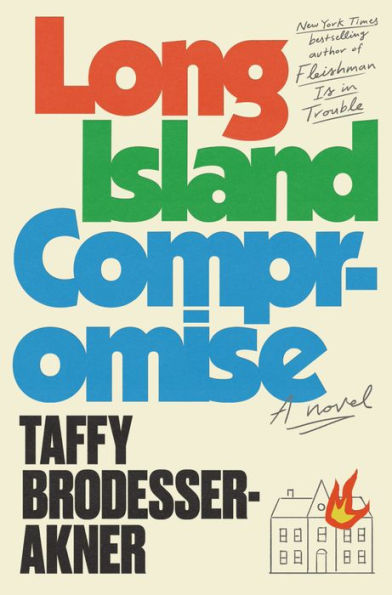
Long Island Compromise by Taffy Brodesser-Akner

Long Island Compromise
by Taffy Brodesser-Akner
Read by Edoardo Ballerina
15 hours, 23 minutes
Published July 2024 by Random House Publishing

Publisher's Summary: 
“Were we gangsters? No. But did we know how to start a fire?”

In 1980, a wealthy businessman named Carl Fletcher is kidnapped from his driveway, brutalized, and held for ransom. He is returned to his wife and kids less than a week later, only slightly the worse, and the family moves on with their lives, resuming their prized places in the saga of the American dream, comforted in the realization that though their money may have been what endangered them, it is also what assured them their safety.

But now, nearly forty years later, it’s clear that perhaps nobody ever got over anything, after all. Carl has spent the ensuing years secretly seeking closure to the matter of his kidnapping, while his wife, Ruth, has spent her potential protecting her husband’s emotional health. Their three grown children aren’t doing much better: Nathan’s chronic fear won’t allow him to advance at his law firm; Beamer, a Hollywood screenwriter, will consume anything—substance, foodstuff, women—in order to numb his own perpetual terror; and Jenny has spent her life so bent on proving that she’s not a product of her family’s pathology that she has come to define it. As they hover at the delicate precipice of a different kind of survival, they learn that the family fortune has dwindled to just about nothing, and they must face desperate questions about how much their wealth has played a part in both their lives’ successes and failures.

Long Island Compromise spans the entirety of one family’s history, winding through decades and generations, all the way to the outrageous present, and confronting the mainstays of American Jewish life: tradition, the pursuit of success, the terror of history, fear of the future, old wives’ tales, evil eyes, ambition, achievement, boredom, dybbuks, inheritance, pyramid schemes, right-wing capitalists, beta-blockers, psychics, and the mostly unspoken love and shared experience that unite a family forever.

My Thoughts: 
I saw this one on numerous best-of-2024 lists (and have heard great things about Brodesser-Akner's Fleishman Is In Trouble) so I requested it from the library. It ended up being a read/listen combination because I struggled with this one and my loan timed out. 

The book opens with the kidnapping and return of Carl Fletcher and the immediate aftermath. It's fast paced and drew me in immediately. And then we moved to sections about each of his children as grown adults. To say they were screwed up is an understatement. Reading Beamer's story was, for me, very uncomfortable and a little disturbing and I almost gave up on the book before I finished reading his part. If something bad could possibly happen, it did; but each of the kids (and their mother and grandmother) brought a lot of it on themselves. I began to feel less and less sorry for these people. I get that their lives had been irrevocably changed with the kidnapping, but I couldn't help but feel that at least one of them might have overcome it all. 

There was a part of me that really hoped that things wouldn't work out for them. That they would all have to learn how to get real jobs and live like normal people. But, of course, rich people hardly ever have the roof fall entirely in on them and this story is no exception. The thing that saved this one for me was that Brodesser-Akner had a couple of surprises up her sleeve that totally took me by surprise and I always do like a book that can surprise me. 

Tuesday, May 28, 2024

The Fraud by Zadie Smith

The Fraud
by Zadie Smith
Read by Zadie Smith
12 hours, 26 minutes
Published September 2023 by Penguin Publishing Group

Publisher's Summary: 
It is 1873. Mrs. Eliza Touchet is the Scottish housekeeper-and cousin by marriage-of a once-famous novelist, now in decline, William Ainsworth, with whom she has lived for thirty years.

Mrs. Touchet is a woman of many interests: literature, justice, abolitionism, class, her cousin, his wives, this life and the next. But she is also sceptical. She suspects her cousin of having no talent; his successful friend, Mr. Charles Dickens, of being a bully and a moralist; and England of being a land of facades, in which nothing is quite what it seems.

Andrew Bogle, meanwhile, grew up enslaved on the Hope Plantation, Jamaica. He knows every lump of sugar comes at a human cost. That the rich deceive the poor. And that people are more easily manipulated than they realize. When Bogle finds himself in London, star witness in a celebrated case of imposture, he knows his future depends on telling the right story.

The “Tichborne Trial”-wherein a lower-class butcher from Australia claimed he was in fact the rightful heir of a sizable estate and title-captivates Mrs. Touchet and all of England. Is Sir Roger Tichborne really who he says he is? Or is he a fraud? Mrs. Touchet is a woman of the world. Mr. Bogle is no fool. But in a world of hypocrisy and self-deception, deciding what is real proves a complicated task. . . .

My Thoughts: 
From an article in The Millions: 
"In 2009, first edition of Charles Dickens’s The Christmas Carol was sold at auction for $290,500. The book had been inscribed by Dickens himself to one “Mrs Touchet.” This Eliza Touchet was cousin by marriage to a novelist named William Harrison Ainsworth, and served as his housekeeper and as a witty hostess for literary parties at his home in Kensal Green, many of which Dickens attended. "

You know how much I love when an author, especially one of Smith's skills, manages to create a novel that ties real life people and events together in a way that really makes me think and that makes those people and events relevant to the world today. 

But that's not what drew me to this book. In fact, I had no idea what this book was about when I requested it from the library. I requested it because it was Smith's latest. This is the fourth book I've read by Smith and she always challenges me. Twice I've commented that I should have read the book in print but had listened to it. Didn't learn my lesson. While this one was easier to follow while listening than were the other books I've listened to by Smith, it does bounce around quite a bit and I think it would have been easier to track with it if I had looked at the book instead of listened to it. 

Still...I thoroughly enjoyed this one. I loved the history, I loved the references to the authors I'm familiar with and the story of the one I wasn't. I found the hoopla surrounding the trial fascinating and how timely it felt. Truly, a man who some people so passionately believed in while so many others could clearly see that he was a fraud? Can you get any more tied in to current events? Eliza was such an interesting character, as was her relationship with the Bogles. 

I've always found plenty to like about Smith's books but this one might be my favorite yet. 

Thursday, November 30, 2023

Not That Bad: Dispatches From Rape Culture edited by Roxane Gay

Not That Bad: Dispatches From Rape Culture
edited by Roxane Gay
Read by various authors
8 hours, 41 minutes
Published May 2018 by HarperCollins Publishers

Publisher's Summary: 
In this valuable and revealing anthology, cultural critic and bestselling author Roxane Gay collects original and previously published pieces that address what it means to live in a world where women have to measure the harassment, violence, and aggression they face, and where they are “routinely second-guessed, blown off, discredited, denigrated, besmirched, belittled, patronized, mocked, shamed, gaslit, insulted, bullied” for speaking out. Contributions include essays from established and up-and-coming writers, performers, and critics, including actors Ally Sheedy and Gabrielle Union and writers Amy Jo Burns, Lyz Lenz, and Claire Schwartz. Covering a wide range of topics and experiences, from an exploration of the rape epidemic embedded in the refugee crisis to first-person accounts of child molestation, this collection is often deeply personal and is always unflinchingly honest. Like Rebecca Solnit’s Men Explain Things to Me, Not That Bad will resonate with every reader, saying “something in totality that we cannot say alone.” 

Searing and heartbreakingly candid, this provocative collection both reflects the world we live in and offers a call to arms insisting that “not that bad” must no longer be good enough.

My Thoughts: 
When she was 12 years old, Roxane Gay was gang raped. In order to mentally survive that, she had to convince herself that it was "not that bad" and that other women had it worse. Read that again. Gay did not allow herself to fully comprehend the horrific thing that had been done to her, and at such a young age. 

Women have been brainwashed for so long that we all begin to believe that things are "not that bad." Even when they truly are that bad. And we live in a world where we are constantly comparing what has happened to us against what has happened to other people. We're prone to convincing ourselves that what happens to us really isn't that bad. The reality is that most women have a certain amount of fear at all times. We are less likely to go out after dark. When we do, we are (and have been raised to be) constantly vigilant of our surroundings. We carry our keys webbed through our fingers as weapons. We double and triple checks locks before we go to bed. We have been catcalled, touched in ways we haven't allowed, followed. We are blamed for the terrible things that happen to us. I live in a very safe suburban neighborhood and it makes me uncomfortable to be in my own backyard after dark if my husband is not at home because I have lived so long in fear that someone is lurking in the shadows, ready to harm me. But it is not just women who suffer in our rape culture. 

This collection of twenty-nine essays is one of the most difficult books I've ever read. Listening to it, I believe, made it that much more difficult, emphasizing, as it did through all of the different voices, the size of the problem. As with any collection, some stories were more compelling for me, more relatable. Told from a wide variety of perspectives, this collection speaks to how widespread rape culture is and how many different lives it touches. I meant to write down the names of the essays that most impacted me and the reasons why; but I put off writing about the book because it was just so damn hard to think about and now those titles are gone from my mind, I'm sorry to say. 

As hard as it is to read, I'm hoping that more people will read this book and understand that no matter how rape culture has impacted your life, it is that bad. None of us should have to live in fear, no one should be blamed for the terrible things that others do to them, all of our sons (because the culture is primarily the result of male behavior) should be taught how to behave and how to speak, and all of us deserve to be heard and believed. 

Tuesday, August 30, 2022

Rogues: True Stories of Grifters, Killers, Rebels, and Crooks by Patrick Raddon Keefe

Rogue: True Stories of Grifters, Killers, Rebels, and Crooks
by Patrick Raddon Keefe
15 Hours, 28 Minutes
Published June 2022 by Penguin Random House

Publisher's Summary:
Patrick Radden Keefe has garnered prizes ranging from the National Magazine Award to the Orwell Prize to the National Book Critics Circle Award for his meticulously-reported, hypnotically-engaging work on the many ways people behave badly. Rogues brings together a dozen of his most celebrated articles from The New Yorker. As Keefe says in his preface “They reflect on some of my abiding preoccupations: crime and corruption, secrets and lies, the permeable membrane separating licit and illicit worlds, the bonds of family, the power of denial.” 

Keefe brilliantly explores the intricacies of forging $150,000 vintage wines, examines whether a whistleblower who dared to expose money laundering at a Swiss bank is a hero or a fabulist, spends time in Vietnam with Anthony Bourdain, chronicles the quest to bring down a cheerful international black market arms merchant, and profiles a passionate death penalty attorney who represents the “worst of the worst,” among other bravura works of literary journalism. 

The appearance of his byline in The New Yorker is always an event, and collected here for the first time readers can see his work forms an always enthralling but deeply human portrait of criminals and rascals, as well as those who stand up against them.

My Thoughts: 
Rachel Maddow says, "Every time he writes a book - I read it." Same here, Rachel, same here. She also reads all of his articles, something I'd never done before. Until now. Rogues is a collection of some of his writings for The New Yorker and now I'm wondering where I can find the rest of his New Yorker back list. 

In this collection, Keefe covers every kind of rogue from murderers (drug kingpin El Chapo, Dutch criminal Wim Holleeder, and a rare female mass murderer, Amy Bishop) to celebrity chef and television personality Anthony Bourdain. The essays cover topics from counterfeit wine to the dirty secrets of Swiss banking to illegal arms trading. In these articles, he looks at two different lawyers who defend killers, both for very different reasons. 

Keefe's great skills are his ability to make the articles relatable and readable. He looks for ways to help us understand why people do the things they do. He never tries to make the bad guys look good but he tries to help us understand who they are. And while he has always clearly done his research, his work never feels like he's dumping every thing he's learned into the article, obliterating the story underneath. And the story is the point - Keefe is a storyteller, even if his stories are those of real people and, in this case, their misdeeds. 

Of course, like all collections, there were some stories that struck me more than others. The story of Astrid Holleeder, a lawyer who fears for her life because she fears a notorious killer she helped put in prison for life will find a way to have her killed. That criminal is her brother, a man who became famous when he was part of the kidnapping of Freddie Heineken (yes, those Heinekens). She and her sister had known for years that their brother was a criminal but finally they had enough of living in fear of what he might do to them so they wore wires and got him to incriminate himself. And still they live in fear of what he might do to them. 

Another story that will stick with me was that of Mark Burnett. Burnett, as you know, is the producer of Survivor. In 2002, he leased the skating rink in Central Park to host the season finale. The Trump skating rink. Burnett had already had the idea for another reality show and as soon as he saw Donald Trump sitting in the audience, he knew what to do. He immediately began feeding Trump's ego, cultivating a relationship that would allow Burnett to convince Trump to star in his new show, The Apprentice. Until then, Trump was considered something of a joke in the business community and the building they were set to film in was more than a little worn at the edges. The production company not only made their floor of the building look good, they turned Donald or The Donald into Mr. Trump. Burnett allowed Trump (partly because he knew it would make good television and partly because Trump wasn't able to learn his lines), to let his own personality come through. The show created an image of Trump as a straight-shooting master businessman. It seems almost impossible that Trump would have become president if not for Mark Burnett. And now I have to stop watching everything else Burnett produces. 

Another is the story a lawyer, Judy Clarke who defends notorious killers, the worst of the worst. Amongst Clarke's clients have been Ted Kaczynski and Dzhokhar Tsarnaev (the younger of the Boston Marathon bombers). Clarke is a staunch advocate against the death penalty and had never had a client sentenced to death until Tsarnaev. While the death penalty has resulted in the deaths of innocent people, Clarke isn't representing those people. The people she represents are guilty and she doesn't try to present them as otherwise. Still, she fights hard to save their lives. In no small part because, as in the case of Tsarnaev, the families of the victims want that as well. They want to be spared the emotional toll of endless appeals and all of the publicity that comes with it. I didn't come away from this article caring any more about those terrible people, but it certainly heightened my conviction that the death penalty is wrong. 

Finally, there was the piece on Anthony Bourdain. I'm not entirely sure that this piece fits in with the others, although Bourdain would certainly be considered a rogue and a rebel. While Bourdain became famous as something of a punk rock chef and all-around bad boy, in later years, Keefe revels, Bourdain was disciplined and hyperorganized, controlling every aspect of not only episodes of his show but his life as well. He was also a man that didn't have a lot of old friends but who made a lot of friends in his travels. If you're a fan of Bourdain, you'll enjoy this piece. If you're not a fan going in, you may rethink your opinion when you learn more about a man who overcame addiction but never overcame his demons. 

As I've done with Keefe's other books, I highly recommend this collection. I especially recommend it for those who can't face the idea of reading a 500-page book about criminal activity but could manage an essay. You, too, will become a Keefe fan. You may even find your self having the same opinion as Rachel Maddow. 


Monday, June 29, 2020

Three Bodies Burning by Brian Bogdanoff

Three Bodies Burning: The Anatomy of an Investigation into Murder, Money, and Mexican Marijuana 
by Brian Bogdanoff
Published 2011 by Press, LLC at Smashwords
Source: checked out from my local library

Publisher's Summary:
A haunting triple murder... the inside story of the investigation.When two worlds collide-the illegal transportation of tons of Mexican cartel marijuana to inner city gang members in a Midwestern city's "hood"-three bodies end up burning, caught in a web of greed as a major international drug deal goes very bad.The chilling trail of evidence from a remote wooded area where three bodies are set on fire leads homicide detectives across the country chasing down witnesses and conspirators in a two-year search for cold-blooded killers. This case has it all: murder, piles of cash stashed in the most unlikely of places, a blood-soaked crime scene, the remote dump site for bodies, luxury cars, flashy jewelry, and hundreds of pounds of illegal dope.An unbelievable break takes detectives down the rabbit hole where CSI meets Law & Order and where good old gumshoeing and meticulous forensic procedures bring down a mega-million-dollar drug conspiracy and lock up the bad guys for life.Follow the case through the eyes of the gritty homicide/narcotics detective. A handbook for the amateur criminologist, this book is for true crime fans, prosecutors and defense attorneys, and cops and robbers.Warning: This book contains graphic crime scene photos and adult language.

My Thoughts: 
In my previous job, we were required to have a certain number of hours of fraud training annually. To that end, we attending several lunches hosted by a fraud group every couple of months. Finding people who wanted to speak became difficult and the tie to fraud was often tenuous. For example, the lunch where the county attorney spoke, along with former police officer, who were, to the best of my recollection, talking to us about fraud caused by drug dealing. Completely irrelevant to my line of work but one of the most interesting lunches we ever attended as the former officer was Brian Bogdanoff who spoke about his work in the narcotics division and in solving the crime to which the book title refers. I had every intention of picking up a copy of the book shortly there after and thought of it again when my daughter began studying criminal justice. Eight years later I finally got around to reading it. My thoughts about this book would certainly have been different had I read it years ago. 

I can remember watching the morning news fifteen years ago and learning that three bodies had been found burning just on the edge of Omaha. It's frightening to think that you live in a city where that kind of thing happens. And then, as happens when something ceases to be a news story, I forgot about it. A year later, I recall the trial, in no small part because of the fact that my husband was serving jury duty at that time and, fortunately, was excused from this case. Five years after that, I had forgotten about it again until Bogdanoff talked about it at our lunch and I was fascinated about how the police managed to identify three bodies without identification on them and then track down their murderers. 

I'm still fascinated by that and by the amount of luck, tedious work, and detail it takes to solve crimes like this one. And how much the police rely on the criminals to screw up. Two pieces of paper were left in the pockets of the three men who were killed; had those not been overlooked when the killers emptied the victims' pockets, this case might never have been solved. Finding out who the victims were was key to solving the case - that led officers to their families who confirmed that the men were in Omaha on drug business and gave them the street names of the men the victims had been working with. Still, those were not names the police were familiar with and it would be some months before their identities were discovered. The amount of paperwork and the number of people involved in solving this case are staggering. The detail involved in putting together a case that won't be able to be overturned later due to some technicality is unbelievable. I 100% believe that the men who committed these crimes were terrible people who deserve to spend the rest of their lives in prison and I'm glad that Bogdanoff and the people he worked with were able to find them and get them off the streets of Omaha. 

That being said, in light of things I've learned in the past few years and of my new way of thinking about the way police departments work, I did have some problems with the book. For example, in the first chapter, Bogdanoff says, "...very few times do the good guys, the cops, catch a break or get lucky." It wasn't the only time he referred to the police as "the good guys," setting up "us versus them" mentality that I'm growing to believe is one of the problems with how our criminal justice system works. 

That's reinforced when he defends a practice the policy use known as a "bar check" which caused some problems for him once. He, of course, says he and the other officers involved did nothing wrong and that the leaders of the African-American community who "claimed they were threatened, harassed, and intimidated by officers coming into a celebration they were having" might have been doing so as a media ploy. I can't say for certain, but knowing what I know now, I'm guessing that these "bar checks" were more often done in neighborhoods were persons of color live. Bogdanoff says that they went into that particular bar because there was a "large volume of foot and vehicle traffic in the parking lot of a bar that was directly next to one of the housing projects." It clearly never occurred to him then, or in retrospect, that it might have been anything other than suspicious. Bogdanoff grew up in this town, he'd worked extensively in that neighbor, and I can't help but think that he surely must have recognized some of the people going into that bar. But he says "I...learned that I would face people...who have certain agendas, and to support those agendas, they will manipulate situations and facts." I'm sure he's not wrong, that he did encounter people who did that. Again, though, it doesn't seem to occur to him that he may have done the same thing. 

I wish Bogdanoff had had a better editor - I didn't need to know that the prosecutor from the county attorney's office looked like Diane Lane or that once he could "literally hear [another office] crap his pants." And perhaps a little less of the braggadocio. It's a book that could have been tightened up and more focused. Because there is a hell of a story here and an impressive job of bringing two murders to justice. 

Monday, March 7, 2016

Thirty-Eight Witnesses: The Kitty Genovese Case by A.M. Rosenthal

Thirty-Eight Witnesses: The Kitty Genovese Case by A. M. Rosenthal
Published
Source: my copy courtesy of the publisher through Netgalley

Publisher's Summary:
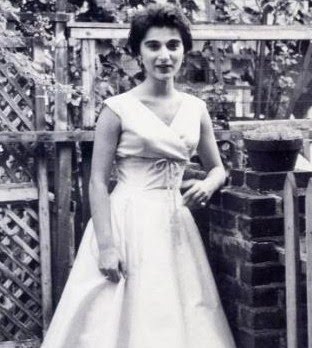
In the early hours of March 13, 1964, twenty-eight-year-old Catherine “Kitty” Genovese was stabbed to death in the middle-class neighborhood of Kew Gardens, Queens. The attack lasted for more than a half hour—enough time for Genovese’s assailant to move his car and change hats before returning to rape and kill her just a few steps from her front door.

Yet it was not the brutality of the murder that made it international news. It was a chilling detail Police Commissioner Michael Joseph Murphy shared with A. M. Rosenthal of the New York Times: Thirty-eight of Genovese’s neighbors witnessed the assault—and none called for help. [Rosenthal said "any journalist would call this "the telling detail," the detail that would catch readers attention, rather than the brutal murder.]

To Rosenthal, who had recently returned to New York after spending a decade overseas and would become the Times’s longest-serving executive editor, that startling statistic spoke volumes about both the turbulence of the 1960s and the enduring mysteries of human nature. His impassioned coverage of the case sparked a firestorm of public indignation and led to the development of the psychological theory known as the “bystander effect.”

My Thoughts: 
I can't remember when I first heard about the Kitty Genovese murder; it seems to be a story that comes up from time to time when we again have a case where people who might have acted to prevent a tragedy did nothing. Thirty-Eight Witnesses was originally written about a year after the murder and is just now being released with a new introduction by Mr. Rosenthal.
"Are the people who turned away that one night in Queens, each in a separate decision, any more immoral or indecent or cowardly because there happened to be thirty-eight, than if there were just one of them? Does God judge by the individual or by head count? And what if we hear the scream but cannot see the screamer? Of all questions about silent witnesses, to me this is the most important."
Rosenthal raises a lot of questions in the book about what caused so many people to remain silent, why the murder would have been more of a story initially had it occurred on Park Avenue, and why the police became the number one target immediately after the story broke. Rosenthal does a fair job of answering where he can and being clear when he is only offering an opinion. He does not attempt to imply that this is a strict recall of the facts; it is clear that Rosenthal is offering his impression of the case and its handling. He can become a bit repetitive but there is so much here that is, forty years later, still important today.
"At first there was, briefly, the reaction of shared guilt. Even people who were sure that they certainly would have acted differently felt it somehow. "Dear God, what have we come to?" a woman said one day. "We," not "they."  
For in that instant of shock, the mirror showed quite clearly what was wrong, that the face of mankind was spotted with the disease of apathy - all mankind. But this was too frightening a thought to live with and soon the beholders began to set boundaries for the illness, to search frantically for causes that were external and to look for the carrier."
We are all too often stunned by violence around us, adamant that things must change. Often we bind together in times of crisis. But "we" almost always fall away from that. Remember how unified our country was fourteen years ago? Hard to remember in these divisive times.

Winston Moseley
An interesting point about the New York Times reporting of the case is that Winston Moseley's race was never mentioned. According to Rosenthal, the paper did not publish the race of a suspect if it weren't pertinent to the case. Given that this murder happened in 1964, I find this remarkable. Frankly, it would be a remarkable thing these days.

When I finished reading this little book, I had to do some more research.

Location of the initial attack
Some reports say there were actually more than 38 witnesses, some say far fewer. In the case of Kitty Genovese, there weren't 38 people who actually saw her being attacked; in fact, after the first attack, only one person actually saw Winston Moseley stabbing Kitty Genovese. But there were plenty of people who heard her screams who were counted among the thirty-eight witnesses. One reporter contends that Genovese, in fact, could not have screamed after the first attack due to her wounds and that where calls to the police, none of which was documented by the police.

The site of the final attack and Ms. Genovese at work
What hasn't changed since 1964? We still see, all too often, what became known after Genovese's assault as the Bystander Effect. And we still see people afraid to call the police or sure it will do no good.

What has changed because of the Kitty Genovese murder? Shortly after Genovese's death, New York City revamped their cumbersome telephone crime reporting system; at the time of her death, it would have been a convoluted process for anyone who heard Genovese's screams to report the attack. Eventually, though, Genovese's death would lead to the development of the 911 emergency reporting number.
"That is the power of the Genovese matter. It talks to us not about her, a subject that was barely of fleeting interest to us, but about ourselves, a subject never out of our minds."