Showing posts with label U.S. history. Show all posts

Thursday, September 4, 2025

Carnegie's Maid by Marie Benedict

Carnegie's Maid
by Marie Benedict
Read by Alana Kerr Collins
9 hours, 1 minute
Published October 2018 by Source Landmark

Publisher's Summary: 
From the author of The Other Einstein, the mesmerizing tale of what kind of woman could have inspired an American dynasty.

Clara Kelley is not who they think she is. She's not the experienced Irish maid who was hired to work in one of Pittsburgh's grandest households. She's a poor farmer's daughter with nowhere to go and nothing in her pockets. But the other woman with the same name has vanished, and pretending to be her just might get Clara some money to send back home.

If she can keep up the ruse, that is. Serving as a lady's maid in the household of Andrew Carnegie requires skills he doesn't have, answering to an icy mistress who rules her sons and her domain with an iron fist. What Clara does have is a resolve as strong as the steel Pittsburgh is becoming famous for, coupled with an uncanny understanding of business, and Andrew begins to rely on her. But Clara can't let her guard down, not even when Andrew becomes something more than an employer. Revealing her past might ruin her future -- and her family's.

With captivating insight and heart, Carnegie's Maid tells the story of one brilliant woman who may have spurred Andrew Carnegie's transformation from ruthless industrialist into the world's first true philanthropist.

My Thoughts: 
A couple of months ago I was texting with a friend I've known and loved since I was 19 years old. She happened to mention that she was reading the last book by Marie Benedict that her local library had available and that she loved Benedict's books. Two things: 1) after more than 40 years of knowing this woman, I had no idea she was a reader (how in the world has that NEVER come up?!); and 2) if she loves this author so much, I need to read something by her, preferably an audiobook since I was just finishing one up. So I grabbed up this one, eager to find out if I would feel the same way about Benedict and to see what the book could teach me about a man whose generosity funded hundreds of libraries across the country. 

As do most historical fictions books I read, this way had me heading to the internet to find out how much truth there was to this story. In point of fact, not much other than the fact that Andrew Carnegie was, himself, an immigrant that came to this country destitute only to become one of the richest men in the world. He was known to be ruthless in business, but more generous in his personal life; still, historians have long wondered what caused him to become such a philanthropist in later life. Benedict has taken her own family's history as immigrants and woven it into Carnegie's life to try to explain that change. It's an interesting idea. 

There's a lot to be said for the socioeconomic portrait Benedict paints of this time in U.S. history and the life of the poor in Pittsburgh at that time, tying in some Irish history as well and I enjoyed those parts of the book. Overall, though, I felt like Benedict was trying to pull too much into her story and things got a little dramatic at times. The fact that our Clara Kelley needed to have her backstory to give us that history that Benedict wanted to give, but would never have been able to work in the capacity in the Carnegie household that she held had she merely applied for the job made for much more drama. Benedict also pulls in a story about the former slave head cook's missing family is another example of pulling in more drama than was necessary to tell the story. But the drama ended as soon as Clara had to leave the Carnegie household and the ending of the book fell flat for me. 

Would it make my top ten list at the end of the year? No. But it was well read and offered enough to be a solid read. It could make a good book club choice, as well. 

Tuesday, September 2, 2025

The Partly Cloudy Patriot by Sarah Vowell

The Partly Cloudy Patriot
by Sarah Vowell
224 pages
Published October 2003 by Simon and Schuster

Publisher's Summary: 
In this insightful and funny collection of personal stories Vowell travels through the American past and in doing so ponders a number of curious questions: Why is she happiest when visiting the sites of bloody struggles like Salem or Gettysburg? Why do people always inappropriately compare themselves to Rosa Parks? Why is a bad life in sunny California so much worse than a bad life anywhere else? What is it about the Zen of foul shots? And, in the title piece, why must doubt and internal arguments haunt the sleepless nights of the true patriot?

Her essays confront a wide range of subjects, themes, icons, and historical moments: Ike, Teddy Roosevelt, and Bill Clinton; Canadian Mounties and German filmmakers; Tom Cruise and Buffy the Vampire Slayer; twins and nerds; the Gettysburg Address, the State of the Union, and George W. Bush's inauguration. 

The result is a teeming and engrossing book, capturing Vowell's memorable wit and her keen social commentary.

My Thoughts: 
Number 1 - let's give me a pat on the back for finally reading a book off of my own bookshelves. 

Number 2 - this is the fourth book by Vowell that I've read and reviewed so I think it goes without saying that I'm a fan, but I'll say it anyway. Because this book did not disappoint. 

Vowell is both a political and historical nerd who doesn't even own rose-colored glasses when it comes to looking at the ways of the United States. Vowell has this about the days immediately following 9/11: 
"...when the newspaper I subscribe to published a full-page, full-color flag to clip out and hang in the window, how come I couldn’t? It took me a while to figure why I guiltily slid the flag into the recycling bin instead of taping it up. The meaning had changed; or let’s say it changed back. In the first day or two the flags were plastered everywhere, seeing them was heartening because they indicated that we were all in this sorrow together. The flags were purely emotional. Once we went to war, once the president announced that we were going to retaliate against the `evildoers,’ then the flag again represented what it usually represents, the government. I think that’s when the flags started making me nervous. The true American patriot is by definition skeptical of the government."

She seems to want to be patriotic but it's just so darn hard to do if you're an educated person who really knows and understands the history of this country. The thing about Vowell is that she brings us all of her truth with a terrific sense of humor and irony which I really enjoy. 

This one started off solid for me with "What He Said," which sees Vowell attending the 137th anniversary of the Gettysburg Address in Gettysburg, Pennsylvania. As an American history teacher's kid, who has visited Gettysburg (among countless (no, really, countless) others, I was caught up with mentions of Joshua Chamberlain, George Pickett, and Little Round Top. Vowell asks us to remember that the Lincoln we idolize was also a politician who was running for re-election when he gave that address. 

Another essay I enjoyed was "Ike Was A Handsome Man," where Vowell is "writing" to Bill Clinton about how his presidential library should be curated. She recommends following the lead of the JFK library, using Clinton's words and voice, rather than narrators as well as the Eisenhower library which emphasizes the highlights of what was accomplished. But she also recommends following the lead of the Lyndon Johnson library, which includes the lowlights as well as the highlights. 

 Vowell has this to say about being a nerd, the thing that has made her so successful: 
"Being a nerd, which is to say going too far, and caring too much about a subject, is the best way to make friends I know. For me, the spark that turns an acquaintance into a friends has usually been kindled by some shared enthusiasm like detective novels or Ulysses S. Grant." 
Me too, Sarah, me, too. 

Tuesday, June 11, 2024

James by Percival Everett

James
by Percival Everett
320 pages
Published March 2024 by Knopf Doubleday Publishing Group

Publisher's Summary: When the enslaved Jim overhears that he is about to be sold to a man in New Orleans, separated from his wife and daughter forever, he decides to hide on nearby Jackson Island until he can formulate a plan. Meanwhile, Huck Finn has faked his own death to escape his violent father, recently returned to town. As all readers of American literature know, thus begins the dangerous and transcendent journey by raft down the Mississippi River toward the elusive and too-often-unreliable promise of the Free States and beyond.

While many narrative set pieces of Adventures of Huckleberry Finn remain in place (floods and storms, stumbling across both unexpected death and unexpected treasure in the myriad stopping points along the river’s banks, encountering the scam artists posing as the Duke and Dauphin…), Jim’s agency, intelligence and compassion are shown in a radically new light.


My Thoughts: 
In 1968 my family moved into the house my parents would live in for 54 years. In that house there was a bit of wall between the room my sister and I shared and our parents' room. After my siblings and I were bathed for the night and in our jammies, my dad would lean against that wall, with the three of us leaning into him, and read to us. We read the usual kid fare (Dr. Seuss' Yertle the Turtle was a particular favorite) and books my dad had grown up reading. But the real treat was when my dad pulled one of the red leather-bound classics off of the shelves and read a chapter of that to us each night. One of those books was Mark Twain's Adventures of Huckleberry Finn. I loved that book, in no small part, I'm sure, as much to the setting and my dad's wonderful reading as for the book itself. But that book pulled me into another world, where children were the center of the world and had marvelous adventures. It never occurred to me then, a girl growing up in the late 60's/early 70's and in a smallish city with very few persons of color, to question Twain's use of the "n" word or his depiction of Jim. 

For Percival Everett, Huckleberry Finn was a very different book. Fortunately for us, he decided there was another story to be told about Twain's characters, a story where the enslaved Jim is an intelligent, well-read family man who protects himself by code switching and playing ignorant. 

Having read Huckleberry Finn more than once, I couldn't help but track that book against the action in this one and I was pleased to see Everett follow that original story line; it allowed me to get an entirely different take on both novels (although reading Twain's work is not essential to enjoying this book). Here Huck is what he is, an largely uneducated, naive young man who relies almost entirely on Jim's ability to survive, even as Jim is forced to allow Huck to believe he is the one doing the thinking. With Jim as the central character in the events, though, slavery plays a much greater role - from Jim's usage of it to try to make the pair some money to the risk Jim is constantly in along the way to the way readers get a real impression of how enslaved people were used and abused to the abuse that James must watch others suffer in order for him to survive. 
“White people try to tell us that everything will be just fine when we go to heaven. My question is, Will they be there? If so, I might make other arrangements.”
Everett doesn't stick entirely to Twain's outline, though. Through all of the book, Everett finds room for humor, generally at the expense (justifiably) of the white characters. He also has some real surprises in store for readers and an ending that I couldn't help cheering for, even as I feared what would happen beyond the final pages of the book. This one is going on the best-of list for 2024 when it will likely end the year at the top of the list. It's a book I would reread, a book I want to discuss with other readers. 

Tuesday, April 30, 2024

The American Daughters by Maurice Carlos Ruffin

The American Daughters
by Maurice Carlos Ruffin
304 pages
Published February 2024 by Random House Publishing Group
Source: my copy courtesy of the publisher, through Netgalley, in exchange for an honest review

Publisher's Summary: 
Ady, a curious, sharp-witted girl, and her fierce mother, Sanite, are inseparable. Enslaved to a businessman in the French Quarter of New Orleans, the pair spend their days dreaming of a loving future and reminiscing about their family’s rebellious and storied history. When mother and daughter are separated, Ady is left hopeless and directionless until she stumbles into the Mockingbird Inn and meets Lenore, a free Black woman with whom she becomes fast friends. Lenore invites Ady to join a clandestine society of spies called the Daughters. With the courage instilled in her by Sanite—and with help from these strong women—Ady learns how to put herself first. So begins her journey toward liberation and imagining a new future. 

The American Daughters is a novel of hope and triumph that reminds us what is possible when a community bands together to fight for their freedom.

My Thoughts:
In that way that the books we're reading can sometimes have remarkable similarities, I chanced to be reading The American Daughters just as I was listening to Jesmyn Ward's Let Us Descend. Two books about young women enslaved in the antebellum South but the similarities didn't end there. Both young women were raised by strong women who gave them hope where there seemed no possibility of it. Two young women who find themselves in New Orleans. 

Here there is no supernatural element to allow Ady to escape, only her own strength and a secret society of free and enslaved black women who use their positions, wits, and courage to undermine those who enslave and keep them down. In The American Daughters we see all of the brutality and horror we expect to see in a novel about enslaved people. We see the complicated relationships between slaves, the communities they formed, the ways they found to survive. In Ady, we also see how some enslaved persons had the ability, limited as it was, to move about in cities and how free blacks allowed to flourish while also being kept down at the same time. 

A person can read this book simply for the surface story it tells and enjoy reading about these strong women and the ways they fought back and survived the psychological and physical torture that was their daily life. It would be a good book on that count alone (although the reader might notice some jarring places in the narrative). 

It is always amazing to me the way that authors can find new and original ways to tell stories we thought we already knew. Here Ruffin tells us, early on, that this is the work of a number of people, that it has been added to over time. We are looking at this story from the outside, as people in the future examine the text, trying to determine what is original and true, what has been added, who has the authority to make alterations and additions. It's a work of fiction that makes us question what is true in the nonfiction we read. This book makes me wonder how much of the South's failure might have been because their efforts were being undermined by the very people they were fighting to keep down. Of course, it also makes me question whether or not those other works are accurate, either, relying as they will have done, on the works that survived that time. 


Thursday, April 4, 2024

The Buddha In The Attic by Julie Otsuka

The Buddha In The Attic
by Julie Otsuka
Published August 2011 by Knopf 
144 pages

Publisher's Summary: 
A novel that tells the story of a group of young women brought over from Japan to San Francisco as "picture brides" nearly a century ago. 

In eight unforgettable sections, The Buddha in the Attic traces the extraordinary lives of these women, from their arduous journeys by boat, to their arrival in San Francisco and their tremulous first nights as new wives; from their experiences raising children who would later reject their culture and language, to the deracinating arrival of war. 

Julie Otsuka has written a spellbinding novel about identity and loyalty, and what it means to be an American in uncertain times.

My Thoughts: 
This is one of those books that's been on my radar for years, but like so many books, it just keep sliding down the list of books to read (because, you know, shiny new books). But when I made my book club read a 500 page book in February, I knew I needed to give them a short read in March and suddenly this one popped to the top of the list. The Buddha In The Attic has everything in a novel that I want when I pick books for my book club: diversity, uncomfortable themes (and history), and timely themes. 

The Buddha In The Attic has the added advantage of being written in an entirely unique way. Told from a first-person-plural point of view, there are no characters that readers will follow throughout the book. Repeatedly Otsuka refers to "we" or "our," allowing her to tell many stories at once, in a cadence that is nearly poetic and often hypnotizing. It would have been impossible, without needing 800 pages, to tell so many stories if each option of what these women lived through had been told by a specific individual woman. These women come to the United States as "picture brides" for Japanese men who were already here. Most had been deceived into accepting the marriage but most had very little choice, regardless. Many found good lives with good men, more had very hard lives, often with very hard men. Some ended up in brothels. 
"On the boat we were mostly virgins. We had long black hair and flat wide feet and we were not very tall. Some of us had eaten nothing but rice gruel as young girls and had slightly bowed legs, and some o us were only fourteen years old and were still young girls ourselves. Some of us came from the city, and wore stylish city clothes, but many more of us came from the country and on the oat we wore the same old kimonos we'd been wearing for years...Some of us came from the mountains, and had never before seen the sea, except for in pictures, and some of us were the daughters o fishermen who had been around the sea all our lives." 
The women adapted. Areas developed that were strictly for the Japanese. Many became housekeepers or worked in shops, or did laundry. They farmed. They had families. Their children sometimes died, sometimes turned from their Japanese heritage, often found themselves ostracized both the whites and the Japanese. 

Only in the final section do we get the point of view of a white woman, describing the town she lives in after the Japanese have gone. Some she says, are happy to see them gone, some sorry, others wondering if they should have done more. 
"We wonder if it wasn't somehow all our fault. Perhaps we should have petitioned the Mayer. The governor. The President himself. Please let them stay. Or simply knocked on their doors and offered to help. If only, we say to ourselves, we'd known." 

"People begin to demand answers. Did the Japanese go to the reception centers voluntarily, or under duress? What is their ultimate destination? Why were we not informed of their departure in advance? Who, if anyone, will intervene on their behalf? Are they innocent? Are they guilty? Are they even really gone? Because isn't it odd that no one we know actually saw them leave." 

But how quickly the Japanese are forgotten. They're places in society taken up by others; their names blurring, their faces even more so. It feels a bit jarring to end the novel with a chapter told from the white point of view but it works as a reminder of how easy it is for those of us with power and privilege to stand by in the face of injustice, to move on with our lives, to succumb to fear mongering. It's a reminder to readers that, while this novel is a work of historical fiction, it could just as easily have been written about current events. History does, indeed, repeat itself. 


Thursday, February 29, 2024

Madame Restell: The Life, Death, and Resurrection of Old New York's Most Fabulous, Fearless, and Infamous Abortionist by Jennifer Wright

Madame Restell: The Life, Death, and Resurrection of Old New York's Most Fabulous, Fearless, and Infamous Abortionist by Jennifer Wright
Read by Mara Wilson
14 hours, 1 minute
Published February 2023 by Hachette Books

Publisher's Summary: 
An industrious immigrant who built her business from the ground up, Madame Restell was a self-taught surgeon on the cutting edge of healthcare in pre-Gilded Age New York, and her bustling “boarding house” provided birth control, abortions, and medical assistance to thousands of women—rich and poor alike. As her practice expanded, her notoriety swelled, and Restell established her-self as a prime target for tabloids, threats, and lawsuits galore. But far from fading into the background, she defiantly flaunted her wealth, parading across the city in designer clothes, expensive jewelry, and bejeweled carriages, rubbing her success in the faces of the many politicians, publishers, fellow physicians, and religious figures determined to bring her down. 

Unfortunately for Madame Restell, her rise to the top of her field coincided with “the greatest scam you’ve never heard about”—the campaign to curtail women’s power by restricting their access to both healthcare and careers of their own. Powerful, secular men—threatened by women’s burgeoning independence—were eager to declare abortion sinful, a position endorsed by newly-minted male MDs who longed to edge out their feminine competition and turn medicine into a standardized, male-only practice. By unraveling the misogynistic and misleading lies that put women’s lives in jeopardy, Wright simultaneously restores Restell to her rightful place in history and obliterates the faulty reasoning underlying the very foundation of what has since been dubbed the “pro-life” movement.

My Thoughts: 
Thanks to my friend who shares The New York Times Book Review sections with me, which is where I first learned about this book. I had never heard of Madame Restell, a woman who rose from poverty to self-made millionaire, a woman who offered a service that polite society both frowned on but also found essential, a woman who frightened men by being unafraid of them and their rules. 

Madame Restell was born Ann Trow in 1811, becoming a maid-of-all-work, a job that instilled in Ann a sympathy for servants that resulted in her treating her own servants far better than the average servants of the age and in a desire to help those servants in trouble. Ann was married at 16 and moved to the United States with her husband and toddler when she was 20. After her husband's death, Ann was forced to find a way to support herself. With so many women skilled at sewing and unwilling to turn to prostitution, young Ann befriended a man who compounded prescriptions. He taught her how to mix medications that would end pregnancies and may also have been the one who taught her to perform surgical abortions. Ann moved on to her own business, helped by her brother and second husband, Charles Lehman. They created the character of Madame Restell. 

No one seemed to find it at all ironic that, while they scorned Madame Restell and the service she provided, they also made her a very rich woman. Riches she was all too happy to flaunt, which may have resulted in the suffragette movement not standing up in the defense of the services she provided. Restell was forced to battle not only the police and public opinion, but also others who provided the same services. She became a master at advertising and using the press to fight her enemies. But she also spent time in both jail and the penitentiary. In 1878, Restell was arrested for the last time by Anthony Comstock, a man who managed to force his own Puritanical views on an entire country. 

This one would be categorized as non-fiction, but it is by no means an unbiased work of non-fiction. To be far to Wright, it's hard not to side against male doctors who refused to adopt hand washing and fought against midwifery until they had all but wiped it out. It's hard not to side with woman being able to get a service they desperately need when they are raped by their employers, when they are impregnated by suiters who abandon them, when they simply cannot conceive of being pregnant for the eighth or ninth time. This in a day and age when "foundlings" weren't allowed in orphanages and were instead sent to almshouses where they were almost certain to die. Wright clearly admires her subject, and the work she did, while acknowledging her flaws. 

In Madame Restell, we not only learn about a forgotten woman, but we also learn a great deal about the times in which she lived - society norms, religion, medicine. As always, I was drawn in by the opportunity to dig deeper into a part of history I didn't know all that much about. Wright provides all the background and research needed without overwhelming readers and shows us that, once again, the more things change, the more they stay the same. Sadly, not much has changed since Madame Restell's time, other than the fact that an abortion, when legal, is a much safer procedure than it was 200 years ago. 

Tuesday, February 27, 2024

Astor: The Rise and Fall of an American Fortune by Anderson Cooper and Katherine Howe

Astor: The Rise and Fall of an American Fortune
by Anderson Cooper and Katherine Howe
Read by Anderson Cooper
8 hours, 18 minutes
Published September 2023 by HarperCollins Publishers

Publisher's Summary: 
The story of the Astors is a quintessentially American story-of ambition, invention, destruction, and reinvention. 

From 1783, when German immigrant John Jacob Astor first arrived in the United States, until 2009, when Brooke Astor's son, Anthony Marshall, was convicted of defrauding his elderly mother, the Astor name occupied a unique place in American society. 

The family fortune, first made by a beaver trapping business that grew into an empire, was then amplified by holdings in Manhattan real estate. Over the ensuing generations, Astors ruled Gilded Age New York society and inserted themselves into political and cultural life, but also suffered the most famous loss on the Titanic, one of many shocking and unexpected twists in the family's story. 

In this unconventional, page-turning historical biography, #1 New York Times bestselling authors Anderson Cooper and Katherine Howe chronicle the lives of the Astors and explore what the Astor name has come to mean in America-offering a window onto the making of America itself.

My Thoughts: 
I've been meaning to read Cooper's Vanderbilt for some time. It arrived in my audiobook inbox once, but I still had too long left on the book I was listening to at the time. It arrived in my library as a hold for me recently, but I'd accidentally requested it on CD. One day I'll get to it. In the meantime, I was able to get Cooper's follow up, Astor, which was inspired by the research he'd done into his own family history. 

The Astor family name is one which I've been familiar with for a long time. I knew a little something about the first John Jacob Astor; I'd heard of John Jacob Astor IV, who sank with the Titanic; and the name Brook Astor was familiar to me, having a vague recollection of the battle over her money after she died. But, as you know, I always love a book that teaches me more about a subject I'm only passingly familiar with - especially when that book is well researched and well written. 

John Jacob Astor I, c. 1794
by Gilbert Sullivan
What I learned: 
  • John Jacob Astor started his fortune trapping and trading in beaver pelts.  He was not, as you might expect from someone who grew from modest means to immense wealth, not above playing dirty and taking advantage of people. Astor's greatest wealth came from his ability to understand how valuable land around New York City would become; he even bought up land from Aaron Burr. 
  • John Jacob Astor I wanted to create his own country, called Astoria, on the west coast. It never came to fruition; but the name Astoria became part of New York history when later family members used it, along with Waldorf (the town where JJA was born), to name hotels and a neighborhood in Queens. 
  • Most of John Astor I's fortune passed down to his son William Backhouse Astor. William bought up even more land. On these lands, slum dwellings grew, greatly increasing the Astor fortune. 
  • William's son, William Backhouse Jr, married Caroline Astor who became the arbiter of New York society for decades. I'm more familiar with William and Caroline than any other Astor due to having read books about the Vanderbilts, who had to overcome Carline to become accepted in NYC society. Junior was more interested in yachting and other women than in business. They were the parents of John "Jack" Jacob Astor IV. 
  • William's grandson, William Waldorf Astor established himself in England but, because of an division between William and his cousin, John Jacob Astor IV, he built the Waldorf Hotel next to John's house in order to dwarf it. Jack Astor convinced his mother to tear down their home and build the Astoria Hotel next to the Waldorf Hotel. Eventually the cousins reached a truce and created corridors between the hotels, creating the Waldorf-Astoria. 
  • When Jack's son, William Vincent Astor, inherited his father's wealth, he set out to change the family's image, selling off their slum housing and becaming a great philanthropist (although not necessary a great person). When he died, he left all of his money to the Vincent Astor foundation and his third wife, Brooke. Brooke's son by her first marriage, Anthony, would eventually end up in jail for trying to cheat his mother out of her money in her later years, when she was battling Alzheimer's. Brooke lived to 105 and was the last of Astor to be prominent.  
Again and again throughout the book, Cooper finds ties to people and places in American history, which made the book all that much more interesting. There are several times when Cooper and Howe veer off to explore places or events, which, while interesting, were a distraction from the family history for me. And while Cooper does a fine job reading the book, I can't help but wonder if it would have been easier to keep track of who was who if I'd been physically reading the book (there are, after all, a lot of John Jacobs and William's in the book). Overall, through, I found it fascinating. The history of a family, the history of how a great fortune became so divided and so ill-used as to become inconsequential, the history of so much of the United States. And now I need to get my hands on Vanderbilt so I can see how that family managed to do much the same thing. 

Thursday, May 4, 2023

Lone Women by Victor LaValle

Lone Women
by Victor LaValle  
Published March 2023 by Random House Publishing Group 
304 Pages
Source: my copy courtesy of the publisher, through Netgalley, in exchange for an honest review

Publisher's Summary: 
Adelaide Henry carries an enormous steamer trunk with her wherever she goes. It’s locked at all times. Because when the trunk opens, people around Adelaide start to disappear.

The year is 1915, and Adelaide is in trouble. Her secret sin killed her parents, forcing her to flee California in a hellfire rush and make her way to Montana as a homesteader. Dragging the trunk with her at every stop, she will become one of the “lone women” taking advantage of the government’s offer of free land for those who can tame it—except that Adelaide isn’t alone. And the secret she’s tried so desperately to lock away might be the only thing that will help her survive the harsh territory.

Crafted by a modern master of magical suspense, Lone Women blends shimmering prose, an unforgettable cast of adventurers who find horror and sisterhood in a brutal landscape, and a portrait of early-twentieth-century America like you’ve never seen. And at its heart is the gripping story of a woman desperate to bury her past—or redeem it.

My Thoughts: 
If you read the final paragraph of the publisher's summary, you'll note the phrase "magical suspense" and the word "horror" there. And, if you've been following my reading for very long at all, you know that neither of those things is in my wheelhouse. In fact, you'll have heard me say, repeatedly, that I will intentionally steer away from anything where magic is mentioned. But in 2017 I was offered the chance to read and review LaValle's The Changeling, which ended up being one of my favorite books of the year, so I jumped at the opportunity to read his latest work. 

Once again, LaValle has convinced me that horror is a genre that I can enjoy, provided it's done well. And LaValle does it well. In The Changeling, LaValle sucked me in with references to fairy tales and literature. Here he lures me in with history, a history he learned about that convinced him to write a book in an entirely new to him setting (his books are, apparently, usually sent in the New York City area). In the first part of the last century, anyone was allowed a land grant in areas of the West that were in need of more settlers. It was not uncommon for single women (including at least one black woman but not Chinese people) to attempt to settle the land, something they had to do for three years before they could claim it as their own. 

When Adelaide flees California, she is bound for Montana, a place she has found where she might be able to own land and live in solitude. But Adelaide is running from the murder of her parents, carrying with her a mysterious trunk, and has absolutely no clue how hard life will be in remote Montana, just as winter begins to settle in. She finds herself forced to rely on others and soon makes friends. But the mystery of that trunk soon revels itself, putting Adelaide at risk among people she is only beginning to realize might be a danger. 

While this book is set in the past, it manages to address problems that we're still grappling with - racism, the eradication of the indigenous way of life, and sexism. He also addresses other big themes, including sexual identity. LaValle gives readers nothing but strong women in this book, women capable to helping themselves, of defending their lives and property. It's clear from early on that what's in the trunk is a very real monster and that the ghosts Adelaide will later confront are real, they are also symbols of bigger things. It took me actually reading Frankenstein, or the Modern Prometheus to understand the symbolism in that story but it opened my eyes to the ways writers might use horror to explore bigger themes. LaValle seems to me to be a master at this and at making me cheer for the monster. 

I highly recommend this one but my recommendation does come with a warning: like The Changeling, this book is violent, bloody, and gruesome. Weirdly, in LaValle's hands, I'm ok with that as it appears essential to the greater story. 

Thursday, February 2, 2023

Dinners With Ruth: A Memoir On The Power of Friendships by Nina Totenberg

Dinners With Ruth: A Memoir On The Power of Friendships 
by Nina Totenberg
320 pages
Published September 2022 by Simon and Schuster

Publisher's Summary:
Four years before Nina Totenberg was hired at NPR, where she cemented her legacy as a prizewinning reporter, and nearly twenty-two years before Ruth Bader Ginsburg was appointed to the Supreme Court, Nina called Ruth. A reporter for The National Observer, Nina was curious about Ruth’s legal brief, asking the Supreme Court to do something revolutionary: declare a law that discriminated “on the basis of sex” to be unconstitutional. In a time when women were fired for becoming pregnant, often could not apply for credit cards or get a mortgage in their own names, Ruth patiently explained her argument. That call launched a remarkable, nearly fifty-year friendship. 

Dinners with Ruth is an extraordinary account of two women who paved the way for future generations by tearing down professional and legal barriers. It is also an intimate memoir of the power of friendships as women began to pry open career doors and transform the workplace. At the story’s heart is one, special relationship: Ruth and Nina saw each other not only through personal joys, but also illness, loss, and widowhood. During the devastating illness and eventual death of Nina’s first husband, Ruth drew her out of grief; twelve years later, Nina would reciprocate when Ruth’s beloved husband died. They shared not only a love of opera, but also of shopping, as they instinctively understood that clothes were armor for women who wanted to be taken seriously in a workplace dominated by men. During Ruth’s last year, they shared so many small dinners that Saturdays were “reserved for Ruth” in Nina’s house.

Dinners with Ruth also weaves together compelling, personal portraits of other fascinating women and men from Nina’s life, including her cherished NPR colleagues Cokie Roberts and Linda Wertheimer; her beloved husbands; her friendships with multiple Supreme Court Justices, including Lewis Powell, William Brennan, and Antonin Scalia, and Nina’s own family—her father, the legendary violinist Roman Totenberg, and her “best friends,” her sisters. Inspiring and revelatory, Dinners with Ruth is a moving story of the joy and true meaning of friendship.

My Thoughts: 
I can't begin to tell you how excited I was to pick up this book...well, you know because you are fully aware that I've kept from returning it two extra weeks just so I could finish it. But I suppose that sentence tells you something about how I felt about the book as I read it, as well. I mean, it took me an extra two weeks to read it. Let's be honest, nonfiction takes longer to read than most fiction; it just does. But this book was only about 280 pages, not counting the notes at the end of the book. I should easier have been able to finish it in the allotted two weeks. 

So why didn't I?

Well, because I was looking for a book that was mostly those first two paragraphs of the publisher's summary. But, honestly, there was at least as much involving that last paragraph and Nina's own life. That doesn't necessarily make this a bad book; it just makes it a different book from the one I thought I was picking up. The two other drawbacks of the book, for me, where quite a bit of repetition (yes, I heard you the first time, Justice Antonin Scalia's nickname was "Nino") and a whole lot of name dropping. If you don't know all of the players in Washington, then there are bound to be a lot of people Totenberg talks about of whom you've never heard. 

I've read about Ruth Bader Ginsberg's life before so some of the background Totenberg shares here was not entirely new to me. I knew Ginsberg had to push to get everything she got when it came to the law and I knew that she was one of the first women to do many of the things she accomplished. Thought I've long been a huge fan of all things NPR and Nina Totenberg is a name as familiar to me as Ruth Bader Ginsberg, I wasn't aware that she, too, was among the first females in her chosen field of journalism. I knew from listening to her for many decades now, that Totenberg was a first-rate reporter but I didn't realize what a bada** she was until I read about how she'd had to push her way into rooms that hadn't previously been open to women and, often, break new ground. What I wouldn't have given to be at one of the dinner parties that Totenberg describes, where these two women, surrounded by other remarkable women (and, yeah, some pretty terrific sounding guys as well) spent the evenings in intellectual conversation, friendly chit-chat, some gossip, and a whole lot of laughter. 

Totenberg is upfront in saying that she had to learn to be a friend and you can, as she writes it, really see her develop as a better friend and her relationships grow deeper, through long battles with cancer, the deaths of spouses, and defending those friendships. Through travels and shopping and movie nights, one on one or as groups. And through those dinners, where Totenberg befriended so many Supreme Court justices while never seeming to lose her ability to remain impartial. Oh, to have been lucky enough to be at one of those dinners.

Monday, December 26, 2022

Mercury Pictures Presents by Anthony Marra

Mercury Pictures Presents
by Anthony Marra
Read by Carlotta Brentan
14 hours
Published August 2022 by Penguin Random House Audio Publishing Group

Publisher's Summary: 
Like many before her, Maria Lagana has come to Hollywood to outrun her past. Born in Rome, where every Sunday her father took her to the cinema instead of church, Maria immigrates with her mother to Los Angeles after a childhood transgression leads to her father’s arrest.

Fifteen years later, on the eve of America’s entry into World War II, Maria is an associate producer at Mercury Pictures, trying to keep her personal and professional lives from falling apart. Her mother won’t speak to her. Her boss, a man of many toupees, has been summoned to Washington by congressional investigators. Her boyfriend, a virtuoso Chinese American actor, can’t escape the studio’s narrow typecasting. And the studio itself, Maria’s only home in exile, teeters on the verge of bankruptcy.

Over the coming months, as the bright lights go dark across Los Angeles, Mercury Pictures becomes a nexus of European émigrés: modernist poets trying their luck as B-movie screenwriters, once-celebrated architects becoming scale-model miniaturists, and refugee actors finding work playing the very villains they fled. While the world descends into war, Maria rises through a maze of conflicting politics, divided loyalties, and jockeying ambitions. But when the arrival of a stranger from her father’s past threatens Maria’s carefully constructed facade, she must finally confront her father’s fate—and her own.

My Thoughts: 
Because I did what I so often did, I jumped into this one solely based on the title and author, without regard to the summary. So it wasn't what I expected or even what I thought I was getting in the beginning of the book. 

We begin thinking that this book is the story of the battle between two brothers (the creative force, Artie, and the money man, Ned) who own a studio that puts out B-movies and is in danger of going under. That storyline, as it turns out, is merely the scaffolding that the rest of the book will be built upon. The book, as it turns out, is the story (and backstory) of a group of immigrants whose lives intertwine with the studio. Maria, who came to the U.S. with her mother after her attorney father was sent to confino by Mussolini's government; Eddie Liu, who can't get a leading role until he can because he's allowed to play the bad guy in propaganda movies; Anna Weber, who lost everything when she refused to become the architect of the 1936 Olympics in Berlin; and Vincent Cortese, photographer, who spends all of his life in the U.S. being someone other than who he had been in Italy. 

It's an epic work, that, through Marra's way of storytelling, spans both just a few years and decades, blending humor and darkness. The New York Times reviewer did seem to have an issue with this combination. But isn't that the way of life, that even in the darkest of times, there are things that are humorous? Through its cast, Marra is able to tell a number of stories of war, immigration, propaganda, and racism. There's a lot here to digest and I think it would make a great book for book clubs, in that regard. I did, maybe partly because I was listening (although Carlotta Brentan is very good), sometimes find myself lost as to where the story was and how things tied together. I didn't entirely ever find my way back from that. But even taken as individual stories, there was enough here to keep my interest; and, in the end, I really enjoyed this book and the way Marra ended it. 

Thursday, April 14, 2022

Out of No Way: Madam CJ Walker & A'Lelia Walker A Poetic Drama by Roje Augustin

Out of No Way: Madam CJ Walker & A'Lelia Walker
A Poetic Drama by Roje Augustin
156 Pages
Published May 2020 by Bowker
Source: my copy courtesy of the publisher, through Poetic Book Tours - Where Readers Come to Poetry

Publisher's Summary: 
Author, producer, and emerging poet Rojé Augustin has written a groundbreaking debut collection of dramatic poems about hair care entrepreneur Madam C.J. Walker and her daughter, A'Lelia. Rojé's singular and accomplished work is presented through the intimate lens of the mother-daughter relationship via different poetic forms — from lyric to haiku, blackout to narrative. (One poem takes its inspiration from Edgar Allan Poe's The Raven.) Written in tribute to Walker, Out of No Way deftly and beautifully explores themes of race, motherhood, sacrifice, beauty, and the meaning of success in Jim Crow America.

My Thoughts: 
You know me I'm always up for trying something different in a book. Well, maybe not always...you are going to have to convince me that it's worth taking a risk, especially in the past year when my reading has been on the skids. But, say you approach me with a book about a woman that I've long been interested in learning more about and then also say that you approach me about a book of poetry, something I've been trying to read more of recently and then say that you have a book that combines both of those things. Well then, you've got my attention. 

Ms. Augustin doesn't just hop right into the poetry. She kindly gives readers an introduction to the characters who will be populating her work and prefaces the book with an explanation of why she wanted to write about Sarah Breedlove, why she chose to write her poetry from the points of view of both Sarah and her daughter Lelia, and how she chose what she would write her poems about. If you've been here long, you know that I almost always skip over these kinds of introductions but I'm glad I didn't do that here. To be honest, it wasn't that much reading but it was certainly well worth the time it took to give me a good background going into the book. 

Sarah Breedlove was the first child born into freedom in her family, orphaned at age seven, married at fourteen, a mother at seventeen, a widow at twenty. Lelia was her only child. Breedlove would marry twice more, the third time to Charles Joseph Walker who convinced her to call herself Madam C.J. Walker when her company began. Ms. Walker died at the young age of fifty-one have risen from a working child who earned seventy cents for doing the hard work of a household to being the first self-made female millionaire in the country. 

Each chapter addresses an issue relevant to this mother and daughter - the first letters of those issues, in fact, spell out M-O-T-H-E-R and D-A-U-G-H-T-E-R. Poem styles include lyric, narrative, haiku, blackout, elegy, nursery rhyme, and villanelle. It's particularly interesting to see how the form of poem either mirrors the topic (Envy is written in blackout form) or to act as a counterpoint (Hate written in nursery rhyme). 

All of the poems serve to move the story of these two women forward as Augustin explores the relationship between the two, often alternating poems from one woman's point of view to the other. As with any book of poetry, some of these resonated more with me than others. Rare for me in a book of poetry, I even highlighted some passages. 

Some of my poems were The Voice In Her Head, in no small part because of the way Augustin then took that work and used blackout to make it several other works. She also used black out to take a dozen Madam C.J. Walker product ads and create poetry out of them that addresses envy - I found them very clever and as a whole, very effective. In the chapter titled Resilience is a work titled "Resilience: Making a Way Out of No Way" Speech by Madam C.J. Walker Given at the Anti-Lynching Conference of June 1918" that is gut wrenching and inspiring. In the chapter titled Hate is the piece titled The Prison of Racism that Hate Built, which is a poem that builds on itself and becomes more and more impactful and which is one of my favorite works in the book. I'll share one of the last stanzas.
There was the money
For the NAACP
To challenge America
That elected the president
Who headed the government
That built a system
That rewarded the white men
Who created Jim Crow, 
That angered the woman 
Who helped the people 
Lynched in the prison of racism
that hate built. 
This is a book the keeps me challenging myself to read out of my comfort zone in both genre and subject, to read diversely and, sometimes, uncomfortably. Well done, Ms. Augustin. Well done. 


Thursday, April 7, 2022

White Houses by Amy Bloom

White Houses
by Amy Bloom
6 Hours 41 Minutes
Read by Tonya Cornelisse
Published by February 2018 by Random House Publishing Group

Publisher's Summary: 
Lorena Hickok meets Eleanor Roosevelt in 1932 while reporting on Franklin Roosevelt’s first presidential campaign. Having grown up worse than poor in South Dakota and reinvented herself as the most prominent woman reporter in America, “Hick,” as she’s known to her friends and admirers, is not quite instantly charmed by the idealistic, patrician Eleanor. But then, as her connection with the future first lady deepens into intimacy, what begins as a powerful passion matures into a lasting love, and a life that Hick never expected to have. She moves into the White House, where her status as “first friend” is an open secret, as are FDR’s own lovers. After she takes a job in the Roosevelt administration, promoting and protecting both Roosevelts, she comes to know Franklin not only as a great president but as a complicated rival and an irresistible friend, capable of changing lives even after his death. Through it all, even as Hick’s bond with Eleanor is tested by forces both extraordinary and common, and as she grows as a woman and a writer, she never loses sight of the love of her life. 

From Washington, D.C. to Hyde Park, from a little white house on Long Island to an apartment on Manhattan’s Washington Square, Amy Bloom’s new novel moves elegantly through fascinating places and times, written in compelling prose and with emotional depth, wit, and acuity.

My Thoughts:
As Lorena "Hick" Hickock looks back, from April 1945, following the death of Franklin Roosevelt, she reflects on her past relationship with his nearly equally famous wife, Eleanor. Their relationship, as told by Bloom, began when Hick was a reporter with the Associated Press, called on to cover Roosevelt who had not yet been inaugurated as President. On one trip with the couple, the women began telling each other stories of their lives. It's in this way that we learn Hick's history - abused and misused as a child, she eventually ran off and, literally, joined the circus. But when a relationship there went sour, she was forced to leave, eventually going to school and beginning work as a reporter. In that way, the two women could not have been more different; Eleanor was raised with wealth and the expectation that she would marry well, have lots of babies, and do her duty. In other ways they were very similar, notably in their appearances.
“Eleanor and I were not conventional beauties. That’s what we’d say and we’d laugh, to underscore conventional, as if maybe we were some other kind.”
Even as Hick was forced to leave the A.P. when she became too close to the first couple, she found new work, helping her would-be rival, Franklin, gathering stories of the Depression from across the country. It's not the only way she helped the man who she admired more than she was disappointed by his philandering and aggressive ways of getting what he wanted. It kept her in the inner circle and gave her a reason to liven the White House where her relationship with Eleanor could hardly be entirely kept a secret. Even when they traveled together, Hick became aware that reporters were likely to wise up to the pairs relationship as being something more than another of Eleanor's close female friendships. In those days, though, the press had some boundaries that, apparently, wouldn't be crossed, which accounted for how the two women could travel alone, without Secret Service, and nothing untoward was reported in the press. 

Bloom's paints vivid portraits of her three main characters, not all of it flattering to any of them. The book is filled with humor and sadness. As Eleanor becomes more political, she becomes more convinced that she must leave her relationship with Hick behind, telling Hick it is for the greater good. Years later the two reunite for a "golden time," less about sex and more about two women providing each other comfort. 

There was a lot about this book that I enjoyed, particularly the two women's time alone in conversation. Some of my favorite parts were, as it turns out, entirely fiction, not historical in the least. While it's clear that Bloom did her research, it's also clear that it's much more fiction than history than many other books in the historical fiction genre. The relationship between Eleanor and Lorena is Bloom's story, the rest is background to play up that relationship, to create the characters Bloom wants these women to be. 

When the New York Times reviewed this book, they reviewed it in comparison to Kelly O'Connor McNees' Undiscovered Country. One of the reviewers issues with McNees' story of this relationship is that, in the end, Hickock ended up the lonely, old lesbian. I found it interesting because I felt the same way about this book. Bloom's Hickock remarks repeatedly on how, in their final time together, the two women are old and saggy; her Hickock's relationships after Eleanor seem to never have the same depth of emotion. She does, in fact, appear to have ended her life a lonely woman who never found the love she had once had and who could never be her authentic self. Which is, I think, the reason that I had a lukewarm reaction to this book. As much as Bloom veered toward fiction, I never for a minute expected it to end in any other way than it did in real life. And yet, I couldn't help but wish that the focus would have been less on what was lost and more on what the women had once had. 


Tuesday, April 5, 2022

Booth by Karen Joy Fowler

Booth
by Karen Joy Fowler
480 Pages
Published March 2022 by Penguin Publishing Group
Source: my copy courtesy of the publisher through Netgalley

Publisher's Summary: 
In 1822, a secret family moves into a secret cabin some thirty miles northeast of Baltimore, to farm, to hide, and to bear ten children over the course of the next sixteen years. Junius Booth—breadwinner, celebrated Shakespearean actor, and master of the house in more ways than one—is at once a mesmerizing talent and a man of terrifying instability. One by one the children arrive, as year by year, the country draws frighteningly closer to the boiling point of secession and civil war.

As the tenor of the world shifts, the Booths emerge from their hidden lives to cement their place as one of the country’s leading theatrical families. But behind the curtains of the many stages they have graced, multiple scandals, family triumphs, and criminal disasters begin to take their toll, and the solemn siblings of John Wilkes Booth are left to reckon with the truth behind the destructively specious promise of an early prophecy.

Booth is a startling portrait of a country in the throes of change and a vivid exploration of the ties that make, and break, a family.

My Thoughts:
These days it feels as though everything has become black or white - there is no grey to any situation. We imagine that this is a relatively recent development. But have you ever thought of John Wilkes Booth as anything other than "the bad guy?" I can't say that I have; he has always been, in my mind, the guy that was so pro-slavery that he was willing to kill the President of the United States because he had emancipated the slaves. It has never occurred to me to wonder what drove him to commit murder. 

Even more rarely do we wonder about the families of people who commit heinous crimes. What blame lies at their feet? What might they have done that would have prevented what happened? How did what their family member do affect the rest of the family's lives? In Booth, Karen Joy Fowler gives us the person, John Wilkes Booth, not merely the assassin, as seen through the eyes of the family who loved him.  

This is, of course, a fictionalized account of the Booth family. But Fowler has done such a tremendous job of researching the family and the times they lived in that it was often difficult to tell where fact ended and fiction began. Junius Brutus Booth was an unbalanced, renowned actor (casting a shadow his three actor sons struggled with), an alcoholic, anti-slavery vegetarian who raised his family in a way that would now be considered bohemian. After Junius and Mary (John Wilkes' mother) have had ten children, it comes out that Junius left behind a wife and son in England; he and Mary are not, in fact, married, another hurdle his children will have to overcome. Oh yeah, he also once threatened to cut the throat of old friend President Andrew Jackson. Given that, his place in the family, and the time and place he grew up in, it begins to become inevitable that John Wilkes would turn out the way he did.

Fowler also intersperses bits of Abraham Lincoln's life, drawing us to the point where John Wilkes and Abraham will come together. We learn that his stepmother encouraged young Abraham's studies, contradicting a father who had forbidden reading as a waste of time; Lincoln never, Fowler writes, credited his father with any of the things that made Lincoln a success. At another point, Fowler writes, "Lincoln has married the woman he said it would kill him to marry." In another piece, we learn that Lincoln was responsible for "the largest act of presidential clemency in United States history. Also the largest mass execution." This because of his inaction in the West, as settlers and Native Americans clashed. In these short pieces, we learn a great deal about the kind of man and the kind of leader Lincoln would become. 

I know that as I've been reading this one I've made it sound like a chore. I even told my dad, at one point, that I was "slogging" my way through it. Let me make it clear right up front - that had nothing to do with this book and everything to do with reading it on my phone, which turned a 480 page book into a 920 page book. If you'll look to my list of favorite books of 2022, though, you'll see that I've already put this book on that list. And why is that? Partly because of gems like this: 
"Maybe Mother is the one keeping Rosalie at home. Maybe, with nothing but love in her heart, his darling mother has eaten Rosalie alive. This seems to be something parents sometimes do." 
Also because each of the family members and their relationships are so well developed, so relatable. The time period and settings come alive and I felt that, while I was getting a superbly crafted story, I was also learning a tremendous amount. 

In looking back at the United States, leading up to the Civil War and, ultimately, Lincoln's murder, Fowler also reminds us that we have not come all that far in 160 years. It's a realization she came to when she realized in 2016 that Lincoln's warning about the tyrant and the mob were still pertinent. As she wrote in her introduction: 
"The Lost Cause may be temporarily mislaid, but it has never been lost. Whenever Black people exercise genuine political power in this country, the assassin appears, the mob rises. This is the history of America and there is no escaping it. Abraham Lincoln told us so."
In the book itself she write: "...both murders affect Lincoln deeply. In his speech, he warns of two possible threats to the republic. The first is found in the lawless actions of the mob, the second in the inevitable rise someday of an aspiring dictator. The gravest peril will come if the mob and the dictator unite."


Thursday, October 21, 2021

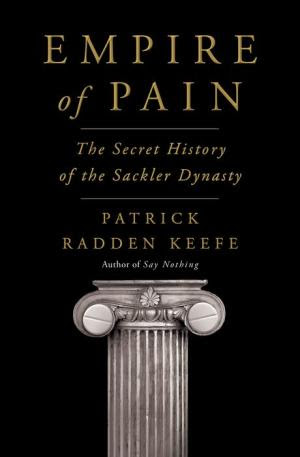
Empire of Pain: The Secret History of the Sackler Dynasty by Patrick Raddon Keefe

Empire of Pain: The Secret History of the Sackler Dynasty 
by Patrick Raddon Keefe
Read by Patrick Raddon Keefe
Published April 2021

Publisher's Summary: 
The Sackler name adorns the walls of many storied institutions—Harvard, the Metropolitan Museum of Art, Oxford, the Louvre. They are one of the richest families in the world, known for their lavish donations to the arts and the sciences. The source of the family fortune was vague, however, until it emerged that the Sacklers were responsible for making and marketing a blockbuster painkiller that was the catalyst for the opioid crisis.

Empire of Pain begins with the story of three doctor brothers, Raymond, Mortimer and the incalculably energetic Arthur, who weathered the poverty of the Great Depression and appalling anti-Semitism. Working at a barbaric mental institution, Arthur saw a better way and conducted groundbreaking research into drug treatments. He also had a genius for marketing, especially for pharmaceuticals, and bought a small ad firm.

Arthur devised the marketing for Valium, and built the first great Sackler fortune. He purchased a drug manufacturer, Purdue Frederick, which would be run by Raymond and Mortimer. The brothers began collecting art, and wives, and grand residences in exotic locales. Their children and grandchildren grew up in luxury.

Forty years later, Raymond’s son Richard ran the family-owned Purdue. The template Arthur Sackler created to sell Valium—co-opting doctors, influencing the FDA, downplaying the drug’s addictiveness—was employed to launch a far more potent product: OxyContin. The drug went on to generate some thirty-five billion dollars in revenue, and to launch a public health crisis in which hundreds of thousands would die.

This is the saga of three generations of a single family and the mark they would leave on the world, a tale that moves from the bustling streets of early twentieth-century Brooklyn to the seaside palaces of Greenwich, Connecticut, and Cap d’Antibes to the corridors of power in Washington, D.C. Empire of Pain chronicles the multiple investigations of the Sacklers and their company, and the scorched-earth legal tactics that the family has used to evade accountability. The history of the Sackler dynasty is rife with drama—baroque personal lives; bitter disputes over estates; fistfights in boardrooms; glittering art collections; Machiavellian courtroom maneuvers; and the calculated use of money to burnish reputations and crush the less powerful.

Empire of Pain is a masterpiece of narrative reporting and writing, exhaustively documented and ferociously compelling. It is a portrait of the excesses of America’s second Gilded Age, a study of impunity among the super elite and a relentless investigation of the naked greed and indifference to human suffering that built one of the world’s great fortunes.

My Thoughts: 
That smiling guy is a guy who became incredibly rich (and set up his family to become even more wealthy) by being incredibly ethically challenged. I'll give it to him - the guy was a genius and an amazingly hard worker. He had his hands in every aspect of getting new pharmaceuticals on the market and making a fortune off of them. His advertising agency(s) developed ad campaigns that inflated the efficacy of medications and downplayed the dangers; he was invested in medical journals that wrote glowing reviews of the medications his agency was pimping; and he took a cut of the sales of the medications that he advertised. It was corruption on a level I could hardly believe as I listened to this book. 

Arthur passed those ethics right on to his brothers, along with buying them a small pharmaceutical company called Purdue Frederick, a company which would eventually spin off a branch called Purdue Pharma. It developed a method of slowly releasing oxycodone and then marketed it under the name Oxycontin. 

Even as Oxycontin (along with other opioids) began to ravage the country, the Sacklers kept their hands clean. They had long kept their individual names quiet when it came to the business and they continually maintained that only people who misused Oxycontin became addicts. Not one of the heirs of the Sackler brothers, including Raymond's son, Richard, who oversaw the launch and barrage of Oxycontin on the country, has ever admitted any guilt. In fact, when it became clear that the company might be financially at risk, the family members made a money grab to protect their fortunes. 

Empire of Pain is, more or less, split into two parts - Arthur's story and the rise of the brothers he brought along with him and then the story of Oxycontin. Arthur's story is terrifically interesting, even as it made me more and more angry at the way he was able to game the system and saw nothing wrong with the way he was manipulating the market for drugs he was profiting from. 

Then the focus of the book switches. While the family continues to play a big part in the book, Oxycontin, and how it came to overtake the country, became the real story. We learn why the drug was developed, how Purdue Pharma (especially Richard) threw everything they had at making the most money they could out of it, and how medical professionals were convinced to push this product on their patients. Keefe throws a lot of the family into the picture in this part of the book, as he tries to introduce readers to all of the family members who would eventually face charges, but it became hard to keep track of who was who in this part of the book and each of them made less of an impression except in the way each of them reacted when the toil their family's business was taking on the country began to be too big to ignore. Eventually we get to the part where various people begin to try to make the family and the company accountable. To say that I was disappointed in our justice system is an understatement. Money talks. To say that I was angry is an even bigger understatement. 

My daughter was a victim of the Sacklers. I've made no secret of the fact that my daughter is a recovering addict. One of the things she was addicted to was Oxycontin. This book was personal for me. This book will be personal for anyone who knows someone who became addicted to this drug, especially those whose addiction escalated to heroin or who died from Oxycontin overdoses (that number includes people who had only taken one pill or who were taking it entirely as prescribed).

Even those of you who were never touched by this drug will find this book fascinating and eye opening. Keefe has done his research and had the courage to publish it despite threats from the Sackler family attorneys. It is a work of narrative nonfiction so it is not without some degree of bias. Still, there is more than enough history and fact here to convince me that Keefe has found the truth. 


Thursday, April 1, 2021

Louisa May Alcott: The Woman Behind Little Women by Harriet Reisin

Louisa May Alcott: The Woman Behind Little Women
by Harriet Reisen
Published October 2009 by Henry Holt and Co.
Source: checked out from my local library

Publisher's Summary:
Louisa May Alcott portrays a writer as worthy of interest in her own right as her most famous character, Jo March, and addresses all aspects of Alcott’s life: the effect of her father’s self-indulgent utopian schemes; her family’s chronic economic difficulties and frequent uprootings; her experience as a nurse in the Civil War; the loss of her health and frequent recourse to opiates in search of relief from migraines, insomnia, and symptomatic pain. Stories and details culled from Alcott’s journals; her equally rich letters to family, friends, publishers, and admiring readers; and the correspondence, journals, and recollections of her family, friends, and famous contemporaries provide the basis for this lively account of the author’s classic rags-to-riches tale. 

Alcott would become the equivalent of a multimillionaire in her lifetime based on the astounding sales of her books, leaving contemporaries like Nathaniel Hawthorne, Herman Melville, and Henry James in the dust. This biography explores Alcott’s life in the context of her works, all of which are to some extent autobiographical. A fresh, modern take on this remarkable and prolific writer, who secretly authored pulp fiction, harbored radical abolitionist views, and completed heroic service as a Civil War nurse, Louisa May Alcott is in the end also the story of how the all-time beloved American classic Little Women came to be. This revelatory portrait will present the popular author as she was and as she has never been seen before.

My Thoughts:
I'm pretty sure that I've told you before that I received a copy of Alcott's Little Women when I was eight years old. It is one of my treasures and no amount of the truth behind the book will ever change that. When I read Geraldine Brooks' March, the truth about Bronson Alcott began to be clear, as it did in Kelly O'Connor McNees' The Lost Summer of Louisa May Alcott. Still, I'm sure I was hoping that Alcott's real life hadn't been so very terrible as those ladies portrayed in their fiction. 

The truth was much worse. Bronson Alcott was a terrible selfish, single-minded man who had no real idea how to handle his headstrong second daughter and didn't seem to notice the burden he placed on his wife. Myth of Father March completely busted. What was new here was finding out that my beloved Marmee (Alcott's portrayal of her mother in Little Women) was not the saint she was made out to be, either. She followed her husband from place to place as he pursued his vision, despite the hardship to herself and her children and seems to have felt as if it were her family's and their friends' duties to support the family when times were hard (which was pretty much always). 

On the other hand, who might Louisa May Alcott have been if she had not been introduced to Ralph Also Emerson, Henry David Thoreau, Nathanial Hawthorne, and a host of well-known abolitionists? In that regard, her father served her well in drawing the family into those circles. 

I couldn't help but wonder what Louisa might have become if writing weren't the only way she could reliably make money, money that her family desperately needed. And what might she have written if she had not felt obliged to write so much of what she wrote simply because she knew that kind of story would make money. Still, Alcott turned out a mountain of writing in her lifetime, in a lot of different genres, including poetry. Reisen certainly has me wanting to scout out more of Alcott's writing than simply the works for young people which I'm so familiar with. 

Reisin was able to obtain some interviews never before published which add a lot of new information to Lousia's adult life. It wasn't an easy life, despite eventually becoming well off, able to support her family and be very generous with others. Alcott became sick nursing soldiers during the Civil War and never completely recovered; in fact, Reisen theorizes (as did Alcott) that Louisa eventually died of mercury poisoning from the calomel given to her in the hospital to treat typhoid pneumonia. She used morphine, opium, and hashish to ease her chronic pain; never married; lost two of her younger sisters; and became of the caretake of her mother and, to some extent, her father. Top all of that off with the fact that she didn't much enjoy her popularity; Reisen even called her "curmudgeonly." 

Louisa May Alcott lived an incredibly interesting life but one that, sadly, lacked the happily-ever-afters found in her most popular books. If you're a fan of Alcott's, I definitely recommend this book, as well as the documentary of the same name.