Showing posts with label World War II. Show all posts

Tuesday, August 20, 2024

The Paris Architect by Charles Belfoure

The Paris Architect by Charles Belfoure Paris Architect by Charles Belfoure
Read by Mark Bramhall
11 hours
Published October 2013 by Sourcebooks

Publisher's Summary: 
In 1942 Paris, architect Lucien Bernard accepts a commission that will bring him a great deal of money – and maybe get him killed. All he has to do is design a secret hiding place for a Jewish man, a space so invisible that even the most determined German officer won't find it while World War II rages on. He sorely needs the money, and outwitting the Nazis who have occupied his beloved city is a challenge he can't resist.

Soon Lucien is hiding more souls and saving lives. But when one of his hideouts fails horribly, and the problem of where to conceal a Jew becomes much more personal, and he can no longer ignore what's at stake.

My Thoughts: 
This book has been on my radar since shortly after it was published, but, as books do, it got pushed down the list until I couldn't remember what it was about. Not only that, but I was paying so little attention that, for some reason, I didn't really notice that picture on the cover, it was as if it were a blur to me. Now I can't imagine why I didn't see what it is and understand what the book was going to be about. As you know, though, I'm kind of a fan of going into a book unaware of what's coming. 
  • Charles Belfoure is himself an architect which becomes clear because of the detail involved in explaining both the buildings Lucien designs for the Nazis and the hiding places he designs for the Jews. 
  • Lucien is a man of questionable morals. He makes little effort to save his marriage, chases after his mistress like a school boy, justifies designing the buildings for the Nazis by convincing himself that the buildings will be used by the French after the war, and only creates the hiding places because it gets him the bigger projects and pays exceedingly well. Slowly, his eyes begin to open, his heart begins to open, and he risks himself for more than just prestige and money. 
  • There are some interesting characters in the book: Manet, the industrialist who draws Lucien into both working with the Nazis and hiding the Jews; Herzog, the Wehrmacht officer in charge of the buildings Lucien is designing, who Lucien develops a bond with; and Pierre, a French Jewish boy who comes to live with Lucien after his entire family is killed. 
  • I wish Belfoure would have spent more time developing these characters and less time writing about sexual exploits and torture for a particularly horrible Nazi soldier. You can imagine how unprepared I was for those, having had no idea what I was getting into when I picked up the book - I had to fast forward over them, they were so gruesome. 
  • I found the ending very satisfying. That last hour of the book held some surprises, some people got what they deserved, some people turned out to be more than I expected. 

Wednesday, July 3, 2024

The Keeper of Hidden Books by Madeline Martin

The Keeper of Hidden Books
by Madeline Martin
Read by Saskia Maarleveld
10 hours, 53 minutes
Published August 2023 by Hanover Square Press

Publisher's Summary: 
All her life, Zofia has found comfort in two things during times of hardship: books and her best friend, Janina. But no one could have imagined the horrors of the Nazi occupation in Warsaw. As the bombs rain down and Hitler's forces loot and destroy the city, Zofia finds that now books are also in need of saving.

With the death count rising and persecution intensifying, Zofia jumps to action to save her friend and salvage whatever books she can from the wreckage, hiding them away, and even starting a clandestine book club. She and her dearest friend never surrender their love of reading, even when Janina is forced into the newly formed ghetto.

But the closer Warsaw creeps toward liberation, the more dangerous life becomes for the women and their families - and escape may not be possible for everyone. As the destruction rages around them, Zofia must fight to save her friend and preserve her culture and community using the only weapon they have left - literature.

My Thoughts: 
Aggghh! This is one of those books that I didn't write a review for soon enough and my thoughts have kind of been lost to me so I'm going to piece things together as best I can. As always, let's start with the things that didn't work for me and work our way to what I liked about this book (I always like to end things on a positive note, when I can!).

What Didn't Work For Me: 
  • Books played a major role in this book, and Zofia's life, until they didn't. Suddenly, she became a resistance fighter for that last quarter (?) of the book. Nothing wrong with that, it felt true to Zofia's nature, but it seemed to veer away from what the premise of the book had been. 
  • Even before the Nazis invade Poland, Zofia, Janina and another friend are already reading, as a group, books that Hitler has banned in Germany. A couple of other girls in their school horn in on their group, girls it's clear that Zofia doesn't really like. But it quickly becomes clear that these girls have interesting thoughts about the books and are really contributing to the discussions. I never felt like they really became part of Zofia's circle or that she acknowledged that she may have misjudged them so it felt odd to me that they brought into the story and remained there, as peripheral characters, to the end. 
  • Things began to feel rushed to me as the book went on and time sort of collapsed. 
What I Liked: 
  • Of course, I loved that so much of this book centered around books being a driving force in educating people, in being a part of their culture, and in being a way to help them survive the worst. I loved seeing these people so passionate about saving these books not only because books are so important to them but also as an act of rebellion. These people were, quite literally, willing to put down their lives in defense of books. 
  • Zofia's and Janina's relationship. Their friendship never wavered and Zofia was willing to do anything (and did) to protect and help Janina. 
  • In fact, a lot of the relationships, including Zofia's and her mother's, which changed tremendously throughout the book. Also, I appreciated that while Zofia and a young man who joins their group are clearly falling in love, nothing happens between them until the very end - it's logical that strong emotions would occur but a romance in the middle of the book would have felt out of place. 
  • I've read a lot about what the Nazis did to the Jews in Germany, much less about what happened in Poland so I found this book a good reminder of what it was like to be in Warsaw and Poland, not just as a Jew but as a Pole. And, if I'd known, I'd forgotten, that the Soviets came into Poland, not so much to chase out the Germans but to take over. 
Overall, I enjoyed the book and would definitely recommend it for book clubs as there is so much to discuss in the book. 

Tuesday, June 18, 2024

The Secret Book of Flora Lea by Patti Callahan Henry

The Secret Book of Flora Lea
by Patti Callahan Henry
Read by Cynthia Erivo 
12 hours, 24 minutes
Published May 2023 by Atria Books

Publisher's Summary: 
1939: Fourteen-year-old Hazel and five-year-old Flora evacuate their London home for a rural village to escape the horrors of the Second World War. Living with the Aberdeen family in a charming stone cottage, Hazel distracts her young sister with a fairy tale about a magical land, a secret place they can escape to that is all their own: Whisperwood.

But the unthinkable happens when Flora suddenly vanishes after playing near the banks of the River Thames. Shattered, Hazel blames herself for her sister’s disappearance, carrying the guilt into adulthood.

Twenty years later, Hazel is back in London, ready to move on from her job at a cozy rare bookstore for a career at Sotheby’s. With a cherished boyfriend and an upcoming Paris getaway, Hazel’s future seems set. But her tidy life is turned upside down when she unwraps a package containing a picture book called Whisperwood and the River of Stars. Hazel never told a soul about the storybook world she created just for Flora. Could this book hold the secrets to Flora’s disappearance? Could it be a sign that her beloved sister is still alive after all these years? Or is something sinister at play?


My Thoughts: 
This book was suggested by a friend to whom it was recommended. You know, lately if someone recommends a book, I immediately request it from the library, knowing that if I don't, it will live on the TBR list for, perhaps, decades. Because I seem to be able to "read" a book much faster if it's audio these days, that's what I requested and I'm glad that I did because it's the perfect kind of book for listening. Cynthia Erivo is an excellent reader and her being British made that much more of a connection to the book. 

What Didn't Work for Me:
  • That "cherished" boyfriend? It takes readers almost no time at all to figure out that he's going to be left behind, although he seems to have no flaws right up until the time that it's essential that he have them. And I didn't buy into the relationship that caused Hazel to leave him. 
  • Aberdeen seems to have made such a deep impression on Hazel that she cannot let it go. But while Flora seemed equally attached to the people there, Hazel had to continually tell her that she could not go to Whisperwood (aka the river nearby) because Flora was so eager to get away. 
  • Some things felt predictable, others a bit forced.
  • Although the ending is unexpected, it is also a little disappointing, in that it doesn't tie together with the book that suddenly appeared other than having the book inspire Hazel to begin her search again. 
What I Liked: 
  • The setting and the time frame. While I often feel I'm over reading WWII books, how the British survived still fascinates me, particularly the idea of Londoners sending their children off to the countryside to live with strangers. 
  • The world of Whisperwood that Hazel created to help help both Hazel and herself survive the upheaval in their lives. It felt so natural that she would do that to protect her sister's peace and fit in so well with the world they were living in at that time. 
  • Life in Aberdeen. There were plenty of interesting characters that felt just right for a small, countryside town and the descriptions of the land made me want to visit. 
  • The story of the author of the book that Hazel discovers who has her own battles to fight. 
  • Yes, I know I said the ending was a little disappointing, it was satisfying in other ways. The truth behind Flora's disappearance was a surprise to me and I appreciated the way that the characters involved in that piece reacted to the reveal. Things didn't end too tidily. 
It's not great literature but, as Kirkus Reviews said, it was enchanting for the most part. Book clubs would find plenty to talk about and, as I said, the reading is very good. 

Thursday, September 21, 2023

All The Broken Places by John Boyne

All The Broken Places
by John Boyne
Read by Kristin Ahterton and Helen Lloyd 
12 hours 42 minutes
Published November 2022 by Penguin Publishing Group

Publisher's Summary: 
Ninety-one-year-old Gretel Fernsby has lived in the same well-to-do mansion block in London for decades. She lives a quiet, comfortable life, despite her deeply disturbing, dark past. She doesn’t talk about her escape from Nazi Germany at age 12. She doesn’t talk about the grim post-war years in France with her mother. Most of all, she doesn’t talk about her father, who was the commandant of one of the Reich’s most notorious extermination camps. 

Then, a new family moves into the apartment below her. In spite of herself, Gretel can’t help but begin a friendship with the little boy, Henry, though his presence brings back memories she would rather forget. One night, she witnesses a disturbing, violent argument between Henry’s beautiful mother and his arrogant father, one that threatens Gretel’s hard-won, self-contained existence. 

All The Broken Places moves back and forth in time between Gretel’s girlhood in Germany to present-day London as a woman whose life has been haunted by the past. Now, Gretel faces a similar crossroads to one she encountered long ago. Back then, she denied her own complicity, but now, faced with a chance to interrogate her guilt, grief and remorse, she can choose to save a young boy. If she does, she will be forced to reveal the secrets she has spent a lifetime protecting. This time, she can make a different choice than before—whatever the cost to herself….

My Thoughts: 
I did that thing again, the thing where I don't finish listening to a book before my loan expires and then months later, when I finally get it back again, I can't remember a thing I listened to before and I have to go back aways into the book to refresh my memory. In no time, though, I was once again swept into this book and everything it made me feel. 

In 2006, Boyne wrote the bestseller The Boy In The Striped Pajamas. Readers of that book will recognize the main character in this book. Gretel Fernsby was 12 years old in that first book. Almost 80 years later, she is still living with the guilt of what she did then and what her father (and, by extension, her family) did and stood for. 

Here we are centered on present-day Gretel, but Boyne drops us back in to different times in Gretel's life. First to the time she and her mother spent in Paris, then to the time she spent in Australia, then to her early life with her late husband and son. In all of those places, Gretel is faced with the repercussions of what her father did, of her own feelings about it, of her implicate others who were guilty of heinous acts. But Gretel has been living for a long time with the past buried, in no small part because she keeps so much to herself. But young Henry has brought back the memory of what Gretel did to her brother and she finally sees a way to at least partially redeem herself. 

Like The German Wife, this book left me with mixed feelings about the main character. How much of what happened in those camps is she complicit in? What is her responsibility to those who died and those who suffered? Are we meant to feel sorry for her or should she be punished for what she did (or didn't) do? To be fair, Gretel was a young girl, not able to stop anything. But she could, in later years, have done more and it's hard to forgive her for that. Especially in light of the fact that she seems to feel much greater guilt for what happened to her brother than what happened to the millions of others who died. I wanted her to make things right in some way and here Boyne did not disappoint. 

I definitely recommend the audiobook (although I'm sure it's great in print, as well) and can imagine that this book would give book clubs a lot to talk about. 

Wednesday, May 31, 2023

The German Wife by Kelly Rimmer

The German Wife
by Kelly Rimmer
13 hours, 49 minutes
Read by Nancy Peterson and Ann Marie Gideon
Published June 2022 by Graydon House Publishing

Publisher's Summary: 
Berlin, 1930—When a wave of change sweeps a radical political party to power, Sofie von Meyer Rhodes’s academic husband benefits from the ambitions of its newly elected chancellor. Although Sofie and Jürgen do not share the social views growing popular in Hitler’s Germany, Jürgen’s position with its burgeoning rocket program changes their diminishing fortunes for the better. But as Sofie watches helplessly, her beloved Berlin begins to transform, forcing her to consider what they must sacrifice morally for their young family’s security, and what the price for their neutrality will be. 

Twenty years later, Jürgen is one of the many German scientists offered pardons for their part in the war, and taken to America to work for its fledgling space program. For Sofie, this is the chance to exorcise the ghosts that have followed her across the ocean, and make a fresh start in her adopted country. But her neighbors aren’t as welcoming or as understanding as she had hoped. When scandalous rumors about the Rhodes family’s affiliation with Hitler’s regime spreads, idle gossip turns to bitter rage, and the act of violence that results will tear apart Sofie’s community and her family before the truth is finally revealed.

My Thoughts: 
Another book recommended by a coworker - the same coworker who recommended Every Summer After. She recommended this one for very different reasons. She wanted me to read it because she wanted to talk about it with someone because it was a book that really had her thinking. I'm pretty picky about what books set around World War II that I'll read. It's really got to be a book with an entirely new take on that war and that's a tough thing to do after all these years and all the thousands of books written about it. 

Written recently enough that Rimmer can pull readers in by touching on current events, she's able to make readers see how easy it was for everyday Germans overlook what was happening to their country prior to the rise to the top of the Nazi party. Once you can understand that, you begin to understand the fear of having waited too long to stand up to them. And once you understand that, then you begin to understand how a person could make decisions that others would later judge, perhaps without understanding the helplessness of the people making those choices. But then again, where do you draw the line, when have those choices become unforgivable? Here it becomes the classic train line conundrum - would you choose to save one person you love at the risk of many more people you don't know? 

Not unexpectedly, this book is full of deep themes - grief, loss of dreams, death, religious persecution, the cost of war, mental illness, marriage, family, and love. Rimmer uses alternating points of view as she moves back and forth in time, bringing Lizzie and Sofie together where their histories collide.

In the end, the question we're left with is what makes a person good or bad? And then she makes us realize how easy it can be for someone to steer our thinking. In the Author's Note, Rimmer, after spending the book leading readers to consider this differently than they might have before they came to "know" the characters, leaves the reader with this - she still believes that the characters had choices to make and that they should be held accountable for those choices, regardless of the reason they made them. 

If you choose to read this one (or if you have already), I'd love to hear your thoughts! If you haven't read it yet, I can't recommend the audiobook highly enough. Peterson and Gideon do a terrific job, both pulling off their character's accents marvelously, creating an even deeper impression that we are really getting to know these women. 

Monday, December 26, 2022

Mercury Pictures Presents by Anthony Marra

Mercury Pictures Presents
by Anthony Marra
Read by Carlotta Brentan
14 hours
Published August 2022 by Penguin Random House Audio Publishing Group

Publisher's Summary: 
Like many before her, Maria Lagana has come to Hollywood to outrun her past. Born in Rome, where every Sunday her father took her to the cinema instead of church, Maria immigrates with her mother to Los Angeles after a childhood transgression leads to her father’s arrest.

Fifteen years later, on the eve of America’s entry into World War II, Maria is an associate producer at Mercury Pictures, trying to keep her personal and professional lives from falling apart. Her mother won’t speak to her. Her boss, a man of many toupees, has been summoned to Washington by congressional investigators. Her boyfriend, a virtuoso Chinese American actor, can’t escape the studio’s narrow typecasting. And the studio itself, Maria’s only home in exile, teeters on the verge of bankruptcy.

Over the coming months, as the bright lights go dark across Los Angeles, Mercury Pictures becomes a nexus of European émigrés: modernist poets trying their luck as B-movie screenwriters, once-celebrated architects becoming scale-model miniaturists, and refugee actors finding work playing the very villains they fled. While the world descends into war, Maria rises through a maze of conflicting politics, divided loyalties, and jockeying ambitions. But when the arrival of a stranger from her father’s past threatens Maria’s carefully constructed facade, she must finally confront her father’s fate—and her own.

My Thoughts: 
Because I did what I so often did, I jumped into this one solely based on the title and author, without regard to the summary. So it wasn't what I expected or even what I thought I was getting in the beginning of the book. 

We begin thinking that this book is the story of the battle between two brothers (the creative force, Artie, and the money man, Ned) who own a studio that puts out B-movies and is in danger of going under. That storyline, as it turns out, is merely the scaffolding that the rest of the book will be built upon. The book, as it turns out, is the story (and backstory) of a group of immigrants whose lives intertwine with the studio. Maria, who came to the U.S. with her mother after her attorney father was sent to confino by Mussolini's government; Eddie Liu, who can't get a leading role until he can because he's allowed to play the bad guy in propaganda movies; Anna Weber, who lost everything when she refused to become the architect of the 1936 Olympics in Berlin; and Vincent Cortese, photographer, who spends all of his life in the U.S. being someone other than who he had been in Italy. 

It's an epic work, that, through Marra's way of storytelling, spans both just a few years and decades, blending humor and darkness. The New York Times reviewer did seem to have an issue with this combination. But isn't that the way of life, that even in the darkest of times, there are things that are humorous? Through its cast, Marra is able to tell a number of stories of war, immigration, propaganda, and racism. There's a lot here to digest and I think it would make a great book for book clubs, in that regard. I did, maybe partly because I was listening (although Carlotta Brentan is very good), sometimes find myself lost as to where the story was and how things tied together. I didn't entirely ever find my way back from that. But even taken as individual stories, there was enough here to keep my interest; and, in the end, I really enjoyed this book and the way Marra ended it. 

Tuesday, February 8, 2022

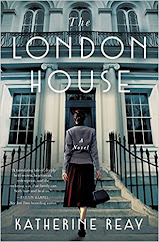
The London House by Katherine Reay

The London House
by Katherine Reay
Published November 2021 by Harper Muse
368 pages

Publisher's Summary: 
Uncovering a dark family secret sends one woman through the history of Britain’s World War II spy network and glamorous 1930s Paris to save her family’s reputation.

Caroline Payne thinks it’s just another day of work until she receives a call from Mat Hammond, an old college friend and historian. But pleasantries are cut short. Mat has uncovered a scandalous secret kept buried for decades: In World War II, Caroline’s British great-aunt betrayed family and country to marry her German lover.

Determined to find answers and save her family’s reputation, Caroline flies to her family’s ancestral home in London. She and Mat discover diaries and letters that reveal her grandmother and great-aunt were known as the “Waite sisters.” Popular and witty, they came of age during the interwar years, a time of peace and luxury filled with dances, jazz clubs, and romance. The buoyant tone of the correspondence soon yields to sadder revelations as the sisters grow apart, and one leaves home for the glittering fashion scene of Paris, despite rumblings of a coming world war.

Each letter brings more questions. Was Caroline’s great-aunt actually a traitor and Nazi collaborator, or is there a more complex truth buried in the past? Together, Caroline and Mat uncover stories of spies and secrets, love and heartbreak, and the events of one fateful evening in 1941 that changed everything.

In this rich historical novel from award-winning author Katherine Reay, a young woman is tasked with writing the next chapter of her family’s story. But Caroline must choose whether to embrace a love of her own and proceed with caution if her family’s decades-old wounds are to heal without tearing them even further apart.

My Thoughts: 
I don't remember where I heard about this book. I almost certainly would not have picked up a book with World War II as a piece of the story with having people recommend it to me. But I made an exception for this one because the piece I read mentioned a connection in the book to the designed Elsa Schiaparelli. I have a degree in fashion merchandising; I studied Elsa Schiaparelli so it was the perfect hook for me. 

Ms. Schiaparelli herself, I was disappointed to find, plays a small role in the book. There is too much going on in this book for her to pay a much larger role. There is, in fact, too much going on here. Reay tries to balance the story line of Caroline Waite's role in the war and her relationship with her family (particularly her twin sister, Caroline Payne's grandmother) with the story line of the tragedy that happened in Caroline Payne's life and its aftermath and the storyline of Caroline Payne's relationship with Mat. I found myself wishing that Reay would have found another way for Caroline Payne to wind up researching her great-aunt's past; we knew, after all, how the arc of Caroline's and Mat's storyline was going to go from the beginning. And all of it doesn't allow as much time for character development as Reay might have been able to do if she'd have had a tighter story. 

Putting all of that aside, I did like the storyline of the relationship between the Waite sisters and how their roles in life flipped over the course of one summer and how one omission changed their relationship for the rest of their lives. I enjoyed the way the pieces of what happened to Caroline Waite were discovered and came together and how they eventually led them to a satisfying conclusion. Some pieces were the happily ever after I expected, others were the ending I felt was more realistic than the happily ever after would have been. 

The Tear Dress, Elsa Schiaparelli,
Wallis Simpson wearing The Lobster Dress
House of Schiaparelli itself plays a bigger role, the place that first draws Caroline Waite to Paris, the place where she first becomes engaged in the politics leading up to the war and where she meets the woman who will drive her to become a spy. It was a good hook that taught me more about Shiaparelli's politics and her relationship with the artist Salvador Dali than what I had learned in college. You know how I love a book that teaches me new things!

Despite its flaws, I think this is a book that fans of historical fiction, particularly historical fiction that focuses on women's roles, will appreciate.


Tuesday, November 16, 2021

A God In Ruins by Kate Atkinson

A God In Ruins by Kate Atkinson
Read by Alex Jennings
Published May 2015 by Litte, Brown and Company

Publisher's Summary:
"He had been reconciled to death during the war and then suddenly the war was over and there was a next day and a next day. Part of him never adjusted to having a future." 

Kate Atkinson's dazzling Life After Life explored the possibility of infinite chances and the power of choices, following Ursula Todd as she lived through the turbulent events of the last century over and over again. A God in Ruins tells the dramatic story of the 20th Century through Ursula's beloved younger brother Teddy — would-be poet, heroic pilot, husband, father, and grandfather — as he navigates the perils and progress of a rapidly changing world.

After all that Teddy endures in battle, his greatest challenge is living in a future he never expected to have.

My Thoughts: 
In a year of great books, Life After Life, was one of my favorites. It went without saying that I would read A God In Ruins; I couldn't wait to see what Atkinson had in store for readers after the ride she took us on in Life After Life

Life After Life is written in a way that very much reflects its very vital protagonist, with its unique format and vivid settings. A God In Ruins is written in very much the same way, except that in this book, we are following the life of a very quiet man (the god of the title) who has lived a very quiet life after his service as a pilot during World War II. He marries the girl he's expected to marry, the girl next door, even though while he loves her, he is certain that he is not in love with her. His career path is unspectacular, his only child is a disappointment who seems not to care very much about him, and his one claim to fame seems to be the books that his aunt wrote that were based on him for their title character. 

Atkinson mostly alternates between Teddy's years in service and his life in post-World War II England but the book begins with a look back at Teddy's childhood years and then jumps forward 45 years to his daughter's life as commune-living hippie who is married to an unsuccessful painter. It quickly becomes apparent that this book, like life After Life, will not have a traditional narrative although it will have a much quieter one. Teddy, like his wife, Nancy, when she discovers she has cancer, and his daughter, Violet, when she tries of writing successful novels, has resigned himself to his life. He is fine, has always been fine, with letting life play out as it will. 
“Now it was settled, now there were no more possibilities.”
Teddy's life is something of a reflection of all of England, post-war. It feels muted. Even when Teddy becomes convinced that his wife is having an affair, there is no real explosion of emotion. Which is not to say that Teddy is without emotion, he just seems incapable of truly expressing it and sometimes, it seems, that is for the best. Teddy is at his best as a pilot because of this and those scenes are the most vivid and alive of the book. 
"He had been reconciled to death during the war and then suddenly the war was over and there was a next day and a next day. Part of him never adjusted to having a future." 
Just when I was certain that the book would end as quietly as Teddy's live has been lived, Atkinson made me gasp. And that was exactly what made the rest of the book feel entirely different. One of my favorite book endings in a long while. 


Monday, May 18, 2020

The Splendid and The Vile by Erik Larson

The Splendid and The Vile by Erik Larson
Read by John Lee
Published February 2020 by Crown Publishing Group
Source: audiobook checked out from my local library

Publisher's Summary: 
On Winston Churchill’s first day as prime minister, Adolf Hitler invaded Holland and Belgium. Poland and Czechoslovakia had already fallen, and the Dunkirk evacuation was just two weeks away. For the next twelve months, Hitler would wage a relentless bombing campaign, killing 45,000 Britons. It was up to Churchill to hold his country together and persuade President Franklin Roosevelt that Britain was a worthy ally—and willing to fight to the end.

In The Splendid and the Vile, Erik Larson shows, in cinematic detail, how Churchill taught the British people “the art of being fearless.” It is a story of political brinkmanship, but it’s also an intimate domestic drama, set against the backdrop of Churchill’s prime-ministerial country home, Chequers; his wartime retreat, Ditchley, where he and his entourage go when the moon is brightest and the bombing threat is highest; and of course 10 Downing Street in London. Drawing on diaries, original archival documents, and once-secret intelligence reports—some released only recently—Larson provides a new lens on London’s darkest year through the day-to-day experience of Churchill and his family: his wife, Clementine; their youngest daughter, Mary, who chafes against her parents’ wartime protectiveness; their son, Randolph, and his beautiful, unhappy wife, Pamela; Pamela’s illicit lover, a dashing American emissary; and the advisers in Churchill’s “Secret Circle,” to whom he turns in the hardest moments.

The Splendid and the Vile takes readers out of today’s political dysfunction and back to a time of true leadership, when, in the face of unrelenting horror, Churchill’s eloquence, courage, and perseverance bound a country, and a family, together.


My Thoughts: 
This is essentially the story of Winston Churchill's first year as Great Britain's prime minister, just as World War II really began to take off and Hitler set his sites on England. In a normal life, at a normal time, one year might not amount to much. But this was not, obviously, a normal time. It's no surprise to find, in listening to this book, that Winston Churchill was the right man for Great Britain in a time of war. Despite almost certain destruction (and let's be honest, if the United States had not gotten into the war, Great Britain would almost certainly have fallen), Churchill managed to keep his nation's spirits high. He did it in no small part by being astonishingly calm throughout the bombing of London, often refusing to leave 10 Downing Street during bombing raids. Churchill also seemed to have had an uncanny knowledge of how to get Franklin Roosevelt to step up and help, working behind the scenes to get what he needed long before the U. S. finally came to England's aid.

The Splendid and The Vile is not just a book about Churchill but also those who surrounded him, his family, his aids, the people who helped save England and also, to an extent, the German leaders. It being written by Larson, the book is exceedingly well researched and the stories of everyone involved are woven together so that readers can see the full picture of what Churchill was going through both as Prime Minister and husband and father. Larson does a tremendous job of making readers feel what it must have been like to have lived in England during the bombing and he doesn't spare readers the brutality those bombs wrought. It's not an easy read.

When I pick up a book by Larson, I know I'm going to learn things that you won't find in your history books unless you're a scholar of that time and place. For example, I had no idea that Rudolph Hess had flown a plane to England, believing he might be able to bring England to the negotiating table and thus avoid war on two fronts.

The book includes an epilogue detailing what became of most of the main players in the book. The audiobook also includes, as a bonus, a Christmas speech Churchill gave after the war. I imagine the print book includes photos and I do love photos in history books. But if I'd picked it up in print, I would have missed John Lee's remarkable reading of the book.


Wednesday, April 8, 2020

Transcription by Kate Atkinson

Transcription by Kate Atkinson
Read by Fenella Woolgar
Published September 2018 by Little, Brown and Company
Source: audiobook checked out from my local library

Publisher’s Summary:
In 1940, eighteen-year old Juliet Armstrong is reluctantly recruited into the world of espionage. Sent to an obscure department of MI5 tasked with monitoring the comings and goings of British Fascist sympathizers, she discovers the work to be by turns both tedious and terrifying. But after the war has ended, she presumes the events of those years have been relegated to the past forever. 


Ten years later, now a radio producer at the BBC, Juliet is unexpectedly confronted by figures from her past. A different war is being fought now, on a different battleground, but Juliet finds herself once more under threat. A bill of reckoning is due, and she finally begins to realize that there is no action without consequence.

My Thoughts:
Let’s just start with the reading, shall we? Fenella Woolgar is marvelous and deserves to be recognized and if I wait to tell you about here until the end, you might have already stopped reading. This is the second of Atkinson’s books that I’ve listened to her read and, while I’m certain I would have been impressed with the books in print, Woolgar’s reading adds so much to the books. So much so that I’ve placed a hold on Tracy Chevalier’s latest, A Single Thread, for the sole reason that Woolgar is reading it.

Now, on to the story.
“Juliet had stopped going to that school, stopped preparing for that bright future, so that she could care for her mother—there had always been only the two of them—and had not returned after her mother’s death. It seemed impossible somehow. . . . That girl, transmuted by bereavement, had gone. And, as far as Juliet could tell, she had never really come back.”
Without any attachments, Julia is just the kind of girl MI5 is looking for. Young, naïve, and alone, she is easily scooped up into the world of espionage. Initially recruited into the secretarial pool, Julia is soon part of a “high tech” surveillance team. Her job is to transcribe recordings of meetings between an MI5 agent, Godfrey Toby who is posing as a German government agent, and a group of Fifth Columnists (“a group of secret sympathizers or supporters of an enemy that engage in espionage or sabotage within defense lines or national borders” – I had to look it up and thought you might not know that phrase, either). It’s dull work in the beginning and, as the only woman on the team, Juliet is often called on to do the kinds of things the men think of as “women’s work.” Our girl Juliet is keenly aware of the slight.

But let’s not to be too hasty in calling Juliet a feminist. To fill her days, young Juliet spends a lot of time fantasizing about a romantic relationship with her handsome boss, Peregrine Gibbons. Perry shows an interest in her that, as it turns out, is not in the least bit romantic. Instead, Perry has chosen Juliet to act as a double agent. As Iris Carter-Jenkins, Juliet is handed a gun, an imaginary fiancé, and very little in the way of training. In no time at all, “Iris” has befriended Mrs. Scaife (a wealthy anti-Semitic) and the Fifth Column. She takes to it like water. It turns out all of the women in the book are masters at assuming whatever identity is needed at the time, a trick we women all now only too well.

After the war, Juliet is working as a producer on “that other great national monolith,” the BBC. Ironically, she is in charge of a program called “Past Lives.” It’s her own past life that is haunting her so badly that she becomes convinced that ghosts from the past have returned to punish her. As it turns out they have… in more ways than one.

The review of this book in the New Yorker suggests - no, out and out says – that Atkinson’s style “isn’t terribly distinctive.” Yet, if you’ve read any of her books, I’d bet you’ll disagree. She has, to my way of thinking a very distinctive style that sucks me into her books and which I think is marvelous. Her, as in her other books, there is both a nostalgia and a sense that the blinders are off and she sees the truth behind the façade. Was this my favorite of her books? No. Life After Life still holds that spot. But I enjoyed this one from the first and loved the way Atkinson bounced me around and then turned everything upside down.


Wednesday, February 26, 2020

Code Name Helene by Ariel Lawhon

Code Name Helene by Ariel Lawhon
Published March 2020 by Knopf Doubleday Publishing Group
Source: my copy courtesy of the publisher, through Netgalley, in exchange for an honest review

Publisher's Summary:
Told in interweaving timelines organized around the four code names Nancy used during the war, Code Name Hélène is a spellbinding and moving story of enduring love, remarkable sacrifice and unfaltering resolve that chronicles the true exploits of a woman who deserves to be a household name.

It is 1936 and Nancy Wake is an intrepid Australian expat living in Paris who has bluffed her way into a reporting job for Hearst newspaper when she meets the wealthy French industrialist Henri Fiocca. No sooner does Henri sweep Nancy off her feet and convince her to become Mrs. Fiocca than the Germans invade France and she takes yet another name: a code name.

As LUCIENNE CARLIER Nancy smuggles people and documents across the border and earns a new nickname from the Gestapo for her remarkable ability to evade capture: THE WHITE MOUSE. With a five million franc bounty on her head, Nancy is forced to escape France and leave Henri behind. When she enters training with the Special Operations Executives in Britain, she is told to use the name HÉLÈNE with her comrades. And finally, with mission in hand, Nancy is airdropped back into France as the deadly MADAM ANDRÉE, where she claims her place as one of the most powerful leaders in the French Resistance, known for her ferocious wit, her signature red lipstick, and her ability to summon weapons straight from the Allied Forces. But no one can protect Nancy if the enemy finds out these four women are one and the same, and the closer to liberation France gets, the more exposed she—and the people she loves—will become.

My Thoughts:
At the conclusion of this book, Lawhon's Author's Note alerts readers to the fact that Nancy Wake was a real person, that a great deal of this book is based on the facts of her life. But she opens that Note with this: "Readers, beware...If you begin this journey here, your reading experience here, your reading experience will be altered. It will be a bit like watching a magic act after you've learned how the rabbit is smuggled into the hat." I'd offer the same caution. DO NOT look up Nancy Wake before you finish this book. You do not want to know ahead of time what will happen, particularly given that Lawhon has hewed so closely to reality and you don't want to spend any part of the book trying to figure out where the facts have been altered. As Lawhon advises: "...start at the beginning and let the show proceed as planned."

And what a show it is.

Again and again I find myself picking up books about World War II. I keep saying that I'm over World War II books. What more could there be to say that I haven't read yet? And then I find a book about a part of that war that I haven't read about before. Well, I knew about the French Resistance, of course. But I didn't know about an Australian woman who was integral to a part of the Resistance, working with the British.

The book opens with Nancy (as Helene) parachuting into France and from there Lawhon blends Nancy's story as a resistance fighter in 1944 with the history of the events that brought her to that point from 1936. It's a dual narrative that works exceedingly well, as Nancy's past works its way to that night when she parachuted her way back into France. Lawhon does a marvelous job of building the tensions in both narratives, of creating characters that the reader cares about, and of engaging all of the reader's senses.

Nancy Wake is an amazing characters; it's even more amazing to realize that she was a real woman. Lawhon's incredible research has allowed her to bring the real Nancy's story come to life in all of its glamour, ugliness, terror, and passion. I was wrapped up in it almost from the beginning. The only fault that I found in the book was that the ending dragged a bit for me but that was a small complaint in a book that I very much enjoyed otherwise.My favorite part? That's a tie. I adored Nancy's and Henri's love story. But then I also loved Nancy putting on her lipstick and being the boss lady.

 I highly recommend it, although I would forewarn readers that there are some very graphic scenes, as you might expect in a book about war.

Wednesday, February 12, 2020

Wolf by Herbert J. Stern and Alan A. Winter - Guest Review

Wolf by Herbert J. Stern and Alan A. Winter
Published February 2020 by Skyhorse
Source: my copy courtesy of the publisher, through TLC Book Tours, in exchange for an honest review

Publisher's Summary:
Perhaps no man on Earth is more controversial, more hated, or more studied than Adolf Hitler. His exploits and every move are well-documented, from the time he first became chancellor and then dictator of Germany to starting World War II to the systematic killing of millions of Jews. But how did he achieve power, and what was the makeup of the mind of a man who would deliberately inflict unimaginable horrors on millions of people?

Meet Friedrich Richard, an amnesiac soldier who, in 1918, encounters Hitler in the mental ward at Pasewalk Hospital. Hitler, then a corporal, diagnosed as a psychopath and helpless, suffering from hysterical blindness, introduces himself as Wolf to Friedrich and becomes dependent upon Friedrich for assistance, forming an unbreakable bond between the two men.

Follow Friedich—our protagonist—who interacts with real people, places, and events, through the fifteen-year friendship that witnesses Hitler turn from a quiet painter into a megalomaniacal dictator. Using brand-new historical research to construct a realistic portrait of the evolving Hitler, Wolf will satisfy, by turns, history buffs and fiction fans alike. And as this complex story is masterfully presented, it answers the question of how a nondescript man became the world’s greatest monster.


My Thoughts:
When I was asked to review this book, I thought it sounded like something that might interest me. But I felt like it was even more likely to be something that would interest my husband. Here is his guest review:

I have always been drawn to Germany between the two wars and the reasons Germany and Hitler were able to pull off the massive infrastructure buildup along with the mass psychology Hitler used to motivate and gain the approval of the majority of the German people.  I also tend to enjoy historical fiction, such that from James Michener and the Flashman Chronicles.

This book is also timely as parallels could be made with the megalomanic in office currently who seems enamored and friendly with dictators while some groups seem intent to either empower or quietly watch and do nothing.

I did like the tone of the characters and enjoyed most of the characters including Friedrich.  Some could certainly fault him for being duped into thinking Hitler was a good thing for Germany and getting caught up in the Reich glam despite being warned by many friends or associates.  Of course, due to economic and political circumstances of the time and the fact that the majority of Germany felt the same way, it is believable and we might be forgiving.

I do believe the dual authors did a nice job of showing the development of Hitler and the party, but it did seem a bit too accurately architected by Hitler, where I would guess it was a bit more messy and he lucked out in many instances.

As I was reading, I was not sure how I was meant to feel about Hitler as the authors did not make him seem the monster we have grown to love thorough much of the book outside of his hatred of the Jews, but it could be easy to over do his evil and focus on it to the point of overpowering the book.

I believe this book can appeal to a fairly broad group where one would believe a book about Hitler and WWII might  be more of a guy thing.  Since there are a great deal of strong women involved with Friedrich and others, it weaves a nice pattern of relationships that come and go and circle back again.  This makes it more interesting and easy to read while getting the political, economic and psychological information across without being too dry and monotonous.

That being said as I am a bit attention deficit, I could lose 100 of the 539 pages and be good with it, but it slides along well for a story of this girth.  Definitely an interesting an worthwhile read in my view.

Jeff


For other opinions about this book, check out the full tour here. Thanks to the folks at TLC Book Tours for including us on this tour!

About Herbert J. Stein

Herbert J. Stern, formerly US attorney for the District of New Jersey, who prosecuted the mayors of Newark, Jersey City and Atlantic City, and served as judge of the US District Court for the District of New Jersey, is a trial lawyer. He also served as judge of the United States Court for Berlin. There he presided over a hijacking trial in the occupied American Sector of West Berlin. His book about the case, Judgment in Berlin, won the 1974 Freedom Foundation Award and became a film starring Martin Sheen and Sean Penn. He also wrote Diary of a DA: The True Story of the Prosecutor Who Took on the Mob, Fought Corruption, and Won, as well as the multi-volume legal work Trying Cases to Win.

About Alan A. Winters

Alan A. Winter is the author of four novels, including Island Bluffs, Snowflakes in the Sahara, Someone Else’s Son, and Savior’s Day, which Kirkus selected as a Best Book of 2013. Winter graduated from Rutgers University with a degree in history and has professional degrees from both New York University and Columbia, where he was an associate professor for many years. He edited an award-winning journal and has published more than twenty professional articles. Alan studied creative writing at Columbia’s Graduate School of General Studies. His screenplay, Polly, received honorable mention in the Austin Film Festival, and became the basis for Island Bluffs.

Wednesday, August 28, 2019

Mistress of the Ritz by Melanie Benjamin

Mistress of the Ritz by Melanie Benjamin
Published May 2019 by Random House Publishing Group
Source: checked out from my local library

Publisher's Summary:
Nothing bad can happen at the Ritz; inside its gilded walls every woman looks beautiful, every man appears witty. Favored guests like Ernest Hemingway, F. Scott Fitzgerald, Coco Chanel, and the Duke and Duchess of Windsor walk through its famous doors to be welcomed and pampered by Blanche Auzello and her husband, Claude, the hotel’s director. The Auzellos are the mistress and master of the Ritz, allowing the glamour and glitz to take their minds off their troubled marriage, and off the secrets that they keep from their guests—and each other.

Until June 1940, when the German army sweeps into Paris, setting up headquarters at the Ritz. Suddenly, with the likes of Hermann Goëring moving into suites once occupied by royalty, Blanche and Claude must navigate a terrifying new reality. One that entails even more secrets and lies. One that may destroy the tempestuous marriage between this beautiful, reckless American and her very proper Frenchman. For in order to survive—and strike a blow against their Nazi “guests”—Blanche and Claude must spin a web of deceit that ensnares everything and everyone they cherish.

But one secret is shared between Blanche and Claude alone—the secret that, in the end, threatens to imperil both of their lives, and to bring down the legendary Ritz itself.

Blanche and Claude Auzello
My Thoughts:
The world is full of people who have interesting stories. Some of them are famous, some are well known in their own sphere, others are almost forgotten to time. Melanie Benjamin has a knack of finding the people at the edges of fame and bringing their stories to life: Vinnie Bump (Mrs. Tom Thumb), Alice Liddell (Alice In Wonderland), Anne Morrow Lindbergh. Blanche Auzello is remembered because of her connection to fame, the fame of Hotel Ritz in Paris, a hotel known for its glamour, famous clientele, and the curious mingling, during World War II, of the rich and the Nazis who had set up headquarters in the Ritz.

Only a skeleton of Blanche's history remains for historians and that's where Benjamin's ability to weave a story comes into play. Benjamin has created a story of a hasty marriage between two people who seemed drawn to each other but who were unwilling to compromise and unable to communicate with each other. The arrival of the Nazis turned the heat up on all of that.

I'm not entirely sure how a feel about Benajmin's light touch early in the book. I don't really need Benjamin to tell me what was happening to the people who were pulled out of their homes and disappeared. And I understand that, at the Ritz, things were not so desperate as they were in other parts of the city. Still, it seemed strange to read a book about occupied Paris without feeling overwhelmed by sadness about what was happening to the people of France.

Benjamin's focus, though, is on Blanche and Claude and the things they do to fight for the country they both love. The atrocities that the Nazis were committing are a part of the book but the real fear and horror doesn't come into play until late in the book, after Benjamin has built the tension around her central characters. And once she's built up the terror of the Nazi occupation, Benjamin doesn't shy away from the atrocities and the suffering nor the desperation those who remained safe felt. Nor does she shy away from the aftereffects of what happened once the Nazi's are driven out of Paris. There is no real "happily-ever-after." The citizens of France may have heeded Charles de Gaulle's advice and focused on moving forward after the war. But, as happy as the reunions were, the scars remained.

As with all of Benjamin's books, Mistress of the Ritz would make an excellent book club selection. There is a lot here to discuss including infidelity, secrets, collaboration with enemies, marriage, friendship, heroism, and anti-Semitism. I raced through this one and recommend it, particularly for fans of historical fiction.


Wednesday, May 22, 2019

Resistance Women by Jennifer Chiaverini

Resistance Women by Jennifer Chiaverini
Published May 2019 by William Morrow
Source: my copy courtesy of the publisher and TLC Book Tours in exchange for an honest review

Publisher's Summary:
After Wisconsin graduate student Mildred Fish marries brilliant German economist Arvid Harnack, she accompanies him to his German homeland, where a promising future awaits. In the thriving intellectual culture of 1930s Berlin, the newlyweds create a rich new life filled with love, friendships, and rewarding work—but the rise of a malevolent new political faction inexorably changes their fate.

As Adolf Hitler and his Nazi Party wield violence and lies to seize power, Mildred, Arvid, and their friends resolve to resist. Mildred gathers intelligence for her American contacts, including Martha Dodd, the vivacious and very modern daughter of the US ambassador. Her German friends, aspiring author Greta Kuckoff and literature student Sara Weitz, risk their lives to collect information from journalists, military officers, and officials within the highest levels of the Nazi regime.

For years, Mildred’s network stealthily fights to bring down the Third Reich from within. But when Nazi radio operatives detect an errant Russian signal, the Harnack resistance cell is exposed, with fatal consequences.

Inspired by actual events, Resistance Women is an enthralling, unforgettable story of ordinary people determined to resist the rise of evil, sacrificing their own lives and liberty to fight injustice and defend the oppressed.

My Thoughts:
Mildred Fish Harnack? She was a  real person, an American living in German with her German husband as Adolf Hitler rose to power. An American who was so upset by what she saw happening that she decided to do something to help those at greatest risk. Greta Kuckoff? Also a real person. As was Martha Dodd (I talked about Martha when I reviewed Erik Larson's In The Garden of Beasts, the story of William Dodd's time as the American ambassador to Germany).

I'm always impressed when an author can weave together the lives of real people and a fictional narrative and Chiaverini is terrific at it. Her books never feel like she's tried to get everything she learned about a subject into a book and the fictional characters always blend so well with the real people she's included. You've heard me say many times that I'm sort of over reading books about World War II. But I keep going back to them because there continue to be new stories to tell. Here, Chiaverini looks at the rise of the Nazis through the eyes of several regular citizens of various backgrounds. In particular, through her characters, she explores the way the citizens of Germany fell under the sway of Hitler and the Nazi party. Chiaverini very much seems to be using this book, too, as a way to make people take a look at what is happening in our country these days. As a cautionary tale, it's scary as hell.

The book is very detailed as Chiaverini follows these women through about ten years, some times too detailed. At almost 600 pages, I did feel that the book could have been trimmed down some without losing any of the details that made us care about these women or any of the history that was so important to the story. It still would have been a frightening book, still a terribly sad book, still a book that tells important stories.

Thanks to the ladies of TLC Book Tours for including me on this tour. For other opinions, check out the full tour.

About Jennifer Chiaverini

Jennifer Chiaverini is the New York Times bestselling author of several acclaimed historical novels and the beloved Elm Creek Quilts series. A graduate of the University of Notre Dame and the University of Chicago, she lives with her husband and two sons in Madison, Wisconsin.

Find out more about Jennifer at her website, and connect with her on Facebook, Twitter, and Instagram.

If you're interested in owning a copy of this book. find it at HarperCollins.


Wednesday, January 30, 2019

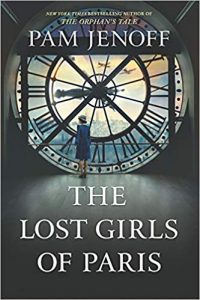
The Lost Girls of Paris by Pam Jenoff

The Lost Girls of Paris by Pam Jenoff
Published January 2019 by Park Row
Source: my copy courtesy of the publisher, through TLC Book Tours, in exchange for an honest review

Publisher's Summary:
1946, Manhattan

One morning while passing through Grand Central Terminal on her way to work, Grace Healey finds an abandoned suitcase tucked beneath a bench. Unable to resist her own curiosity, Grace opens the suitcase, where she discovers a dozen photographs—each of a different woman. In a moment of impulse, Grace takes the photographs and quickly leaves the station.

Grace soon learns that the suitcase belonged to a woman named Eleanor Trigg, leader of a network of female secret agents who were deployed out of London during the war. Twelve of these women were sent to Occupied Europe as couriers and radio operators to aid the resistance, but they never returned home, their fates a mystery. Setting out to learn the truth behind the women in the photographs, Grace finds herself drawn to a young mother turned agent named Marie, whose daring mission overseas reveals a remarkable story of friendship, valor and betrayal.


My Thoughts:
I have a confession to make (doesn't it seem like I have a lot of confessions to make when I sit down to write reviews?) - I may be one of the very few women in this country who did not read Jenoff's The Orphan Train, especially women who belong to book clubs. I imagine some day I'll get around to reading that one; but, in the meantime, when I was offered the chance to read this novel, I figured that was a good place to start with Jenoff.

And now here's another thing I often find myself saying in book reviews - this one proved to be the right book at the right time. History, mystery, women doing things we're not accustomed to women doing and interesting characters - it's all there, just when it was the kind of different book that I needed. If I'd have picked this one up at another time, I might have had more trouble with the times Jenoff demanded that I suspend disbelief. Or I might have had more trouble with the dual narrative that has become so common that it's become something that sort of turns me off on a book. But Jenoff does the dual narrative in a different way - her two tales are set only two years apart. This worked better for me because I found it much more likely that Grace would be able to find the information she needed than if she would have been searching for it 50 years later, even with the internet.

I fell into this book almost from the beginning. I needed to find out what happened to those women who were sent to Occupied Europe; I needed to find out how Grace was going to unravel the mystery. And I absolutely needed to find out who betrayed this women. I had my ideas, first one and then another.

Of course, as soon as I finished this book, I had to get online and find out how much of the story was based on fact. I hadn't been aware for the SOE (the organization behind the operations in the book) before the book but assumed that was real. It was. It was also true that women were recruited as couriers and radio operators and Jenoff has even included some real people who were involved. You know how much more that endears a book to me!


I can definitely recommend this book, like Jenoff's others, for book clubs. Thanks to the ladies of TLC  Book Tours for allowing me to discover Jenoff. For other opinions about the book, check out the full book tour. You can also find Instagram Features and Excerpts there.

Pam Jenoff is the author of several novels, including the international bestseller The Kommandant’s Girl, which also earned her a Quill Award nomination. Pam lives with her husband and three children near Philadelphia where, in addition to writing, she teaches law school.


Monday, October 1, 2018

The Kennedy Debutante by Kerri Maher

The Kennedy Debutante by Kerri Maher
Published October 2018 by Penguin Publishing Group
Source: my ecopy courtesy of the publisher, through Netgalley, in exchange for an honest review

Publisher's Summary:
London, 1938. The effervescent "It girl" of London society since her father was named the ambassador, Kathleen "Kick" Kennedy moves in rarified circles, rubbing satin-covered elbows with some of the 20th century's most powerful figures. Eager to escape the watchful eye of her strict mother, Rose, the antics of her older brothers, Jack and Joe, and the erratic behavior of her sister Rosemary, Kick is ready to strike out on her own and is soon swept off her feet by Billy Hartington, the future Duke of Devonshire.

But their love is forbidden, as Kick's devout Catholic family and Billy's staunchly Protestant one would never approve their match. When war breaks like a tidal wave across her world, Billy is ripped from her arms as the Kennedys are forced to return to the States. Kick gets work as a journalist and joins the Red Cross to get back to England, where she will have to decide where her true loyalties lie--with family or with love . . .

My Thoughts:
The Kennedy Debutante is, first and foremost, a love story. But it is a love story featuring a largely unknown member of the most famous family in America. It is a Capulet/Montegue love story with it's battle between the Irish-American Catholic Kennedys and the English Protestant Hartingtons. It's also a love story set during a time of world war. Most importantly, it's the story of a young girl coming of age and spreading her wings in extremely unusual conditions.

Fans of historical fiction are going to enjoy this book with its blend of American royalty and old school artistocracy. Those wanting to learn more about the Kennedy family will find plenty to learn here (Maher has hewed closely to the facts as they are known). Kick, as portrayed by Maher, is a young woman yearning to make her own way in life but one who is also deeply fond of her family and of her faith. Maher focuses on six years of Kick's life, from her debut in front of the Queen of England at age 18 until her return to England after the death of her husband when she was only 24 years old. My, but did she live a full life in those six years. In addition to making her mother happy with her "duties," Kick volunteered prior to the war and returned during the war to work with the Red Cross to provide comfort to soldiers. During her time in the U.S., she lived on her own and worked at a newspaper, rising to become a reporter.


While Maher does a good job of showing Kick's full life in this time period, her focus throughout is Kick's love of Billy Hartington. It was a complicated relationship, what with their different backgrounds, different religions, and his desire to serve his country. But I did feel that Maher could have made the love story a bit tighter. It sometimes felt, to me, like a lot of handwringing and unnecessary back and forth.

Still, Maher kept me entertained and made me want to learn more about Kick. If you look up Kathleen "Kick" Kennedy (and you know I did!), you will most often find her referred to as the "forgotten" Kennedy or the "rebellious" Kennedy. Maher wants readers to know and understand Kick, how love drove her to marry outside her faith (something that was unheard of in 1944), how constricted she felt playing the traditional socialite female roles. Considering the life she lead, it's hard to believe that Kick came to be forgotten. Until you remember her last name and the tragedy of her three older siblings (Joe Jr., Rosemary, and Jack) and her younger brother (Robert) and that she died when she was only 28 years old.

Monday, June 25, 2018

The Women In The Castle by Jessica Shattuck

The Women In The Castle by Jessica Shattuck
Published March 2017 by Harper Collins Publishers
Source: bought for my Nook

Publisher's Summary:

Set at the end of World War II, in a crumbling Bavarian castle that once played host to all of German high society, a powerful and propulsive story of three widows whose lives and fates become intertwined.

Amid the ashes of Nazi Germany’s defeat, Marianne von Lingenfels returns to the once-grand castle of her husband’s ancestors, an imposing stone fortress now fallen into ruin following years of war. The widow of a resister murdered in the failed July 20, 1944, plot to assassinate Adolf Hitler, Marianne plans to uphold the promise she made to her husband’s brave conspirators: to find and protect their wives, her fellow resistance widows.

First Marianne rescues six-year-old Martin, the son of her dearest childhood friend, from a Nazi reeducation home. Together, they make their way across the smoldering wreckage of their homeland to Berlin, where Martin’s mother, the beautiful and naive Benita, has fallen into the hands of occupying Red Army soldiers. Then she locates Ania, another resister’s wife, and her two boys, now refugees languishing in one of the many camps that house the millions displaced by the war.

As Marianne assembles this makeshift family from the ruins of her husband’s resistance movement, she is certain their shared pain and circumstances will hold them together. But she quickly discovers that the black-and-white, highly principled world of her privileged past has become infinitely more complicated, filled with secrets and dark passions that threaten to tear them apart. Eventually, all three women must come to terms with the choices that have defined their lives before, during, and after the war—each with their own unique share of challenges.

My Thoughts:
I read this with the Omaha Bookworms* last month. It wasn't exactly what any of us had been expecting (maybe because we didn't entirely read through the synopsis); but we all liked the story the book does tell.

This was another one of those books about World War II that surprised me by giving me a view of that war that I've never read about before. Shattuck raises a lot of questions in The Women In The Castle. What of the German people in the aftermath, those who supported the German war machine and those who opposed it? And how do they live with each other after what has happened? And how do people live with the things they've done to survive?

As much as I disliked the Germans for what they did during the war, it's the Russians who really come off as the bad guys here as they literally rape, pillage, and plunder their way across what's left of Germany. I'm not naive enough to believe that American soldiers didn't commit some atrocities as they moved across the lands of the conquered enemies, but the Russians seem to have taken their revenge for what was done to their people by German soldiers and their leaders.

One of the things that grabbed me about this book was how often this piece of history mirrored our current political situation.
"For so long Marianne and Albrecht and many of their friends had known Hitler was a lunatic, a leader whose lowbrow appeal to people's most selfish, self-pitying emotions and ignorance was an embarrassment for their country. They had watched him make a masterwork of scapegoating Jews for Germany's fall from power and persuade his followers that enlightenment, humanity, and tolerance were weaknesses - "Jewish" ideas that led to defeat. They had wrung their hands over his dangerous conflations, his fervor, and his lack of humanity." 
These ladies have stayed with me; a month after reading the book, I'm still thinking about them and their strength and their pain.

*This is a terrific book club selection, with a lot to talk about including the ties to current times, the bonds the women forged, the ways they survived and the truth of the history in the book. We definitely recommend it for other book clubs.