Monday, March 7, 2016

Thirty-Eight Witnesses: The Kitty Genovese Case by A.M. Rosenthal

Thirty-Eight Witnesses: The Kitty Genovese Case by A. M. Rosenthal
Published
Source: my copy courtesy of the publisher through Netgalley

Publisher's Summary:
In the early hours of March 13, 1964, twenty-eight-year-old Catherine “Kitty” Genovese was stabbed to death in the middle-class neighborhood of Kew Gardens, Queens. The attack lasted for more than a half hour—enough time for Genovese’s assailant to move his car and change hats before returning to rape and kill her just a few steps from her front door.

Yet it was not the brutality of the murder that made it international news. It was a chilling detail Police Commissioner Michael Joseph Murphy shared with A. M. Rosenthal of the New York Times: Thirty-eight of Genovese’s neighbors witnessed the assault—and none called for help. [Rosenthal said "any journalist would call this "the telling detail," the detail that would catch readers attention, rather than the brutal murder.]

To Rosenthal, who had recently returned to New York after spending a decade overseas and would become the Times’s longest-serving executive editor, that startling statistic spoke volumes about both the turbulence of the 1960s and the enduring mysteries of human nature. His impassioned coverage of the case sparked a firestorm of public indignation and led to the development of the psychological theory known as the “bystander effect.”
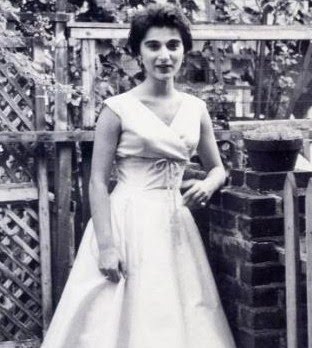
My Thoughts: 
I can't remember when I first heard about the Kitty Genovese murder; it seems to be a story that comes up from time to time when we again have a case where people who might have acted to prevent a tragedy did nothing. Thirty-Eight Witnesses was originally written about a year after the murder and is just now being released with a new introduction by Mr. Rosenthal.
"Are the people who turned away that one night in Queens, each in a separate decision, any more immoral or indecent or cowardly because there happened to be thirty-eight, than if there were just one of them? Does God judge by the individual or by head count? And what if we hear the scream but cannot see the screamer? Of all questions about silent witnesses, to me this is the most important."
Rosenthal raises a lot of questions in the book about what caused so many people to remain silent, why the murder would have been more of a story initially had it occurred on Park Avenue, and why the police became the number one target immediately after the story broke. Rosenthal does a fair job of answering where he can and being clear when he is only offering an opinion. He does not attempt to imply that this is a strict recall of the facts; it is clear that Rosenthal is offering his impression of the case and its handling. He can become a bit repetitive but there is so much here that is, forty years later, still important today.
"At first there was, briefly, the reaction of shared guilt. Even people who were sure that they certainly would have acted differently felt it somehow. "Dear God, what have we come to?" a woman said one day. "We," not "they."  
For in that instant of shock, the mirror showed quite clearly what was wrong, that the face of mankind was spotted with the disease of apathy - all mankind. But this was too frightening a thought to live with and soon the beholders began to set boundaries for the illness, to search frantically for causes that were external and to look for the carrier."
We are all too often stunned by violence around us, adamant that things must change. Often we bind together in times of crisis. But "we" almost always fall away from that. Remember how unified our country was fourteen years ago? Hard to remember in these divisive times.

Winston Moseley
An interesting point about the New York Times reporting of the case is that Winston Moseley's race was never mentioned. According to Rosenthal, the paper did not publish the race of a suspect if it weren't pertinent to the case. Given that this murder happened in 1964, I find this remarkable. Frankly, it would be a remarkable thing these days.

When I finished reading this little book, I had to do some more research.

Location of the initial attack
Some reports say there were actually more than 38 witnesses, some say far fewer. In the case of Kitty Genovese, there weren't 38 people who actually saw her being attacked; in fact, after the first attack, only one person actually saw Winston Moseley stabbing Kitty Genovese. But there were plenty of people who heard her screams who were counted among the thirty-eight witnesses. One reporter contends that Genovese, in fact, could not have screamed after the first attack due to her wounds and that where calls to the police, none of which was documented by the police.

The site of the final attack and Ms. Genovese at work
What hasn't changed since 1964? We still see, all too often, what became known after Genovese's assault as the Bystander Effect. And we still see people afraid to call the police or sure it will do no good.

What has changed because of the Kitty Genovese murder? Shortly after Genovese's death, New York City revamped their cumbersome telephone crime reporting system; at the time of her death, it would have been a convoluted process for anyone who heard Genovese's screams to report the attack. Eventually, though, Genovese's death would lead to the development of the 911 emergency reporting number.
"That is the power of the Genovese matter. It talks to us not about her, a subject that was barely of fleeting interest to us, but about ourselves, a subject never out of our minds."

Sunday, March 6, 2016

Life: It Goes On - March 6

Not quite officially spring yet, but I can't put the lovely snowy scene any more! Starting to think of gardening, bringing the pretties back on the porch, and dinners on the patio.

We've had a fun, busy week, with a lot of it spent celebrating Miss H. Her 21st birthday was Tuesday and we lunched and shopped; Friday she had a dinner party for friends and family. She is still partying, having gone off to Kansas City this weekend for fun with friends. Oh, to be young again!

Today is tax day for this girl. Woohoo. I'm hoping to knock out all four sets today but I also having cleaning and laundry that needs to be done. And, of course, series finale of "Downtown Abbey" tonight. We're going to miss this show and the distraction it brings from remembering that tomorrow is Monday.

This Week I'm:

Listening To: I'm about half way through The Shoemaker's Wife. My little quibble this week is Trigiani's need to give detailed descriptions of every character, no matter how insignificant role they play in the story. But, again, still enjoying the story and the glimpse into immigrant life in the early years of the last century.


Watching: Last night we watched "Steve Jobs." Even if this movie were not based on real life, it would have been a fascinating look at one man. This is another one that the Oscar noms didn't get wrong - Michael Fassbender and Kate Winslet were fantastic. I found an interesting article on Slate.com that explores what was fact and what was fiction in the movie (you know how I like to dig further!).

Reading: I finished 13 Ways of Looking At A Fat Girl (painful read) and started Mennonite In A Little Black Dress, which is the perfect followup to lighten things back up. Next up I'm hoping that the Jacqueline Winspear book I'm waiting on for a review shows up soon. If not, I'll start on my book club read for this month, The Sandcastle Girls by Chris Bohjalian.

Birthday lunch, birthday dinner, my "granddaughter" at the party, and the whole family

Making: My big hit this week was chocolate mini cupcakes with peppermint frosting for Miss H's dinner party. Which I forgot to take a picture of; trust me, they were very cute!

Planning: On helping Miss H get ready for an 8-day trip to Boston with friends next week and celebrating my dad's birthday. I'm thinking pie will come into play for that! What sounds good, Dad?

Thinking About: What I need to get done before Mini-me and Miss S's graduation party in a couple of months. A party is always a good incentive to get things done around the house that you've been wanting to get done, isn't it?

Oscar Party
Enjoying: Girls' night at an Oscar watch party. My friend holds the party every year and we all have such a great time critiquing the fashion and the show. What did you think of the show this year?

Feeling: Tired. I really need a new pillow; I swear I'm spending half my nights trying to maneuver my pillow into a comfortable position. I hate shopping for new pillows, though; hate paying what it costs to get a decent pillow, especially since I might not even like it after I get it. This all drives The Big Guy crazy!

Looking forward to: A thunderstorm this week (as long as it's not severe!). Love watching the lightning, listening to the thunder and sitting at an open window watching and smelling the rainfall.  

Question of the week:  What is your favorite thing about spring?

Thursday, March 3, 2016

What We Learned From Sir Arthur Conan Doyle and Sherlock Holmes

Sir Arthur Conan
Doyle
When Sir Arthur Conan Doyle wrote his first Sherlock Holmes mystery, policy work was a much different thing than it is today. There was no such thing as collecting blood evidence, no ballistics testing, no microscopic or deductive reasoning used to solve crimes.

Then along came Conan Doyle, with his background as a ship's surgeon, medical doctor, and ophthalmologist who changed every thing through the works of his fictional character, Sherlock Holmes.

In 1887 Sherlock Holmes first appeared, in Conan Doyle's A Study In Scarlet. It was the first time a magnifying glass had appeared in detective fiction. A year later, the first Jack the Ripper murder happened and standard investigative failed. Crime scenes were contaminated and much of the evidence wasn't even collected. The police were sorely in need of new methods for solving crime but it took a fictional character to show them the way.

Forensic science as we know it essentially started with Holmes: use of the magnifying glass; sifting and measuring; looking at the small details; smells; collection of evidence; getting down on the ground to see thing from a new angle; ballistic evidence - all of these methods were first seen in Sir Arthur Conan Doyle's stories. Before Holmes, police almost entirely relied on confessions and eye witness accounts, including forced confessions.


According to forensic scientists, A Study In Scarlet is still relevant today. In a recent PBS program, "How Sherlock Changed The World," Holmes was a pioneering chemist and the Holmes books remain an manual for investigations.

In A Study In Scarlet, Holmes develops a test to determine if a substance is blood before that test had been developed in real life. That test was able to be used in real life for more than 50 years once it became used in real life. He also began toxicology testing and the study of poisons before they had become routine police work.

The most timeless of Holmes' fits was deductive reasoning, the process of using evidence to reach a logical conclusion. Holmes taught detectives how to infer from the evidence and to keep an open mind.

Holmes other great lesson was the concept that every contact leaves a trace (now also known as the "principle of exchange). He had the first crime lab and kept samples to compare later to trace evidence he collected in cases.

Sir Arthur Conan Doyle did have a medical education and training to draw on for his books but no detective experience. How did a man with so little background come up with the ideas that would change police work? There's nothing particularly impressive about Conan Doyle's writing style, but there's no doubt he was one of the most influential authors ever.

Wednesday, March 2, 2016

A Study In Scarlet by Sir Arthur Conan Doyle

A Study In Scarlet by Sir Arthur Conan Doyle
Originally Published in 1887
Source: bought this one for my Nook for book club

Summary:
A dead man is discovered in a bloodstained room in Brixton. The only clues are a wedding ring, a gold watch, a pocket edition of Boccaccio's Decameron, and a word scrawled in blood on the wall. With this investigation begins the partnership of Sherlock Holmes and Dr. Watson. Their search for the murderer uncovers a story of love and revenge-and heralds a franchise of detective mysteries starring the formidable Holmes. 


My Thoughts: 
It was suggested, some months ago, that my book club read some Sherlock Holmes. This is so far out of our norm and, since there were only four novellas and 56 short stories, I knew we'd need to do something a little different this time around. First up was picking what we'd read. I chose to go with two of the novellas, A Study In Scarlet, the first novella, and The Hound of The Baskervilles (which I read a couple of years ago - my review), the most famous of the novellas.

A Study In Scarlet introduces Dr. Watson to Sherlock Holmes, the two come together as total strangers who need each other for practical housing reasons. Watson quickly falls under Holmes' spell as he is, time and again, astounded by what Holmes can deduce accurately by simple observation and prior research. Holmes, we learn, is not, strictly speaking, the genius those of us who only know him from movies and television believe him to be. Instead he's a man whose genius lies in knowing what he needs to learn in order to do what he wants to do better. His studies all revolve around what will come to be known as forensic science.
"...his zeal for certain studies was remarkable, and within eccentric limits his knowledge was so extraordinarily ample and minute that his observations have fairly astounded me. Surely no man would work so hard or attain such precise information unless he had some definite end in view.  
His ignorance was a remarkable as his knowledge. Of contemporary literature, philosophy and politics he appeared to know next to nothing...My surprise reached a climax, however, when I found incidentally that he was ignorant of the Copernican Theory and of the composition of the Solar System. That any civilized human being in this nineteenth century should not be aware that the earth travelled round the sun appeared to be to me such an extraordinary fact that I could hardly believe it."
Holmes has not yet become a consultant for the police and has very little interest in most of their cases, they being below his intellect. But when a body is found dead without a trace, Holmes can't resist. And he's going, doing his thing, just about to solve the crime when all of sudden...bam! Conan Doyle takes readers into what appears to be an entirely different storyline. Suddenly we're in Utah, among the Mormans. Eventually, we'll get back to the original story but not until we've spent several years, and half the novella, learning the background of the murder suspect.

The back and forth was more than a little jarring and it felt like I was reading two different stories. Conan Doyle certainly had gotten a better grasp on how to tell his stories by the time he wrote The Hound of the Baskervilles.

What was most interesting to me, in doing research for our discussion of the novellas, was how much these stories changed police work. I'm not sure there have ever been fiction works that had a greater impact on real life. Knowing that made the book much more interesting for me that it might otherwise have been. Between the stories themselves, some research, a quiz and a prize, Sherlock Holmes turned out to be a fun book club choice.

Tuesday, March 1, 2016

Happy Birthday to Our Girls - and Nebraska!


 Happy Birthday To Our Girls, Miss H Miss S!

Miss H turns 21 today - we enjoyed lunch and shopping and having a drink with her. Can't believe our baby is now officially an adult by any legal measure.

Miss S is off in Texas for school and we're missing getting to celebrate with her. She may not be legally family yet but we think of her as one of ours already.

And what do these girls have in common (besides being the sisters each has always wanted)? Today is also the 149th celebration of Nebraska statehood.