Showing posts with label books about books. Show all posts

Thursday, March 12, 2026

The Bookbinder's Secret by A.D. Bell

The Bookbinder's Secret
by A.D. Bell
400 pages
Published January 2026 by St. Martin's Press
My copy courtesy of the publisher, through NetGalley, in exchange for an honest review

Publisher's Summary: 
Lilian ("Lily") Delaney, apprentice to a master bookbinder in Oxford in 1901, chafes at the confines of her life. She is trapped between the oppressiveness of her father’s failing bookshop and still being an apprentice in a man’s profession. But when she’s given a burned book during a visit to a collector, she finds, hidden beneath the binding, a fifty-year-old letter speaking of love, fortune, and murder.

Lily is pulled into the mystery of the young lovers, a story of forbidden love, and discovers there are more books and more hidden pages telling their story. Lilian becomes obsessed with the story but she is not the only one looking for the remaining books and what began as a diverting intrigue quickly becomes a very dangerous pursuit.

Lily's search leads her from the eccentric booksellers of London to the private libraries of unscrupulous collectors and the dusty archives of society papers, deep into the heart of the mystery. But with sinister forces closing in, willing to do anything for the books, Lilian’s world begins to fall apart and she must decide if uncovering the truth is worth the risk to her own life.

My Thoughts: 
As you know, I often don't read the summary of books (although I must have at some point in order for me to choose this book for review); in this case, it meant it took me a while to figure out what time period in which the book was set. I kept thinking it was a century earlier, which made the fact that Lily was a bookbinder in training even more astounding. 

Even so, a woman in a trade in the first part of the 20th century was remarkable and I enjoyed learning about bookbinding through her. I think we can all recognize the difference between a well bound book and a cheaply bound one but knowing what steps make the difference was intriguing. In Lily's case, the books being individually bound meant that the bookbinder chose the design of the cover so it's conceivable that no two copies of any book remaining from that time period would have the same cover. 

The initial mystery of the first book Lily got pulled me into the story, but I will admit that I was a little confused about how Lily became so obsessed with that first book that she was willing to risk her life and her safety because of it. Because someone else wants that book and wants her to find the remaining five books related to it...in fact, they demand that she find them or they will come after her father, who is already fragile. Here's the next point I struggled with - why would the person who wanted the books assume that Lily would be better able to find them than that person would? Overlooking those points, this story takes readers along on Lily's race to find all six of the books while she also races to find out the reason they are so important and what because of the young lovers whose story is told in those hidden pages. Along the way, we learn that Lily is not the good girl so many heroines of books set in this time period are and it makes her a much more interesting person for it. We're also introduced to a cast of interesting characters, some not so savory, most with secrets of their own. 

I haven't been reading as much historical fiction lately as I used to and this one made me wonder why. I'm always fascinated to go back in time so that we can see how far we've come. Thanks to St. Martin's Press for giving me this history lesson. 

Wednesday, April 23, 2025

The Little Village of Book Lovers by Nina George

The Little Village of Book Lovers
272 pages
Published July 2023 by Random House Publishing Group

Publisher's Summary: 
In Nina George’s New York Times bestseller The Little Paris Bookshop, beloved literary apothecary Jean Perdu is inspired to create a floating bookstore after reading a seminal pseudonymous novel about a young woman with a remarkable gift. The Little Village of Book Lovers is that novel.

“Everyone knows me, but none can see me. I’m that thing you call love.”


In a little town in the south of France in the 1960s, a dazzling encounter with Love itself changes the life of infant orphan Marie-Jeanne forever.

As a girl, Marie-Jeanne realizes that she can see the marks Love has left on the people around her—tiny glowing lights on the faces and hands that shimmer more brightly when the one meant for them is near. Before long, Marie-Jeanne is playing matchmaker, bringing true loves together in her village.

As she grows up, Marie-Jeanne helps her foster father, Francis, begin a mobile library that travels throughout the many small mountain towns in the region of Nyons. She finds herself bringing soulmates together every place they go—and there are always books that play a pivotal role in that quest. However, the only person that Marie-Jeanne can’t seem to find a soulmate for is herself. She has no glow of her own, though she waits and waits for it to appear. Everyone must have a soulmate, surely—but will Marie-Jeanne be able to recognize hers when Love finally comes her way?

My Thoughts: 
Last fall my book club read Nina George's The Little Paris Bookshop and it was a big hit. So when I was putting together this year's reading list and found that this book is meant to be the book referenced in that book, Southern Lights, I thought it would be a great follow up that we would surely enjoy. 

We did not. In fact, one member said she hated this book. I have never heard her say that about any book we've read; she is generally the one we count on to find the humorous bits and the highlights of books. She began with the book in print and finished with the audiobook version, which I think may have been the problem. On Goodreads, I noticed that a lot of the people who didn't like this book had listened to it and found it confusing. I can definitely see that; a lot of people who read it in print found it confusing as well. There is a lot of back and forth in the narration and Love as a narrator and a talking (although not literally) olive tree are tough for a lot of people to buy into. 

To be fair, having not that long ago read The Little Paris Bookshop and having been told throughout that book that Southern Lights was the perfect book, George set readers up with very high expectations that were all but impossible to live up to. Further, in that book we were promised that this book would explore all kinds of love but when it came down to it, this one is all about romantic love between men and women. Very traditional love, even if told through a magical voice. Then, too, the title tells us that this is a book about book lovers, which would seem to be a different book entirely than a book about all kinds of love. Honestly, books only brought these people together tangentially - Francis' book mobile was more of a way to introduce us to a big cast of characters instead of a way for the characters to come together organically. 
I think my book club agreed that a book that was primarily about Marie-Jeanne's gift and her being able to help people find each other would have made a better book. Or a book strictly about how the book mobile makes true book lovers out of all kinds of people and how they learn about each other would have been a good read. It just didn't work for us to pull the two stories together. 

For most of us the ending of a book can make or break a book and this one might well have been saved by a different ending. We spent the entire book waiting for the sainted Marie-Jeanne to be rewarded for all of the good she did with love of her own. And we waited. And we waited. It was not until there were only five pages left that George gave us the slightest hint that Marie-Jeanne might finally find love. The lesson from that? Love is cruel. Which seems a strange way to come to the end of a book all about love. 

Thursday, September 5, 2024

The Villa by Rachel Hawkins

The Villa
by Rachel Hawkins
Read by Julia Whelan, Kimberly M. Wetherell, Shiromi Arserio
7 hours, 57 minutes
Published January 2023 by St. Martin's Publishing Group

Publisher's Summary: 
As kids, Emily and Chess were inseparable. But by their 30s, their bond has been strained by the demands of their adult lives. So when Chess suggests a girls trip to Italy, Emily jumps at the chance to reconnect with her best friend.

Villa Aestas in Orvieto is a high-end holiday home now, but in 1974, it was known as Villa Rosato, and rented for the summer by a notorious rock star, Noel Gordon. In an attempt to reignite his creative spark, Noel invites up-and-coming musician, Pierce Sheldon to join him, as well as Pierce's girlfriend, Mari, and her stepsister, Lara. But he also sets in motion a chain of events that leads to Mari writing one of the greatest horror novels of all time, Lara composing a platinum album--and ends in Pierce's brutal murder.

As Emily digs into the villa's complicated history, she begins to think there might be more to the story of that fateful summer in 1974. That perhaps Pierce's murder wasn't just a tale of sex, drugs, and rock & roll gone wrong, but that something more sinister might have occurred--and that there might be clues hidden in the now-iconic works that Mari and Lara left behind.

Yet the closer that Emily gets to the truth, the more tension she feels developing between her and Chess. As secrets from the past come to light, equally dangerous betrayals from the present also emerge--and it begins to look like the villa will claim another victim before the summer ends.

My Thoughts: 
Chess is a highly successful self-help guru. Emily is a less successful cozy mystery series writer going through a bitter divorce and far behind the deadline to submit the latest book in the series. When Chess suggests Emily join her in Italy and they can both spend time writing, Emily agrees. And that's about the last time the two seem to really enjoy each other. 

After they arrive, Emily is just not inspired to return to her Petal Blossom character (and who can blame her - what a ridiculous name - even for a cozy mystery series). Instead, she begins reading Lilith Rising, the only published novel by Mari Godwick which became one of the greatest horror novels of all time, a novel Godwick wrote the summer she spent at Villa Rosato and reading the lyrics of Mari's sister Lara's uber famous novel, Aestas. Soon she's obsessed with uncovered the secrets in those works and in the villa itself. And that's when things become very tense between Chess and Emily. 

Between Chess' and Emily's chapters, the story of what happened in 1974 is revealed through Mari Godwick's eyes. That storyline overshadows the contemporary one, in no small part because the reader is playing a game of "I see what you did there" with Hawkins. Mari Godwick = Mary Godwin Shelley; Pierce Sheldon = Percy Shelley; Noel Gordon = George Gordon, Lord Byron; Mari's step sister Lara = Mary's step sister, Clair. Lilith Rising, created on a stormy night = Frankenstein (although with a twist); Aestas = Tapestry (ok that one doesn't link back to the Romantics, but still). 

What's good here? 
  • Playing "I see what you did there," although I'd far preferred that Hawkins let the reader figure out the connections without stating them outright. 
  • The twists that I was expecting from Hawkins that which she delivered. 
  • The readers are great (but I expected that as soon as I saw Julia Whelan was one of the readers). 
Where it fell short for me?
  • The relationship between Chess and Emily, even before the reveal that I can't tell you about. 
  • That reveal about Chess and Emily's reaction to it. Not believable to me at all.   
  • Although Hawkins' use of multiple narrators in The Heiress was one of my favorite things about that novel, in this book the dual storylines (interspersed with passages from Lilith Rising) didn't work as well for me because it felt uneven. 
Reviews are mixed on this one - some readers and reviewers really love it, others felt it could have been better. I fall in that latter category, but that doesn't mean it wasn't worth reading - there was plenty to enjoy. 

Wednesday, July 3, 2024

The Keeper of Hidden Books by Madeline Martin

The Keeper of Hidden Books
by Madeline Martin
Read by Saskia Maarleveld
10 hours, 53 minutes
Published August 2023 by Hanover Square Press

Publisher's Summary: 
All her life, Zofia has found comfort in two things during times of hardship: books and her best friend, Janina. But no one could have imagined the horrors of the Nazi occupation in Warsaw. As the bombs rain down and Hitler's forces loot and destroy the city, Zofia finds that now books are also in need of saving.

With the death count rising and persecution intensifying, Zofia jumps to action to save her friend and salvage whatever books she can from the wreckage, hiding them away, and even starting a clandestine book club. She and her dearest friend never surrender their love of reading, even when Janina is forced into the newly formed ghetto.

But the closer Warsaw creeps toward liberation, the more dangerous life becomes for the women and their families - and escape may not be possible for everyone. As the destruction rages around them, Zofia must fight to save her friend and preserve her culture and community using the only weapon they have left - literature.

My Thoughts: 
Aggghh! This is one of those books that I didn't write a review for soon enough and my thoughts have kind of been lost to me so I'm going to piece things together as best I can. As always, let's start with the things that didn't work for me and work our way to what I liked about this book (I always like to end things on a positive note, when I can!).

What Didn't Work For Me: 
  • Books played a major role in this book, and Zofia's life, until they didn't. Suddenly, she became a resistance fighter for that last quarter (?) of the book. Nothing wrong with that, it felt true to Zofia's nature, but it seemed to veer away from what the premise of the book had been. 
  • Even before the Nazis invade Poland, Zofia, Janina and another friend are already reading, as a group, books that Hitler has banned in Germany. A couple of other girls in their school horn in on their group, girls it's clear that Zofia doesn't really like. But it quickly becomes clear that these girls have interesting thoughts about the books and are really contributing to the discussions. I never felt like they really became part of Zofia's circle or that she acknowledged that she may have misjudged them so it felt odd to me that they brought into the story and remained there, as peripheral characters, to the end. 
  • Things began to feel rushed to me as the book went on and time sort of collapsed. 
What I Liked: 
  • Of course, I loved that so much of this book centered around books being a driving force in educating people, in being a part of their culture, and in being a way to help them survive the worst. I loved seeing these people so passionate about saving these books not only because books are so important to them but also as an act of rebellion. These people were, quite literally, willing to put down their lives in defense of books. 
  • Zofia's and Janina's relationship. Their friendship never wavered and Zofia was willing to do anything (and did) to protect and help Janina. 
  • In fact, a lot of the relationships, including Zofia's and her mother's, which changed tremendously throughout the book. Also, I appreciated that while Zofia and a young man who joins their group are clearly falling in love, nothing happens between them until the very end - it's logical that strong emotions would occur but a romance in the middle of the book would have felt out of place. 
  • I've read a lot about what the Nazis did to the Jews in Germany, much less about what happened in Poland so I found this book a good reminder of what it was like to be in Warsaw and Poland, not just as a Jew but as a Pole. And, if I'd known, I'd forgotten, that the Soviets came into Poland, not so much to chase out the Germans but to take over. 
Overall, I enjoyed the book and would definitely recommend it for book clubs as there is so much to discuss in the book. 

Tuesday, June 18, 2024

The Secret Book of Flora Lea by Patti Callahan Henry

The Secret Book of Flora Lea
by Patti Callahan Henry
Read by Cynthia Erivo 
12 hours, 24 minutes
Published May 2023 by Atria Books

Publisher's Summary: 
1939: Fourteen-year-old Hazel and five-year-old Flora evacuate their London home for a rural village to escape the horrors of the Second World War. Living with the Aberdeen family in a charming stone cottage, Hazel distracts her young sister with a fairy tale about a magical land, a secret place they can escape to that is all their own: Whisperwood.

But the unthinkable happens when Flora suddenly vanishes after playing near the banks of the River Thames. Shattered, Hazel blames herself for her sister’s disappearance, carrying the guilt into adulthood.

Twenty years later, Hazel is back in London, ready to move on from her job at a cozy rare bookstore for a career at Sotheby’s. With a cherished boyfriend and an upcoming Paris getaway, Hazel’s future seems set. But her tidy life is turned upside down when she unwraps a package containing a picture book called Whisperwood and the River of Stars. Hazel never told a soul about the storybook world she created just for Flora. Could this book hold the secrets to Flora’s disappearance? Could it be a sign that her beloved sister is still alive after all these years? Or is something sinister at play?


My Thoughts: 
This book was suggested by a friend to whom it was recommended. You know, lately if someone recommends a book, I immediately request it from the library, knowing that if I don't, it will live on the TBR list for, perhaps, decades. Because I seem to be able to "read" a book much faster if it's audio these days, that's what I requested and I'm glad that I did because it's the perfect kind of book for listening. Cynthia Erivo is an excellent reader and her being British made that much more of a connection to the book. 

What Didn't Work for Me:
  • That "cherished" boyfriend? It takes readers almost no time at all to figure out that he's going to be left behind, although he seems to have no flaws right up until the time that it's essential that he have them. And I didn't buy into the relationship that caused Hazel to leave him. 
  • Aberdeen seems to have made such a deep impression on Hazel that she cannot let it go. But while Flora seemed equally attached to the people there, Hazel had to continually tell her that she could not go to Whisperwood (aka the river nearby) because Flora was so eager to get away. 
  • Some things felt predictable, others a bit forced.
  • Although the ending is unexpected, it is also a little disappointing, in that it doesn't tie together with the book that suddenly appeared other than having the book inspire Hazel to begin her search again. 
What I Liked: 
  • The setting and the time frame. While I often feel I'm over reading WWII books, how the British survived still fascinates me, particularly the idea of Londoners sending their children off to the countryside to live with strangers. 
  • The world of Whisperwood that Hazel created to help help both Hazel and herself survive the upheaval in their lives. It felt so natural that she would do that to protect her sister's peace and fit in so well with the world they were living in at that time. 
  • Life in Aberdeen. There were plenty of interesting characters that felt just right for a small, countryside town and the descriptions of the land made me want to visit. 
  • The story of the author of the book that Hazel discovers who has her own battles to fight. 
  • Yes, I know I said the ending was a little disappointing, it was satisfying in other ways. The truth behind Flora's disappearance was a surprise to me and I appreciated the way that the characters involved in that piece reacted to the reveal. Things didn't end too tidily. 
It's not great literature but, as Kirkus Reviews said, it was enchanting for the most part. Book clubs would find plenty to talk about and, as I said, the reading is very good. 

Thursday, May 12, 2022

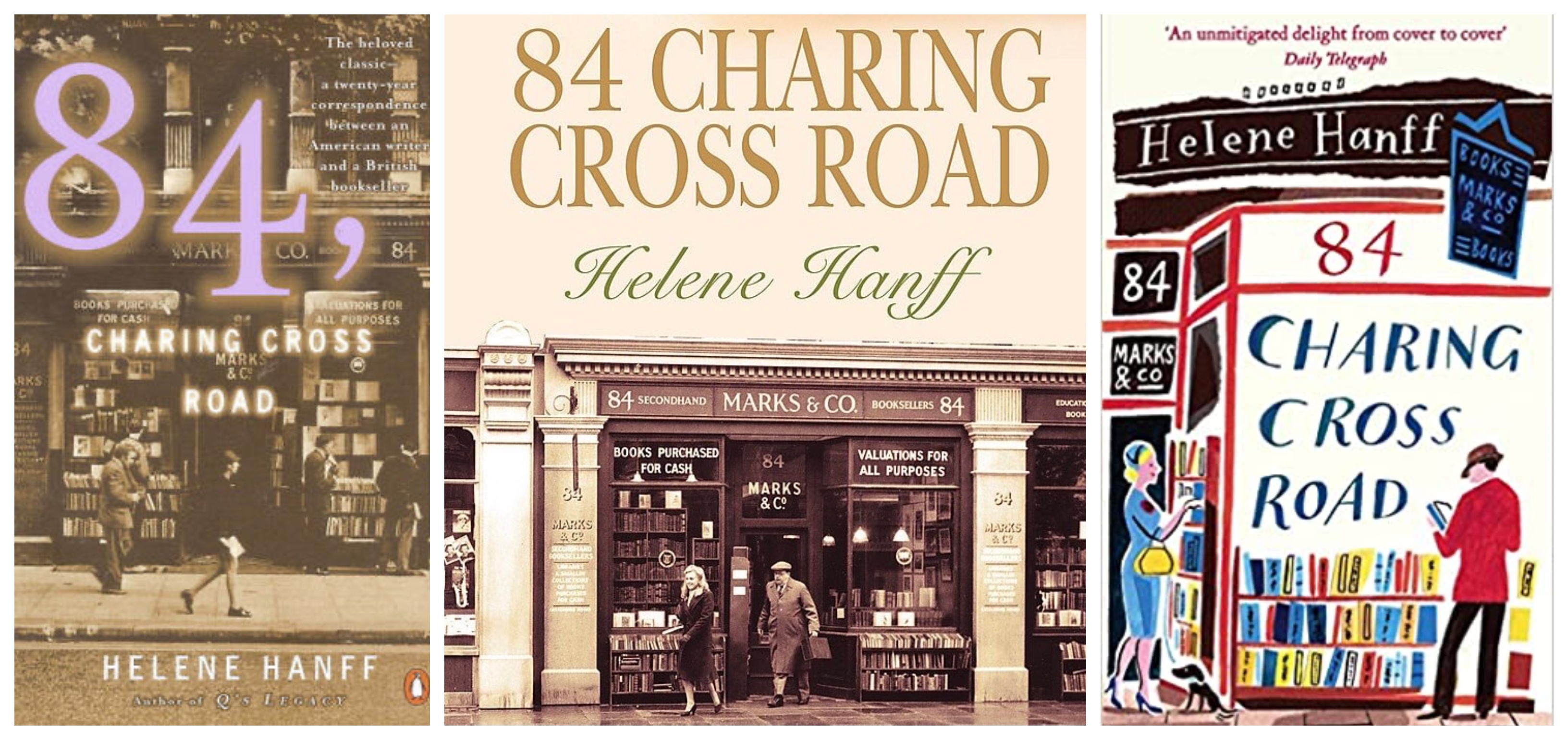
84, Charing Cross Road by Helene Hanff

84, Charing Cross Road
by Helene Hanff
Read by Barbara Rosenblat, John Franklyn-Robbins, Jill Tanner
1 Hour 55 Minutes
Published 

Publisher's Summary: 
When Helene Hanff makes an innocent inquiry about the possibility of purchasing hard-to-find books through Marks and Co., Booksellers, she begins a twenty-year love affair with Frank Doel, the proper English bookseller who answers her letter and sends along her first order in the fall of 1949. 

They are two very unlikely correspondents: she a cranky Jewish New Yorker who writes TV scripts and lives in a messy apartment on East 95th Street; he a determinedly courteous middle-class Englishman who sends her beautifully bound and often obscure antiquarian books from the shop he manages on Charing Cross Road in London. 

The letters, written between 1949 and 1969, capture the period and pay tribute to the special kind of reader who treasures a well-worn classic.

My Thoughts:
84, Charing Cross Road is one of those books I've been meaning to read for years. But I didn't own it, couldn't find it from my library book on audiobook and always had so many other books that popped up ahead of it. And then the other day I was looking for audiobooks that would be good for the hubby and me to listen to on road trips and there it was, 84, Charing Cross Road, not only available but also less than 2 hours long. Fewer than 24 hours later, I was finished with it. And now I'm a little sad that I can never "read" it again for the first time. 

Helene Hanff is a no-nonsense writer living in a studio apartment with a penchant for obscure, mostly nonfiction books. When her first request to Marks and Co booksellers in London is a success, the store quickly becomes her go-to for book acquisitions. She can't be bothered to go out into New York to search for the books and she can't be bothered to convert the pounds into dollars and she often complains about the books that are sent to her. But it is equally clear that she is, at least partially, teasing and soon such a deep affection grows between Frank and Helene that others in the store begin writing to Helene as well. Getting to know them, Helene begins sending packages of foodstuffs to the store employees, knowing, as she does that so many things are in such low supply in London and finding the cost to herself to be quite reasonable. Soon Helene is also carrying on a correspondence with Frank's wife, a neighbor, and, eventually Frank's daughter. 

Helene is witty and fun; I adored the way Helene described things. Frank is ceaselessly patient and warm. I so wanted Helene to make it across the ocean so that they could meet. I so wanted to meet each of them. The best part was knowing that these people were real, that these letters were real. And those letters provide a marvelous glimpse of what life was like as a writer in New York and for the people of England following the war. It almost seems trite to call this book "charming" or "delightful;" but it is, it really is both of those things. It is also moving and thoughtful and makes me want to run to my nearest used book store. 

Helene proclaims that she doesn't like to read a book for the first time, far preferring to read books that bring her comfort. I don't reread often; but, for 84, Charing Cross Road, I will gladly channel Helene. This may be the book I read every year. 


Thursday, February 17, 2022

Dear Fahrenheit 451: Love and Heartbreak In The Stacks: A Librarian's Love Letters and Breakup Notes to the Books In Her Life by Annie Spence

Dear Fahrenheit 451: Love and Heartbreak In the Stacks: A Librarian's Love Letters and Breakup Notes to the Books in Her Life 
by Annie Spence
256 Pages
Published September 2017 by Flatiron Books

Publisher's Summary: 
If you love to read, and presumably you do since you’ve picked up this book (!), you know that some books affect you so profoundly they forever change the way you think about the world. Some books, on the other hand, disappoint you so much you want to throw them against the wall. Either way, it’s clear that a book can be your new soul mate or the bad relationship you need to end.

In Dear Fahrenheit 451, librarian Annie Spence has crafted love letters and breakup notes to the iconic and eclectic books she has encountered over the years. From breaking up with The Giving Tree (a dysfunctional relationship book if ever there was one), to her love letter to The Time Traveler’s Wife (a novel less about time travel and more about the life of a marriage, with all of its ups and downs), Spence will make you think of old favorites in a new way. Filled with suggested reading lists, Spence’s take on classic and contemporary books is very much like the best of literature—sometimes laugh-out-loud funny, sometimes surprisingly poignant, and filled with universal truths.

A celebration of reading, Dear Fahrenheit 451 is for anyone who loves nothing more than curling up with a good book…and another, and another, and another!

My Thoughts:

"When people say books are full of wonder, we don't take it seriously enough."

This one was recommended for my book club and I worked and worked on finding a theme for the year that would work to include it. Finally I hit on the idea of a book that represents something about each month and for February it was love - in this case love letters to books. I was expecting a book full of letters to books that Spence has loved through her life and I felt certain that I would have enjoyed that book. But this book is so much more. 

Dear Fahrenheit 451 is funny, snarky, political, and, unexpectedly, a bit naughty (which, honestly, makes me love librarians even more). Spence writes letters to books she loves, books that she is culling from collections (including a book about masturbation and a recipe book filled with recipes for popcorn), and even a book collection in a person's home that she becomes a little too involved with. There is more here, though, than just the letters. Spence also includes lists of books for readers who want particular kinds of books and recommendations for people who say they don't like or have time to read. 

To Dr. Seuss' Yertle the Turtle and Other Stories, Spence writes about how the book saved her on the playground, when she saw it sticking out of another outcast parent's diaper bag and likens that playground hierarchy to the one in the book. 
"Since your release in 1950, you may have assumed fascism was dead, but you need only look around this lot of tyrant tots and their proud parents to see that no everyone absorbed your line about all creatures being free. While the parents at the top of the proverbial turtle heap discuss min-body connections and preschool plans on the shady benches, I'm down the throne on the broiling-hot-covered-in-bird-sh&# bench, whipping sand out of my crying child's eyes with the bottom of my T-shirt."
Most of all this book is a love letter to the idea of books. What they make us feel, how they make us think, and what they represent to society: 
"Dear Fahrenheit 451,
Don't ever change. And stay here with us, always, You were created in a library, and I'm comforted by the fact art you'll remain on library shelves around the world. If we ever get to a point where you're not included in the core of a book collection, we're all f*^#ed...Some days the world feels closer to that point than I'm comfortable with. Be glad you have a voice but no eyes. Since 1953, the talking walls are bigger and louder than ever. The modern-day "firefighters" are armed not with kerosene but snarky internet memes, reality TV, and the ability to simultaneously see more and less of the world around them." 

So many books here that I haven't read...yet. Thanks, Spence, for the recommendations and the reminder that libraries are great places and that librarians are cool. 


Monday, August 2, 2021

The Last Chance Library by Freya Sampson

The Last Chance Library
by Freya Sampson
Published August 2021 by Berkley Publishing Group
Source: my copy courtesy of the publisher, through Netgalley, in exchange for an honest review

Publisher's Summary:
Lonely librarian June Jones has never left the sleepy English village where she grew up. Shy and reclusive, the thirty-year-old would rather spend her time buried in books than venture out into the world. But when her library is threatened with closure, June is forced to emerge from behind the shelves to save the heart of her community and the place that holds the dearest memories of her mother.

Joining a band of eccentric yet dedicated locals in a campaign to keep the library, June opens herself up to other people for the first time since her mother died. It just so happens that her old school friend Alex Chen is back in town and willing to lend a helping hand. The kindhearted lawyer's feelings for her are obvious to everyone but June, who won't believe that anyone could ever care for her in that way.

To save the place and the books that mean so much to her, June must finally make some changes to her life. For once, she's determined not to go down without a fight. And maybe, in fighting for her cherished library, June can save herself, too.

My Thoughts:
Poor June has lived most of her life hidden away from the world, maybe not literally, but most definitely figuratively, although she once had dreams of a bigger life. She has always been bookish, withdrawn and not like the other girls. She's grown up feeling like her mother was her only real ally and when her mother died, June was left adrift and with paralyzing grief. Years after her mother's death, June has not changed a single thing in the home they shared. She goes to work, she gets carryout from the Chen's takeout, and she spends her evenings at home alone, apart from her books and a dog who doesn't really like her. 

Let's see if you recognize June: she's the girl that goes to a hen party (aka bachelorette party) dressed as Hermoine Granger while all of the other young women are dressed up as sexy characters. When they play "never have I ever," June never has to take a drink, not even when one of the ladies cruelly throws in "never have I ever had sex." But she's also the person who helps an elderly gentleman sign into his email account every single day because he can't remember his password; she steers a bright young boy to the books that will challenge and entertain him; she treats the patron who complains about every single book she checks out with the same kindness as she does every other patron. You cannot help but cheer for her; she's a good person who deserves good things. 

You and I both know that a book that begins like that is going to end up with June finding her voice and her own life by the end of the book, probably a boyfriend and maybe even the family she didn't even know she'd had all along. Knowing that is one of the reasons I picked up this book - I needed a book that was going to give me exactly the ending I expected. Well, maybe not exactly the ending I was expecting. Sampson gave me just enough sadness to save the book from being too syrupy and threw in a couple of twists that kept things from becoming too predictable. It's light fare, to be sure; but sometimes light fare is just what you need.

Monday, January 20, 2020

The Book Woman of Troublesome Creek by Kim Michele Richardson

The Book Woman of Troublesome Creek by Kim Michele Richardson
Published May 2019 by Sourcebooks
Source: checked out from my local library

Publisher's Summary:
The hardscrabble folks of Troublesome Creek have to scrap for everything—everything except books, that is. Thanks to Roosevelt's Kentucky Pack Horse Library Project, Troublesome's got its very own traveling librarian, Cussy Mary Carter.

Cussy's not only a book woman, however, she's also the last of her kind, her skin a shade of blue unlike most anyone else. Not everyone is keen on Cussy's family or the Library Project, and a Blue is often blamed for any whiff of trouble. If Cussy wants to bring the joy of books to the hill folks, she's going to have to confront prejudice as old as the Appalachias and suspicion as deep as the holler.

Inspired by the true blue-skinned people of Kentucky and the brave and dedicated Kentucky Pack Horse library service of the 1930s, The Book Woman of Troublesome Creek is a story of raw courage, fierce strength, and one woman's belief that books can carry us anywhere—even back home.

My Thoughts:
What are the chances that I would read three books about book mobiles in just a couple of months? I don't really know how I ended up doing that but I'm afraid that they all may have suffered some because of being read too closely together. This one particularly did given that it is the second book about the Kentucky pack horse librarians I've read, Jojo Moyes' The Giver of Stars being the first.

Richardson has given this one a turn that one didn't have, a twist that is based on fact; there actually were people in Troublesome Creek, Kentucky who were blue because of a rare, recessive genetic disorder. In the book, the "Blues" are considered even lower than African-Americans and it seems likely that would have been the case. In reality it was not until there had been blue people in this area for almost 200 years before the case was found and a "cure" discovered. Richardson moves that cure up twenty years so that Cussy Mary has a choice to make. Does she take the medicine and put up with the side effects? Will being white make her life better? And is taking the medicine merely a vanity? The Blues were ostracized because they were different but also because no one understood why they were blue. While townsfolk looked down on the blue people because of inbreeding, there wasn't much choice. Cussy Mary faced all of that even as her father pushed for her to marry so that she wouldn't be alone when he was gone.

By choosing to write about the blue people, Richardson has placed her novel right in a place where there are a lot of other things that make for interesting story lines - life in the hills of Kentucky, the mines and the fight to unionize the workers, and the pack horse library project of the WPA. Richardson does a respectable job of tying all of these things together. We spend a lot of time on the routes with Cussy Mary, meeting the people along her route and seeing the reaction of the hill people to her color (versus the city people) and to the idea of putting books into the hands of people who might otherwise not have access to them and the knowledge they bring. All of that time riding along with Cussy Mary seemed to be more than was necessary; Richardson could have cut back here and not lost her story at all. And I could see where the book was going long before it got there, although there was a twist that I did not expect (and which I felt might have been resolved differently in a way that would have tied up all plot points better).

I have to admit that I got a better feel for the terrain than I did in Moyes' book and I actually like Cussy Mary better than I did Moyes' protagonist. I wish this one had been edited a little more tightly and been a little less predictable but I still enjoyed it and would probably recommend it over the Moyes' book.


Monday, December 9, 2019

The Lost Books of Jane Austen by Janine Barchas

The Lost Books of Jane Austen by Janine Barchas
Published October 2019 by Johns Hopkins University Press
Source: my copy courtesy of the publisher, through TLC Book Tours, in exchange for an honest review

Publisher’s Summary:
In the nineteenth century, inexpensive editions of Jane Austen's novels targeted to Britain's working classes were sold at railway stations, traded for soap wrappers, and awarded as school prizes. At just pennies a copy, these reprints were some of the earliest mass-market paperbacks, with Austen's beloved stories squeezed into tight columns on thin, cheap paper. Few of these hard-lived bargain books survive, yet they made a substantial difference to Austen's early readership. These were the books bought and read by ordinary people.
Packed with nearly 100 full-color photographs of dazzling, sometimes gaudy, sometimes tasteless covers, The Lost Books of Jane Austen is a unique history of these rare and forgotten Austen volumes. Such shoddy editions, Janine Barchas argues, were instrumental in bringing Austen's work and reputation before the general public. Only by examining them can we grasp the chaotic range of Austen's popular reach among working-class readers.
Informed by the author's years of unconventional book hunting, The Lost Books of Jane Austen will surprise even the most ardent Janeite with glimpses of scruffy survivors that challenge the prevailing story of the author's steady and genteel rise. Thoroughly innovative and occasionally irreverent, this book will appeal in equal measure to book historians, Austen fans, and scholars of literary celebrity.

My Thoughts:
You all know that I didn’t even hesitate, when I was offered this book for review, to squeeze in another book this month when it was about Jane Austen. You may have even heard me squeal a little bit when it arrived in the mail. It’s really a beautiful book, inside and out. I love the cover!

Not only is this a beautiful book, it’s an extremely well-researched piece of academic work. Which is also to say that this is not a quick read; it is a detailed exploration of the way that innovations in book printing and marketing gave rise to Austen’s enormous popularity. Books went from being the possessions of strictly the wealthy to being something even those with the lowliest of incomes could afford. The working class was soon able to afford to keep small libraries thanks to publishers such as George Routledge, including the copies sold in railway stations (think paperbacks sold in the airport gift shops). Because these books were not made as well nor prized by collectors, they are, in many ways, rarer than first editions.

I found it interesting that Lever Brothers and Pear soap manufacturers used copies of the books as prizes. I’m certain that if my readers were offered the chance to earn books as a prize just for buying soap, you’d jump at the chance. But can you imagine readers more than one hundred years ago thinking that a cheap copy of a book was preferable to other prizes they might choose? It goes to show how highly books were prized then, even if they were cheaply made copies.

Between each chapter, Barchas has included the story of the provenance of a particular physical book which especially intrigued me. With each of these books, using the information regarding the reprint and the signature in the book, Barchas was able to find the owner using census records allowing us to get a fuller picture of the kinds of people who might have owned and read Austen’s stories.

I’m pretty impressed that Barchas took up the common man and the lesser copies of Austen’s books as a research project, especially given the considerable number of years she devoted to the project. I’ll admit that I haven’t had time to give this book the deep reading it deserves but that’s ok – it’ll be sitting on my coffee table, ready for me to pick up and read more thoroughly as time permits. Barchas didn’t rush her research and I don’t want to rush through her work. Although, I have to admit that I’ve got a problem with Henry James and Mark Twain after reading what they had to say about Austen. I’m not sure how many more insults to my fave author I can take!

Thanks to the ladies of TLC Book Tours for including me on this tour. For other reviews, check out the full tour.

About Janine Barchas

Janine Barchas is the Louann and Larry Temple Centennial Professor of English Literature at the University of Texas at Austin. She is the author of Matters of Fact in Jane Austen: History, Location, and Celebrity and Graphic Design, Print Culture, and the Eighteenth-Century Novel. She is also the creator behind What Jane Saw (www.whatjanesaw.org).

To purchase your own copy of this book, you can order directly from Johns Hopkins University Press.

Friday, November 22, 2019

The Giver of Stars by Jojo Moyes

The Giver of Stars by Jojo Moyes
Read by Julia Whelan
Published October 2019 by Penguin Publishing Group
Source: audiobook from my local library

Publisher’s Summary:
Alice Wright marries handsome American Bennett Van Cleve hoping to escape her stifling life in England.  But small-town Kentucky quickly proves equally claustrophobic, especially living alongside her overbearing father-in-law. So when a call goes out for a team of women to deliver books as part of Eleanor Roosevelt’s new traveling library, Alice signs on enthusiastically.

The leader, and soon Alice's greatest ally, is Margery, a smart-talking, self-sufficient woman who's never asked a man's permission for anything. They will be joined by three other singular women who become known as the Packhorse Librarians of Kentucky. 

What happens to them—and to the men they love—becomes an unforgettable drama of loyalty, justice, humanity and passion. These heroic women refuse to be cowed by men or by convention. And though they face all kinds of dangers in a landscape that is at times breathtakingly beautiful, at others brutal, they’re committed to their job: bringing books to people who have never had any, arming them with facts that will change their lives.

My Thoughts:
I’ve been a fan of Moyes’ since I read Me Before You many years ago. I’m still waiting for her to write the book that lives up to that one, though. Which is not to say that I haven’t enjoyed her book (I am, as I noted, a fan), it’s just that nothing has packed the emotional punch that book had. What made Me Before You so gut wrenching was the fact that you saw a terrible thing about to happen, you hoped and hoped it wouldn’t, and then it did. And it still broke your heart. So I suppose what I’m wishing for is for Moyes’ to kill off a dearly loved character. Except as I’m reading her books, I’m so hoping she won’t. She really can’t win.

But back to this book:


  • The feminist in me loved the five women in this book, all of whom threw off traditional roles to be a part of the pack horse library. Alice defies her father-in-law, Izzy defies her parents, and Margery refuses to marry the man she loves, believing there is no reason to change a thing that is working for both of them. The feminist in me had a harder time with the idea that two of the women ended up married because, of course, you can’t be happy unless you’re married. The romantic in me sort of told the feminist in me to get over it, though.
  • There’s a big buildup regarding the mine owned by Alice’s father-in-law and the conflict between the union trying to gain a foothold and the muscle hired to stop them. Throughout much of the book, I thought this was going to end up playing a bigger part in the story but it sort of fizzles out. I had mixed feelings about that. If it had ended up being more, it would have taken away from the story Moyes wanted to tell. But it also felt like if she was going to put all of it in the book, something more should have come of it.
  • Still, those issues with the mines did play a big part in what happened to Margery, even if the conflict itself never played out, so what do I know?
  • Julia Whelan does a great job reading this book. It’s the second book I’ve listened to her read and I’m a fan.
  • I have mixed feelings about the resolution. There’s a part of me that felt like it was not believable and all a little too easy. On the other hand, I’m not sure how else things could have played out.
  • I loved the relationship between these women. They come from very different backgrounds and all bring baggage to the table. Moyes wisely doesn’t make their relationships all picture perfect. There are sometimes spats, there are sometimes hurt feelings, sometimes someone says the wrong thing. But the bond between these women, which begins just as a bond between coworkers, develops into something much more. They stand up for each other, they encourage each other, and they support one another. Girl goals!
  • I loved learning about the Packhorse Library and the effort these women put into helping their communities. Of course, I had to hit the internet to learn more. What’s more, I’ve got two more books lined up to read as well.
  • Jojo Moyes always does a marvelous job of making the time and place settings of her books come alive and this book is no exception. I really could picture those mountains and that town nestled down between them.

Despite some misgivings, I really did enjoy this book a lot and raced through it. I only wish I had a copy to pass along to my mom who I think will really enjoy this book!


Monday, November 12, 2018

A Ladder To The Sky by John Boyne

A Ladder To The Sky by John Boyne
Published November 2018 by Hogarth Press
Source: my copy courtesy of the publisher, through Netgalley, in exchange for an honest review

Publisher's Summary:
Maurice Swift is handsome, charming, and hungry for success. The one thing he doesn't have is talent - but he's not about to let a detail like that stand in his way. After all, a would-be writer can find stories anywhere. They don't need to be his own. Working as a waiter in a West Berlin hotel in 1988, Maurice engineers the perfect opportunity: a chance encounter with celebrated novelist Erich Ackermann. He quickly ingratiates himself with the powerful - but desperately lonely - older man, teasing out of Erich a terrible, long-held secret about his activities during the war. Perfect material for Maurice's first novel.

Once Maurice has had a taste of literary fame, he knows he can stop at nothing in pursuit of that high. Moving from the Amalfi Coast, where he matches wits with Gore Vidal, to Manhattan and London, Maurice hones his talent for deceit and manipulation, preying on the talented and vulnerable in his cold-blooded climb to the top. But the higher he climbs, the further he has to fall...

My Thoughts:
As I was scanning through upcoming books some weeks ago, I saw that John Boyne had a new book coming out this fall. That's as far as I read before I requested this book. I went into the book having absolutely no idea what this collection of closely connected short stories was about.

Because of that, as I was reading the first story, I almost set the book aside. I thought this was going to be about Erich Ackermann, an aging author who had only ever had mediocre success and then won a prize. It was too close to Andrew Sean Greer's Less, which was still fairly fresh in my mind. I'd enjoyed that book quite a bit but I wasn't ready to read another one so similar.

Fortunately, Boyne's writing is so wonderful that I wasn't ready to give up on the book after the first story. This is a long quote, but well worth the time it will take you to read it:
"I found myself drinking a glass of rose outside a bar in Montmartre, a chestnut tree shading me from the late summer sunlight, while I observed the closing moments of a marriage. A woman in her late forties, very beautiful, with short black hair and expensive sunglasses, had been sitting alone since my arrival with a large glass of white wine and an envelope on the table before her. She had already smoked three cigarettes and was lighting a fourth when a man appeared, perhaps a little older thinner but dressed just as smartly, holding his hands in the air in apology for his tardiness, and she stood to allow him to kiss her on both cheeks. The waitress brought a second glass and she poured some wine for him as he reached into his bag and removed a similar envelope to hers. They spoke for some time and at one point he laughed and put an arm around her shoulders before they picked up the envelopes and took out two lengthy documents. Turning to the last page of each they allowed their pens to hover over the paper for only a moment before signing simultaneously, then passed each one to the other, whereupon they signed again. Finally, the man returned both forms to his bag and the couple removed their wedding rings, dropping each one into their glasses before standing up, kissing on the kips and walking off in opposite directions, their hands drifting out behind them, their fingers touching momentarily before they disappeared from my sight an, presumably, from each other's lives."
I just love the way Boyne has told an entire story in one paragraph and the way I am able to so clearly see this scene playing out before me.

As you'll have noticed in the summary, this isn't, after all, Erich Ackermann's story. It's Maurice's story but told through the eyes of several different people as Maurice's life progresses, including one story written in first person by Maurice's wife with a twist I definitely didn't see coming.

Maurice is not without talent; he can write well. But he has no creativity and is incapable of coming up with fresh new ideas for books. And therein lies his moral dilemma. From the minute he takes Erich's life story and turns it into a best-selling novel, the line between right and wrong blurs for Maurice.
"You've written a novel that features Erich Ackermann as a character?" asked Howard.
"I suppose that's a reasonable way of putting it, yes."
"And does he mind?"
"He hasn't said one way or the other."
"Did you have to ask his permission?"
"No."
"Isn't there some sort of moral conflict there then?" asked Howard.
"None whatsoever,"said Dash. "There can be no discussion of morality when it comes to art. A writer must tell the story that captures his soul."
Dash goes on here to point out that many authors write about the lives of other people, tell their stories, and no one questions their right to do so. The historical fiction genre is loaded with books that rely on the stories of real people to create their story around. When have you crossed the line? When you take other people's story ideas when their lack of skill will never allow that story to see the light of day? Or must you steal an entire book and pass it off as your own?
"And you've heard the old proverb about ambition, haven't you?"He shook his head."That it's like setting a ladder to the sky. A pointless waste of energy."
Maurice is so driving to succeed as a writer that he never entertains the possibility that he won't succeed, never sees it as a pointless waste of energy. Even when he is caught out, he has so convinced himself that he has done nothing wrong, that he is almost able to justify to the reader as well.

I haven't read a book with this unlikable a character in a long while but Boyne just proves that point that characters need not be likable to make you appreciate them as a character, to make their story worth reading. And Maurice's story is definitely one worth reading.

Thursday, October 11, 2018

The Library Book by Susan Orlean

The Library Book by Susan Orlean
Published October 2018 by Simon & Schuster
Source: my ecopy courtesy of the publisher, via Netgalley, in exchange for an honest review

Publisher's Summary:
On the morning of April 29, 1986, a fire alarm sounded in the Los Angeles Public Library. As the moments passed, the patrons and staff who had been cleared out of the building realized this was not the usual false alarm. As one fireman recounted later, “Once that first stack got going, it was Goodbye, Charlie.” The fire was disastrous: It reached 2,000 degrees and burned for more than seven hours. By the time it was extinguished, it had consumed 400,000 books and damaged 700,000 more. Investigators descended on the scene, but over thirty years later, the mystery remains: Did someone purposefully set fire to the library—and if so, who?

[Orlean] investigates the legendary Los Angeles Public Library fire to showcase the larger, crucial role that libraries play in our lives. To truly understand what happens behind the stacks, Orlean visits the different departments of the LAPL, encountering an engaging cast of employees and patrons and experiencing alongside them the victories and struggles they face in today’s climate. She also delves into the evolution of libraries across the country and around the world, from a metropolitan charitable initiative to a cornerstone of national identity. She reflects on her childhood experiences in libraries; studies arson and the long history of library fires; attempts to burn a copy of a book herself; and she re-examines the case of Harry Peak, the blond-haired actor long suspected of setting fire to the library over thirty years ago. Along the way, she reveals how these buildings provide much more than just books—and that they are needed now more than ever.

My Thoughts:
In April, Entertainment Weekly said “Susan Orlean’s next book will be a passionate love letter to libraries.” Indeed it is.

Orlean grew up with a love of her mother and her weekly trips to the library.
"Together we waited for the librarian at the counter to pull the date card out and stamp it with the checkout machine - that loud chunk-chunk, like a giant fist of time thumping the card, printing a crooked due date underneath a score of previous crooked due dates that belonged to other people, other times.
Our visits to the library were never long enough for me. The place was so bountiful. I loved wandering around the bookshelves, scanning the spines until something happened to catch my eye. Those visits were dreamy, frictionless interludes that promised I would leave richer than I arrived."
But, like so many of us, as she got older, she stopped going to the library. She had a burning (no pun intended) desire to own books, not just read them and give them back. "I wanted to have my books around me, forming a totem pole of narratives I'd visited." When her son was young, though, she found herself rediscovering libraries when she began taking him to them; and when she learned about the fire at Los Angeles' Central Library her love of libraries and her investigative journalism career made the perfect match.

I would imagine my husband is very happy that I’m finished reading this book, given the number of times a day I interrupted whatever he was doing to read him passages. I read to him about Ray Bradbury, who never got a college education but read his way through the Central Library. I read to him about the number of books and libraries destroyed during World War II, including the German group which was tasked with burning dangerous books and which inspired Bradbury. I read to him about some of the real characters who have headed the Los Angeles library, including Charles Lummis who walked from Ohio to Los Angeles when he accepted the job. And I read to him about Bertram Goodhue, who designed both the Central Library and the Nebraska State Capital, a building we both love. Being so familiar with the Capital building gave me a good idea of what the Central Library building looked like even before I looked up pictures.

There is nothing dull or dry about this book. Orlean's writing is vivid, bringing history to life.
"Usually, a fire is red and orange and yellow and black. The fire in the library was colorless. You could look right through it, as if it were a sheet of glass. Where the flame had any color, it was pale blue. It was so hot that it appeared icy."
"In the building, the air began to quiver with radiant heat. Crews trying to make their way into the stacks felt like they were hitting a barricade, as if the heat had become solid. "We could only stand it for ten, fifteen seconds," one of them told me...The temperature reached 2000 degrees. Then it rose to 2500. The firefighters began to worry about a flashover, a dreaded situation during a fire in which everything in a closed space - even smoke - becomes so hot that it reaches a point of spontaneous ignition, causing a complete and consuming eruption of fire from every service."
Did you know that fire could be colorless, that it could become so hot it cause spontaneous ignition, and have you heard of a stoichiometric condition (when a fire achieves the perfect burning ratio of oxygen to fuel)? I'm sure I would not have believed I could be so interested in reading about fire.

Although, The Library Book is never heavy handed, Orleans touches on the ways libraries have had to deal with homelessness, immigration, and politics in order to remain relevant and to achieve their missions. Reading this book is about learning about so much more than just one fire in one library. Through it all, though, books remain at the heart of any library and their value is beyond measure.
"Book are a sort of cultural DNA, the code for who, as a society, we are, and what we know. All the wonders and failures, all the champions and villains, all the legends and ideas and revelations of a culture last forever in its books. Destroying those books is a way of saying that the culture itself no longer exists; its history has disappeared; the continuity between it's past and its future is ruptured."
This book makes me happy that I'm again a card carrying library patron.


Monday, August 1, 2016

The Year of Reading Dangerously by Andy Miller

The Year of Reading Dangerously: How Fifty Great Books (And Two Not-So-Great Ones) Saved My Life by Andy Miller
Published November 2014 by HarperCollins Publishers
Source: my copy courtesy of the publisher in exchange for an honest review

Publisher's Summary:
Nearing his fortieth birthday, author and critic Andy Miller realized he's not nearly as well read as he'd like to be. A devout book lover who somehow fell out of the habit of reading, he began to ponder the power of books to change an individual life—including his own—and to the define the sort of person he would like to be. Beginning with a copy of Bulgakov's Master and Margarita that he happens to find one day in a bookstore, he embarks on a literary odyssey of mindful reading and wry introspection. From Middlemarch to Anna Karenina to A Confederacy of Dunces, these are books Miller felt he should read; books he'd always wanted to read; books he'd previously started but hadn't finished; and books he'd lied about having read to impress people.


My Thoughts:

  • Andy Miller had, like so many of us, grown up loving to read. Maybe more than most of us. He spent an incredible amount of time at his local libraries growing up, read every book in the school library, and took no small amount of grief as a child for being such a book nerd.
  • In his son's first three years, Miller read just one book - Dan Brown's The DaVinci Code. Instead he read work emails, music magazines, business proposals, newspapers, Excel spreadsheets. I hadn't been distracted by quite so many things but, while my kids were very young, I was lucky to read more than a couple of books a year, preferring to stick with magazines which worked better with the brief periods of reading time I could squeeze in.
  • When he started reading The Master And Margarita he said his "life changed direction" and he began his year of reading dangerously, a year when he was not "reading for pleasure." Instead he was "reading for dear life." 
  • I've been pretty well convinced to never pick up The Master and Margarita after reading what Miller had to say about it, even though he loved it.
  • Miller began with a list of a dozen books he called the "list of betterment." It was largely a list of books he had previously lied about having read and included only a dozen books. It's his belief that all readers lie about having read books they think they should have read but haven't. Not sure I agree about that, at least not in the blogosphere - we're forever making lists of books we should have read but haven't!
  • On only his second book, George Eliot's Middlemarch the whole thing almost came to a screeching halt. His wife convinced him to continue, to "let the book do the work" and told him that it didn't matter if every line made sense. "The drift would do for now." I can relate to that - more than once I've kept reading, accepting that I'll get out of the book what I can and won't worry that it might not be what the writer intended.
  • In the end, Miller made his way through 50 books in a year, reading 50 pages a day. While he ended up loving some books (including Middlemarch), it was more important to him that he took something away from each of them. It ranged from a lesson the book meant to teach to the idea that he must persevere, even when he'd prefer not to. 
  • I have a hard enough time giving up on books I'm not enjoying. Miller would have me believe that I need to push on through. You'll notice that I didn't learn that lesson from him, having recently succeeded in giving up on Billy Lynn's Long Halftime Walk. 
  • Fifty books on that list of books he felt were really important and must be read - I hadn't even heard of a lot of them. What does that say about the kind of reader I am? 
  • The book is a blend of memoir and book criticism. It is filled with humor (particularly in all of the footnotes) and readers will be able to relate to Miller's struggles. It felt a bit uneven, sometimes focusing for long periods on Miller's life but more often to long stretches about the books. When I cared about the books, that was fine. When he was talking about books I'd never heard of, and quickly sussed out that I would never read, things dragged. 
  • If you're interested in this one, I recommend reading it a chapter at a time. It doesn't suffer from being read that way but might if you tried to power through it. Of course, that's entirely up to you - unlike Miller, I have no intention of telling you what to read or how to read it.